

Jacob Lake to South Rim, Grand Canyon
The first time I saw the Grand Canyon, I was about 12 years old and on a classic American road trip with my family. We spent a month traveling the country in a van, camping every night along the way. It was my father’s dream trip and, as a camping family, we were all willing to take it.
Seeing the view from the South Rim for the first time in the middle of summer took my breath away, both literally and figuratively. In a sudden burst of curiosity, my dad decided to walk into the canyon with my younger brother. My mom and I followed them a short distance down Bright Angel Trail before turning around to wait for their return.
I don’t remember much from that day other than the international tourists enthusiastically photographing the squirrels, which seemed strange to me at the time. I also remember my mom getting more and more worried as the hours went by. Finally, my dad and brother returned exhausted and dehydrated. Years later, my dad admitted that it had been a terrible idea considering how out of shape he was and how little water they were carrying.
Since then, I have hiked the runner’s trails twice. Once at Thanksgiving to Phantom Ranch and again at a rim-to-rim crossing during our Arizona Trail hike.
Fast forward to today, and we’re hitchhiking from Kanab, Utah, back to where we left the Hayduke Trail three days earlier, near Jacob Lake. The next three nights on the Arizona Trail were easy but brutally cold miles. One night the temperatures dropped to 19°F. Once again, the Kaibab Plateau won it over for us, as we dreamed of the warm days that awaited us down in the canyon.
As excited as I was for the next 75 miles through the Grand Canyon, I became increasingly nervous as we approached the Nankoweap Trail. The route descends through a steep strip of cliffs before descending thousands of feet into the canyon. For six years, since I first read about it, Nankoweap had held a place in my mind as one of the most intimidating trails in the canyon. It is often considered the most difficult named trail in Grand Canyon National Park, with the largest descent from the rim to the river at 5,640 feet. Before beginning our hike to the Colorado River we came across an arrowhead at our campsite. This gave us the peace of mind we needed to confirm that we were on a path that many have been following for thousands of years.
Getting to the bottom seemed like an important milestone in The Hayduke. Not because the path was as difficult as he had imagined, but because of the years of fear that surrounded him. By the time we reached Nankoweap Creek, we were hot and exhausted. I found Lane already splashing water on himself to cool off. I immediately joined him, and before long we were both laughing uncontrollably as the cold water hit our skin. It was pure relief and pure joy.
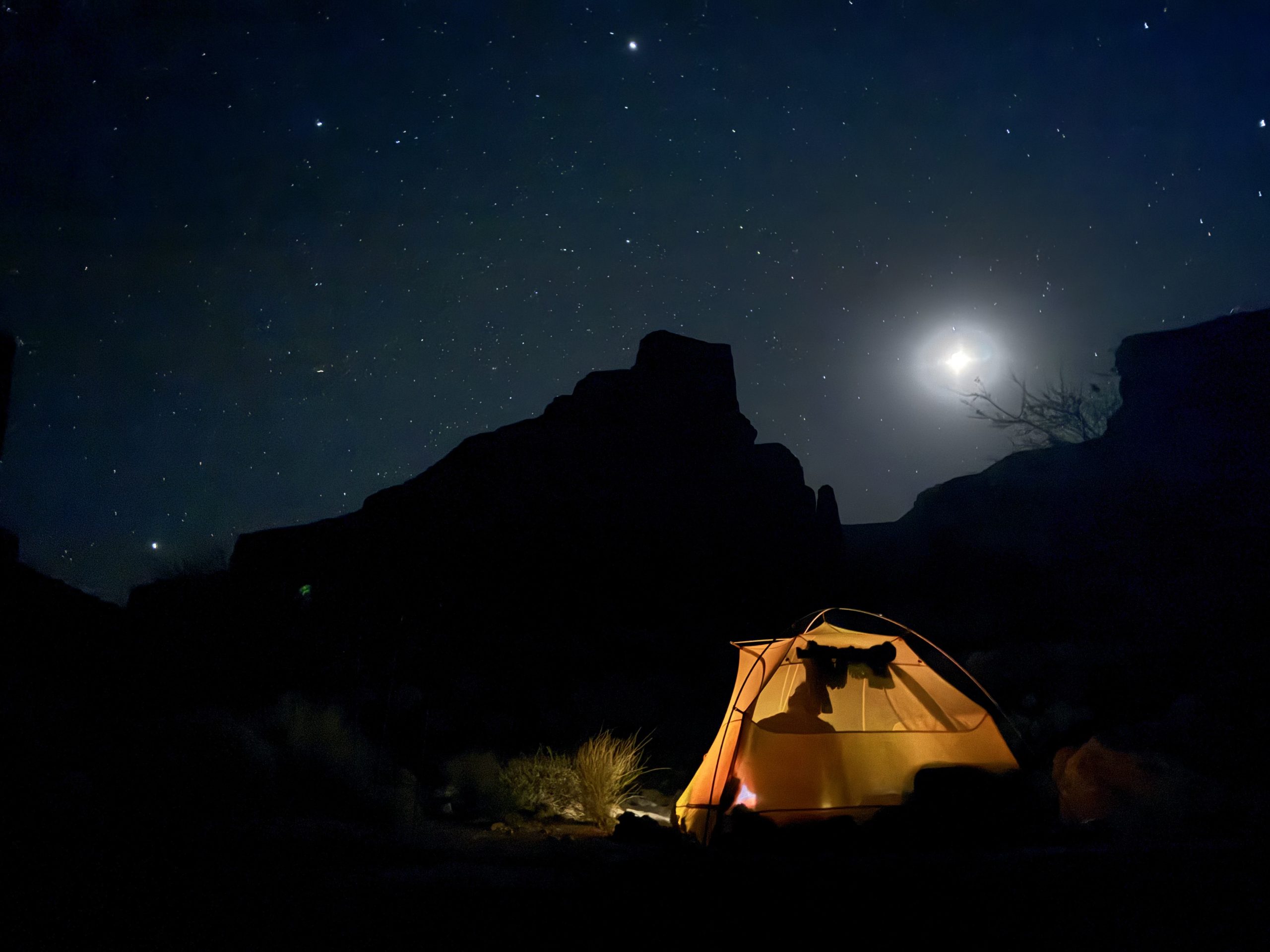
A few hours later, we hit the Colorado River and celebrated with blackberry whiskey lemonades while watching the sunset from our campsite below the Nankoweap Barns. That night we slept without the rain fly and looked at a sky full of stars over the canyon we had worked so hard to descend.
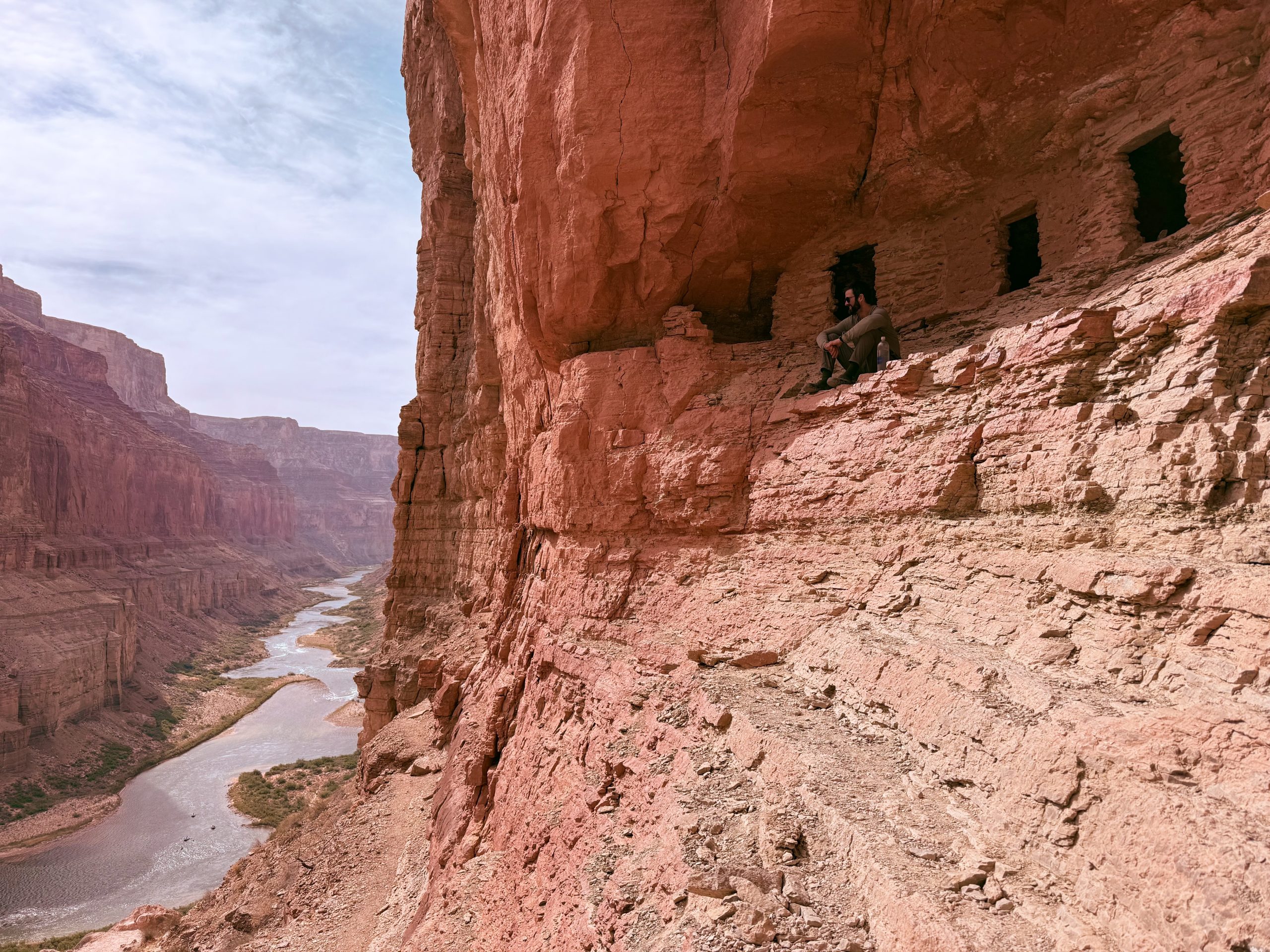
After sunrise, we hiked up to the Nankoweap Barns, which offered what might be my favorite view in the entire park. The rest of the day was spent walking along the Colorado River, weaving between the emerald green water and the towering cliffs that towered above it.
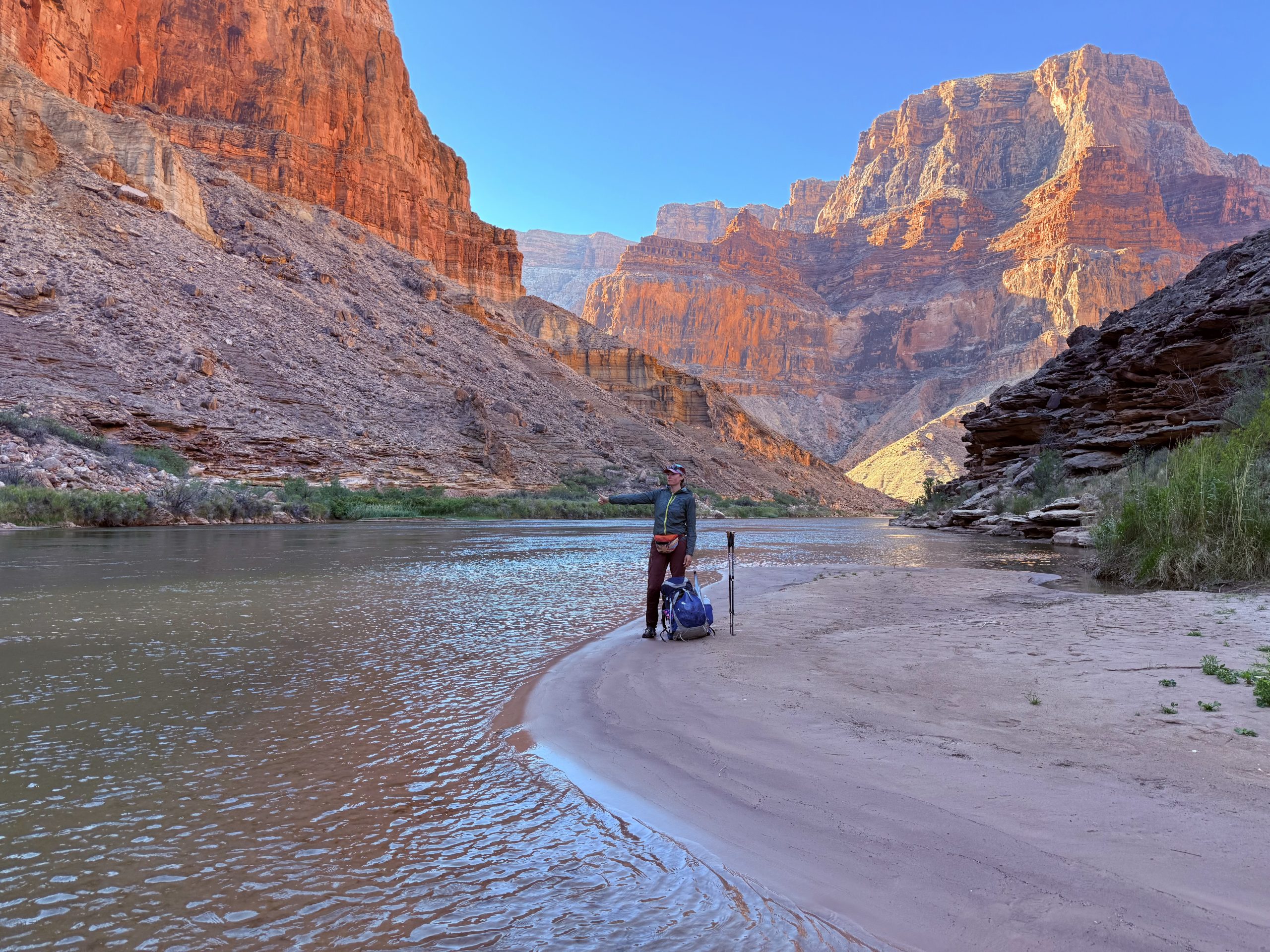
The next morning, it was time to take the first of two hitchhiking raft trips down the river. Like countless Hayduke hikers before us, we sat on a sandy beach and waited for a ride. Hours passed. We filled the time by washing clothes in the river, filtering water, and catching up on camp chores. Finally, the first raft of the day came around the bend. We signaled and the group generously agreed to transport us to the confluence of the Little Colorado River.
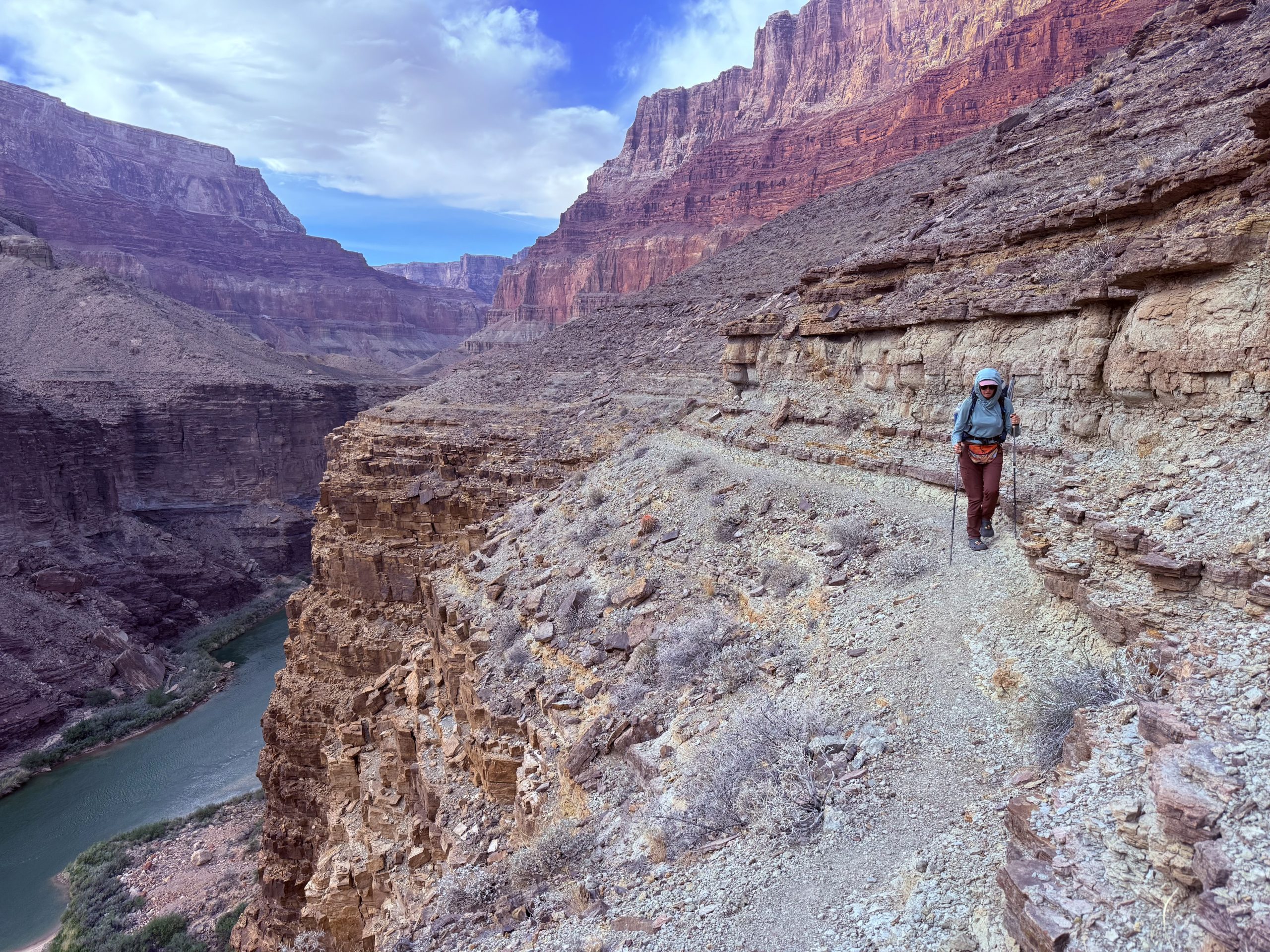
That day the wind was relentless, with gusts close to 30 knots. Hiking the Beamer Trail over the Colorado River became a stressful exercise in concentration. At one point, a strong gust knocked me to the ground. For a brief moment, sitting near a 500-foot drop, I found myself crying. It was one of those moments that reminded me how small I was compared to the landscape around me.
The next day saw some of the best hiking of the trip. We followed the Colorado River through spectacular scenery, screaming and yelling at the rafters below every time we saw them. Whether they heard us or not, we never knew. The day was filled with magnificent views, Class 3 climbing the cliffs, a swim in the river and finally a moonlit walk along the Tonto trail. We played Pink Floyd loudly as we walked under the stars until we finally arrived at our permitted campsite for the night.
The next morning, I felt physically and emotionally exhausted after several demanding days in the canyon. Somehow, we still made it 24 miles to the South Rim, where we resupplied and met up with our friend Sara before tackling the second half of the Grand Canyon. This next section is widely considered the most difficult section of the entire Hayduke Route. Not only that, we were asked to take the less traveled route along the North Bass Trail to the North Rim, instead of the corridor trails that were closed due to the wildfire in 2025. A route that only very adventurous Hayduke hikers choose to do years before.
This website contains affiliate links, which means The Trek may receive a percentage of any products or services you purchase using links in articles or advertisements. The buyer pays the same price they would otherwise pay, and their purchase helps support The Trek’s ongoing goal of bringing you quality backpacking information and advice. Thank you for your support!
For more information, visit the About page of this site.

:max_bytes(150000):strip_icc():format(jpeg)/Taylor-and-Tay-Lautner-060726-e6ca511100ba4faa93867a72cf85fc21.jpg?w=238&resize=238,178&ssl=1 "Taylor Lautner grita emocionado mientras él y su esposa Tay Lautner revelan el género de su bebé: ‘Nuestro pequeño secreto ahora es tuyo’")


:max_bytes(150000):strip_icc():format(jpeg)/Taylor-and-Tay-Lautner-060726-e6ca511100ba4faa93867a72cf85fc21.jpg?w=100&resize=100,75&ssl=1 "Taylor Lautner grita emocionado mientras él y su esposa Tay Lautner revelan el género de su bebé: ‘Nuestro pequeño secreto ahora es tuyo’")


:max_bytes(150000):strip_icc():format(jpeg)/woman-playing-slot-machine-060726-ebd7c76ef91b4a6d9a9d731d940c752c.jpg?w=100&resize=100,75&ssl=1 "Una mujer que se había prohibido jugar se coló en un casino y ganó el premio mayor antes de ser escoltada por la policía.")

