

Last night’s heavy gray skies continued into this morning and it was gray and cold when I set off. It rained a little, then more, and then very hard. It felt bleak and being outside seemed like harder work. My path today was to begin the journey home, although I still have a way to go. I took the Hiraethog Trail, which took me from the coast towards the valley of the River Clwyd. Hiraethog is the name given to the Denbigh moors around here, and hiraeth in Welsh is a word that describes a deep longing for home, or a place of belonging, a feeling of nostalgia. We tend to think of nostalgia as a kind of mild sentimental feeling about something past or distant. The term was initially coined to describe the great anxieties felt by mercenary soldiers far from home in the 17th century. Over time, homesickness came to be considered a medical condition, mixing the idea of homecoming and pain. It was even thought to be fatal at times, which is harsh! I thought I was starting to show the first signs of this terrible condition. My surroundings were rural farmland, riverbanks and trees, the colors intensified by gray skies and increasing rain.
The best stained glass windows in Wales?
I was happy to enter the 13th century St Dyfnog’s Church in the small village of Llanrheadr. A “Llan” is an area reserved for a church or a holy hermit and rheadr means waterfall, so the name of the town means “the church by the waterfall”. I stayed for a while, waiting for the rain to stop and enjoying the wonderful historic features of the church. The most striking thing was a huge and beautiful stained glass window that represented the Jesse tree.
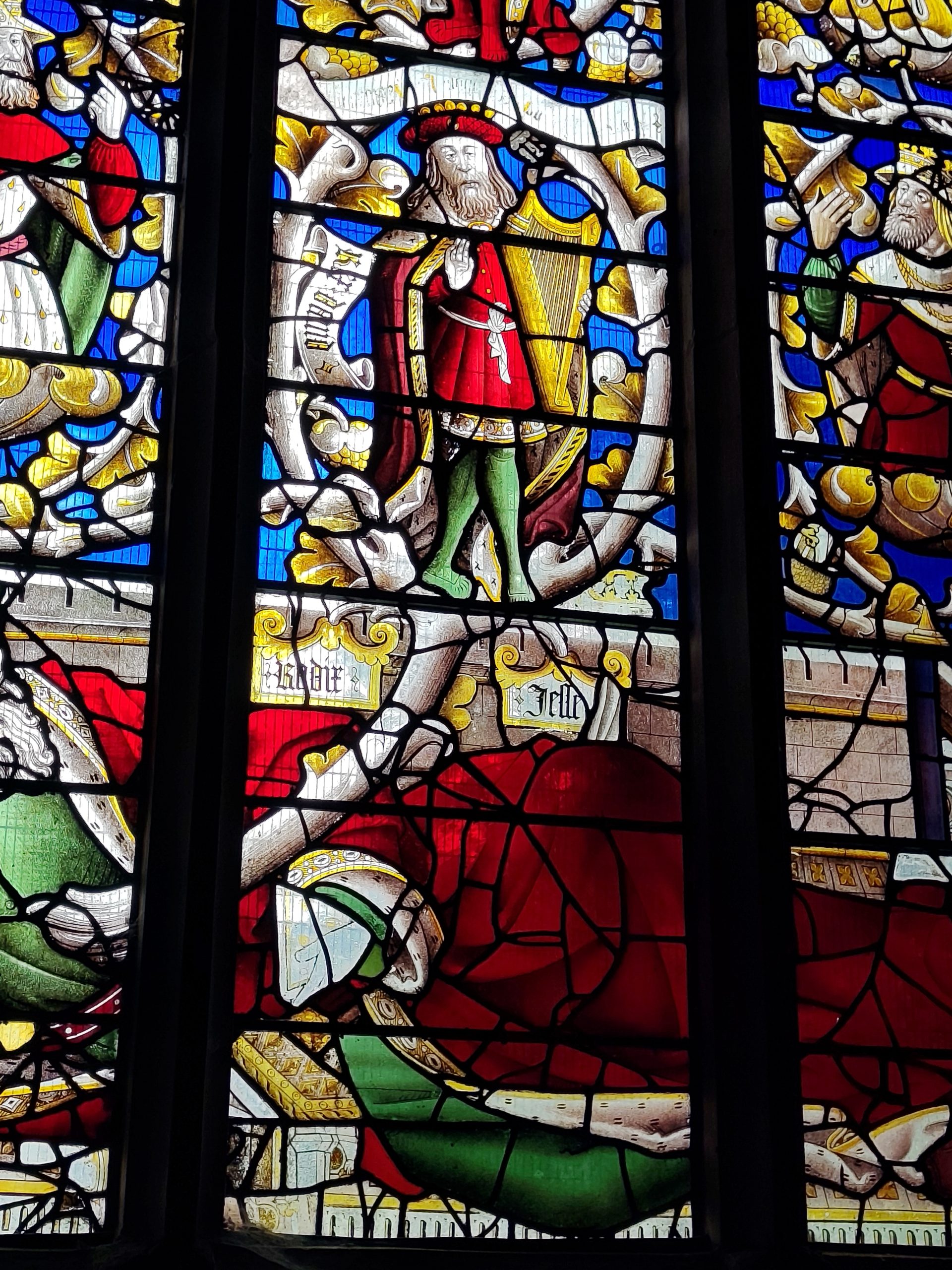
I had to share this wonderful detail of King David playing his harp. I realized that part of my personal “hiraeth” was missing my harp and longing to play music again.
Finding St Dyfnog’s Well
Although the grass was wet and the trees were dripping, it had actually stopped raining. I left the cemetery through a small door in the corner, leaving aside the Welsh poppies and the white flowers of the flower known as Queen Anne’s Lace, a delicate umbellifer. The path wound around a gushing stream, through a forest filled with birdsong and beautiful ferns, my favorite plant. After the relative silence of the shorebirds, I enjoyed the loud songs of wrens, the liquid chatter of blackbirds and robins, as well as the songs of warblers, goldfinches, nuthatches, chiffchaffs and thrushes. What riches to the ear and what comfort to my hiraeth-filled heart! I realized that this forest soundscape feels home to me and I was very happy to return to the singing of spring birds.
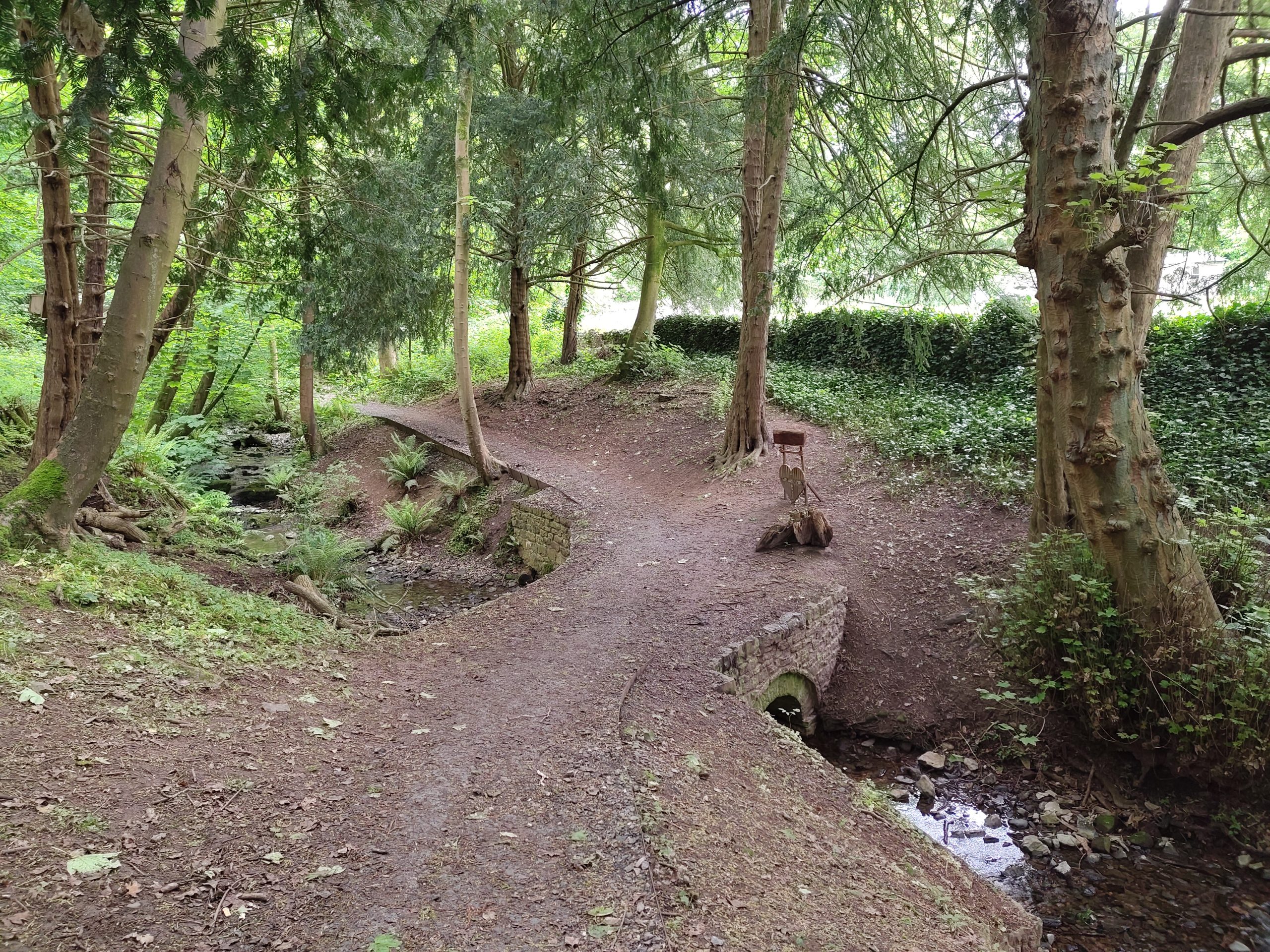
Two streams and a beautiful pool.
A short path took me to a hollow, where two trickles of water entered a blue-green pool, a stream on either side, before flowing into the stream I had been walking alongside. This is the holy well of Saint Dyfnog. Like many of these early saints, Dyfnog came from a family with a lot of money, but he chose simplicity and the life of a monk. He even lived on bread and water. One of his activities was to stand in the cold gushing water, wearing a hair shirt and an iron chain around him, to do penance for his sins. Its iron chain was thought to impart special healing powers to the water, which became known for curing skin conditions, arthritis and rheumatism. The pilgrims were so impressed with its effects that they donated generous offerings, allowing for the construction of a larger church and the installation of the expensive Jesse window. The water is sometimes said to be «the coldest in Wales». I put my hand in it, but I don’t have a large enough sample of Welsh water to be sure how cold it is.
The beautiful surroundings of the well.
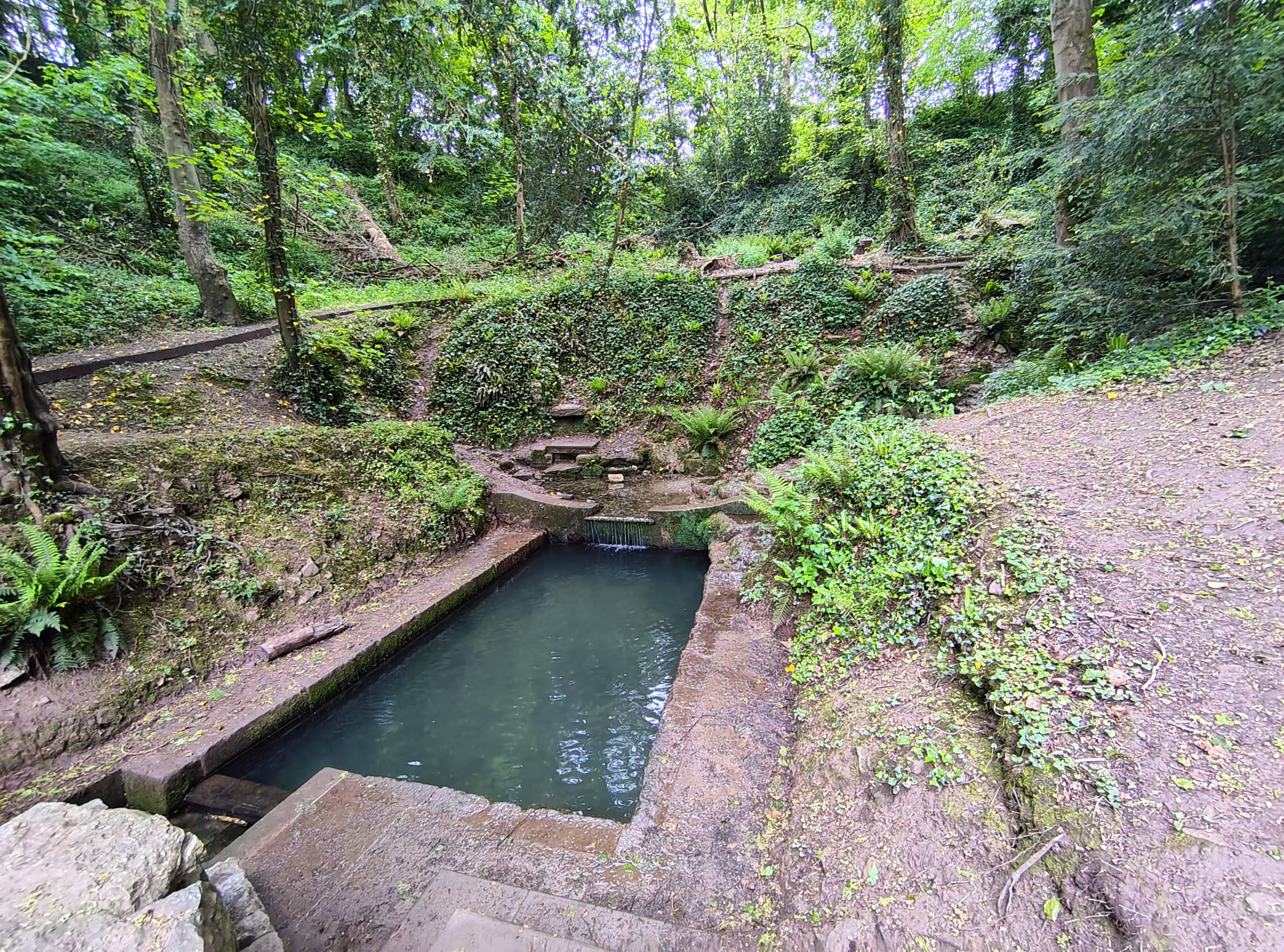
I enjoyed watching the water come through this little arch and was very glad that this famous well is still loved and cared for.
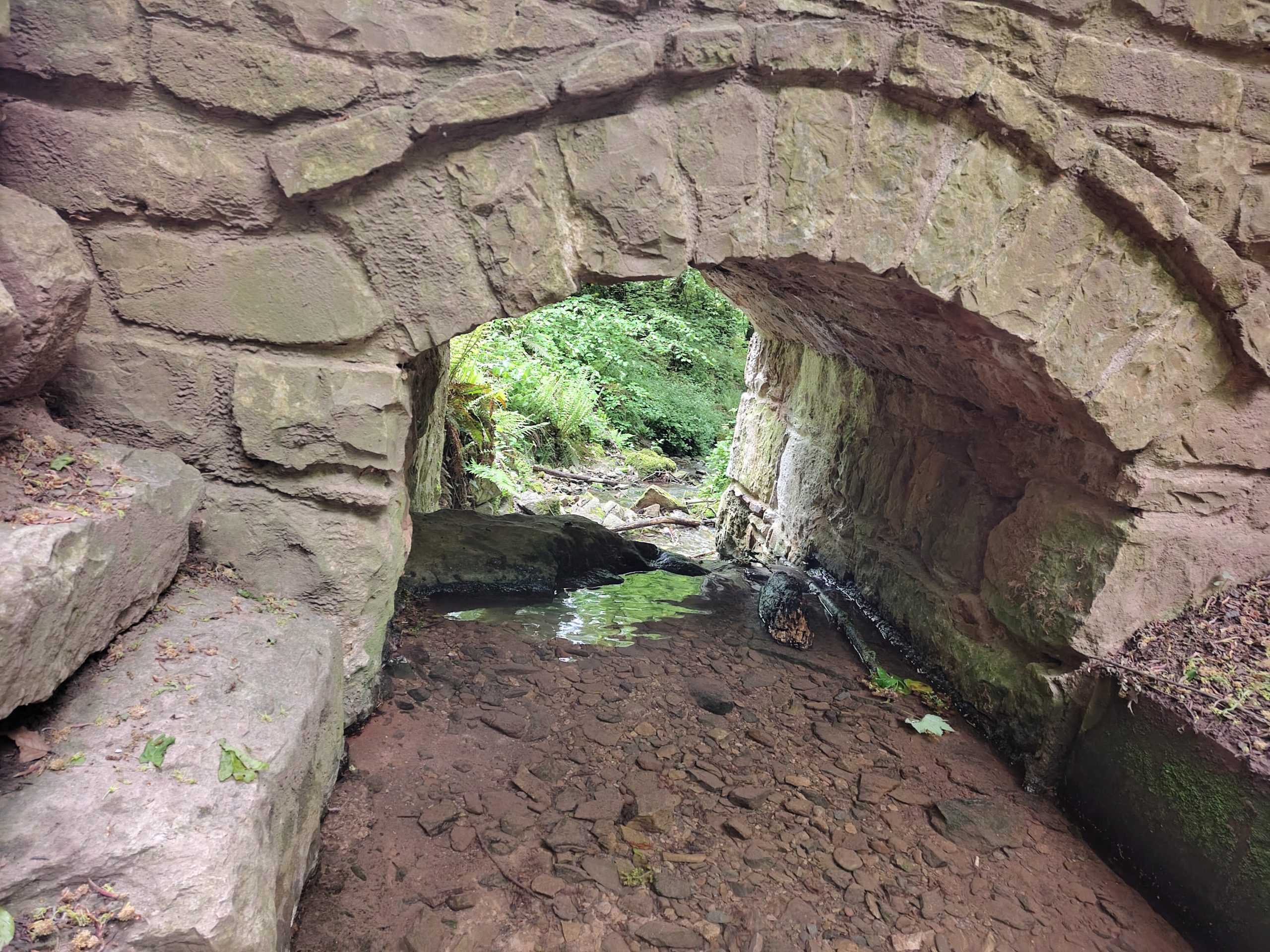
Need for food, morale at risk, more rain.
It started raining again and I splashed through muddy puddles and wet grass. However, this didn’t matter too much as I had spotted a nice old pub nearby, which promised a hot lunch, much needed as I had left without breakfast. It was lovely to enter the refuge of somewhere warm and dry and I began to speculate on what it might offer me. It turned out that there were many delicious dishes on offer, but not until five in the afternoon, a few hours away. I had to content myself with a packet of crisps and a drink. My desire to walk had completely disappeared. I felt wet and cold and wanted to get somewhere warm and change into dry clothes. Feeling like it was time to “throw some money at a problem,” I tried to find a taxi. The small town had a weak mobile phone signal. although I finally managed to talk to a driver who was 2 hours away in the opposite direction. So I waited an hour for a bus (in the rain) and walked back along the coast to my bed for the night.
This website contains affiliate links, which means The Trek may receive a percentage of any products or services you purchase using links in articles or advertisements. The buyer pays the same price they would otherwise pay, and their purchase helps support The Trek’s ongoing goal of bringing you quality backpacking information and advice. Thank you for your support!
For more information, visit the About page of this site.