
Around mile 600, the desert started to feel different.
The Joshua trees were still there. The water hauls were still long. The wind was still trying to blow us off the ridges. But something had changed. Kennedy Meadows South was finally close enough to seem real.
For months before setting out on the Pacific Crest Trail, Kennedy Meadows had existed in my mind as one of those legendary places. Right next to names like Forester Pass, Mount Whitney and Bridge of the Gods. It was not just another stop along the way. It was a milestone. A dividing line between the desert and the Sierra. A place every PCT hiker dreams of reaching. We still had a hundred kilometers to go.
marathon day
The desert was not willing to give up those kilometers easily. Water dictated almost every decision we made. Long transports, water tanks and careful planning had become part of everyday life. However, at this point, our trail stages were fully developed. The miles that once seemed intimidating had become routine. On our first day we covered 42 kilometers: a marathon.
Long water carries, sand washes and endless miles through Jawbone Canyon.
As someone who has run marathons before, the number wasn’t what caught my attention. What surprised me was how normal it felt. A few months earlier, the idea of running a marathon through the desert would have seemed absurd. Now it was just another day on the road.
The day was full of sand washes, long climbs, and endless rolling terrain through Jawbone Canyon. We stopped on Kelso Road, where Michael, who maintains the nearby spring, was unloading supplies from his truck. We helped him unload and in exchange he gave us cold soft drinks. Out here, a cold soda could very well be gold.
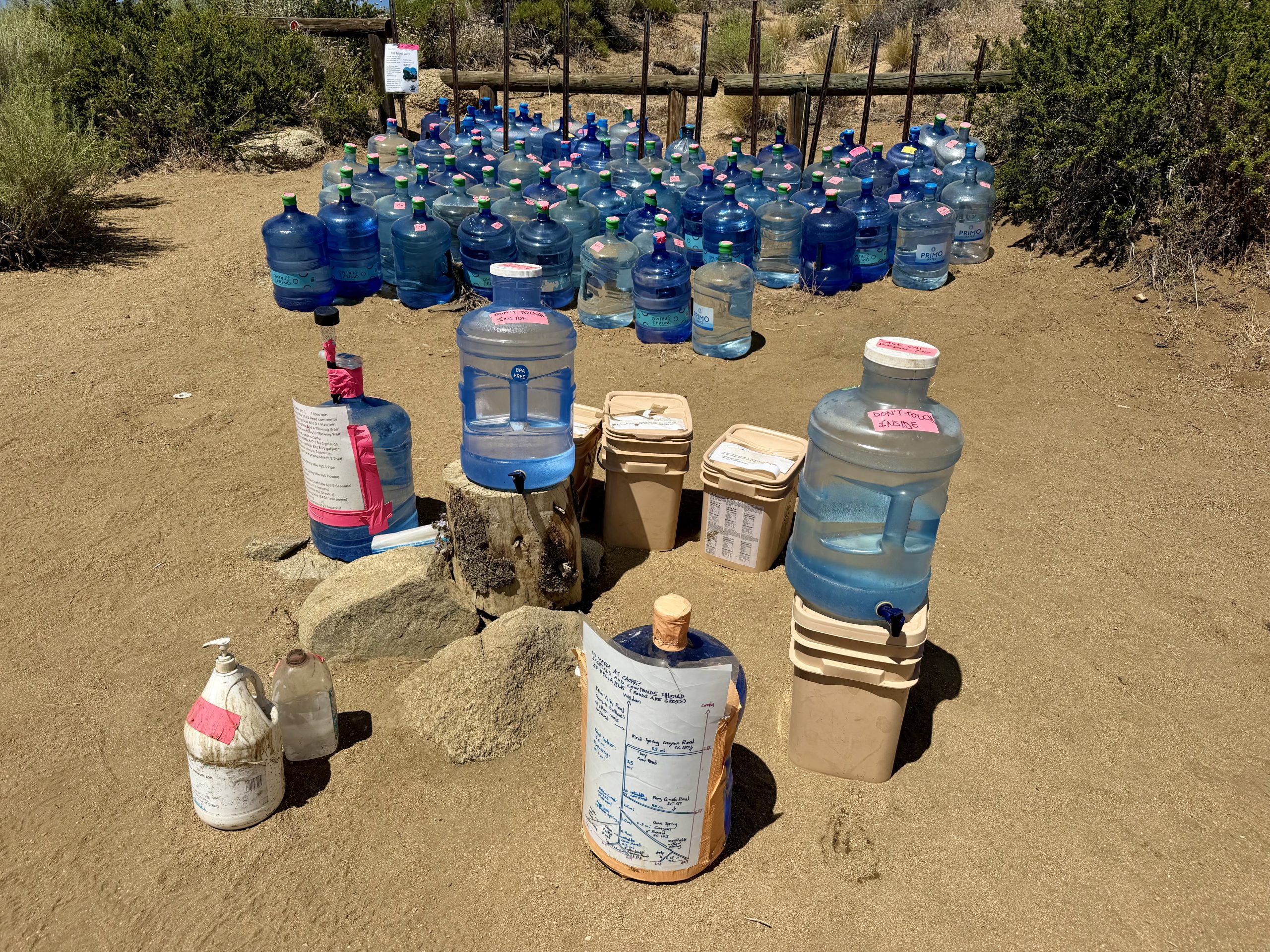
Michael keeps the spring nearby and keeps hikers moving through one of the driest stretches of the trail.
In the afternoon we arrived at Bird Spring Pass. Hikers gathered as the sun sank below the horizon. We watched the sunset together, shared stories, and reflected on the miles we had traveled.
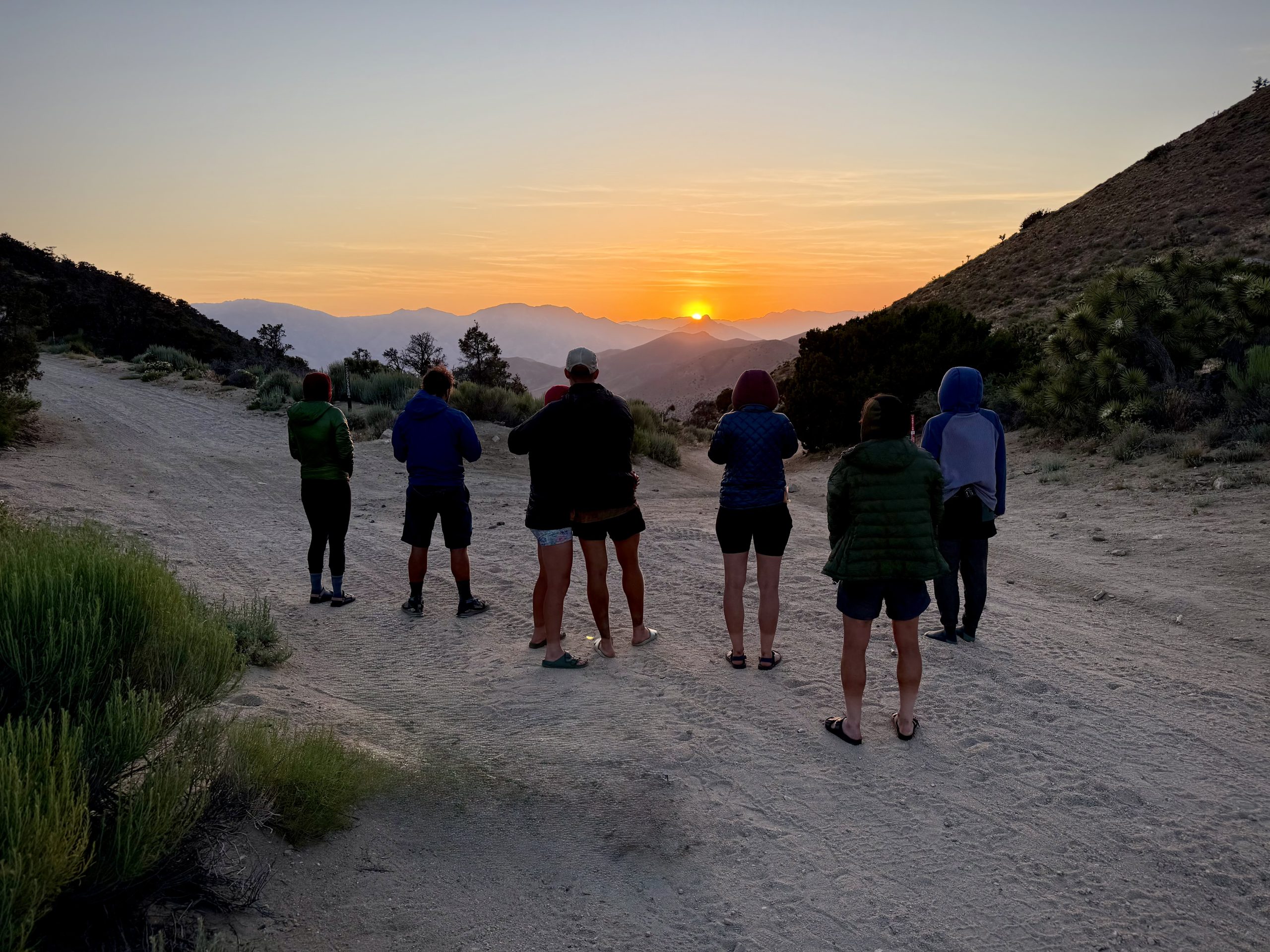
Pass Bird Spring after our first marathon day on the trail.
When I finally laid my head down that night, sleep came instantly.
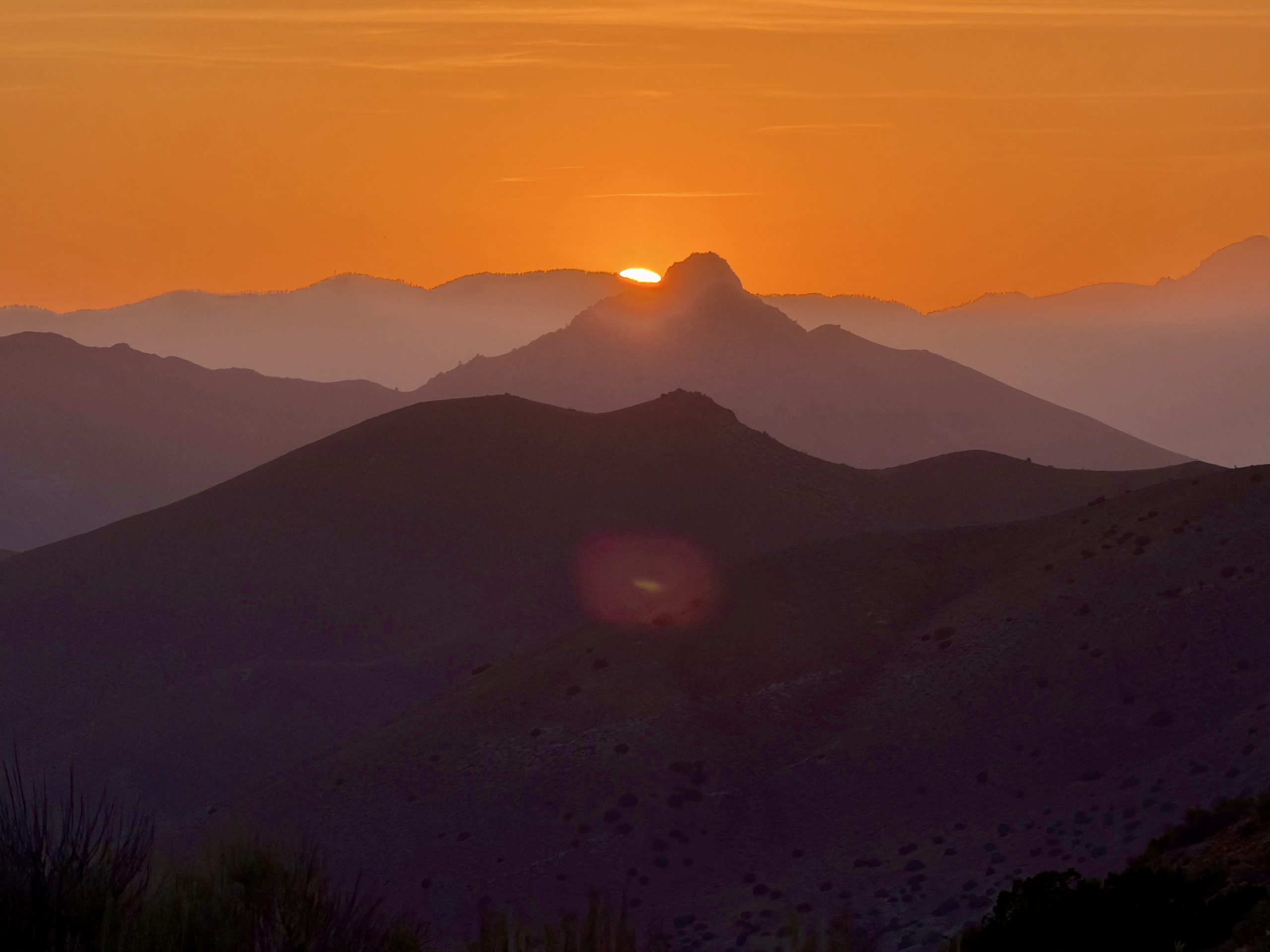
Twenty-six and a half miles later, I was able to fall asleep easily.
Change of trail families
One of the things I’ve learned on the PCT is that trail families are constantly evolving. People move faster. People slow down. Some take zeros. Others move on. Sometimes people you’ve spent weeks walking with just end up on a different path. The following days brought us a reminder of that reality. There was no dramatic moment. No arguments. Just the realization that the group dynamic we had become accustomed to was changing.
At first it felt strange.
Then it felt normal.
The path has a way of teaching you that not everything is permanent, and that’s okay. The people who are meant to be part of your journey will still show up exactly when they are supposed to.
Walker Pass and Ridgecrest
The climb from Bird Spring Pass was long and steady. Along the way I managed to lose track of Pippy and ended up running almost three miles to catch up with the group. It was the first time in a long time that my heart rate really increased. When I found everyone at the cabin, I was more than ready for a break.
Finally we headed towards Walker Pass where, as seems to happen every time morale starts to drop, the magic of the trail appeared. Fresh fruit, cold drinks, friendly faces; just what we needed!
From Walker Pass we hitchhiked to Ridgecrest. Just when it seemed like things were getting complicated, Sprinter showed up and rescued us with cold beer, an It’s-It ice cream sandwich, and a ride into town. The trail always seems to give you what you need, even if it’s not always what you expected.
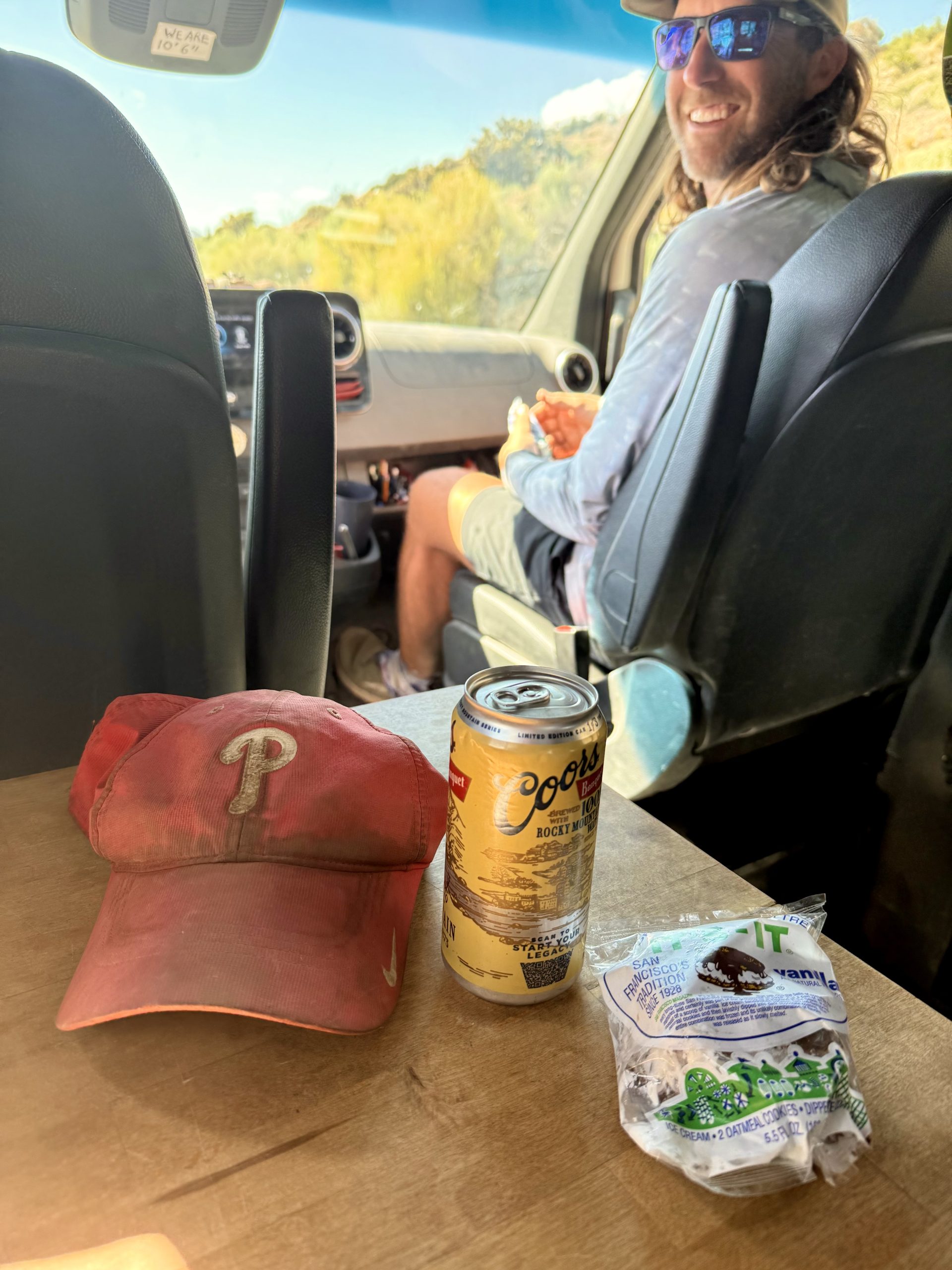
Some trail angels seem to appear exactly when they are needed.
Waiting for the weather
Ridgecrest became something unexpected.
A double zero.
Normally I would have been eager to keep moving, but the weather forecast told a different story. Storms hit the Sierra. It was snowing. The hikers who were advancing were already talking about difficult conditions and even turning around. So we adapt. That’s one of the most important lessons the trail continues to teach me. Sometimes the smartest decision is not to move at all.
Sandy welcomed us into her home and gave us exactly what we needed: rest.
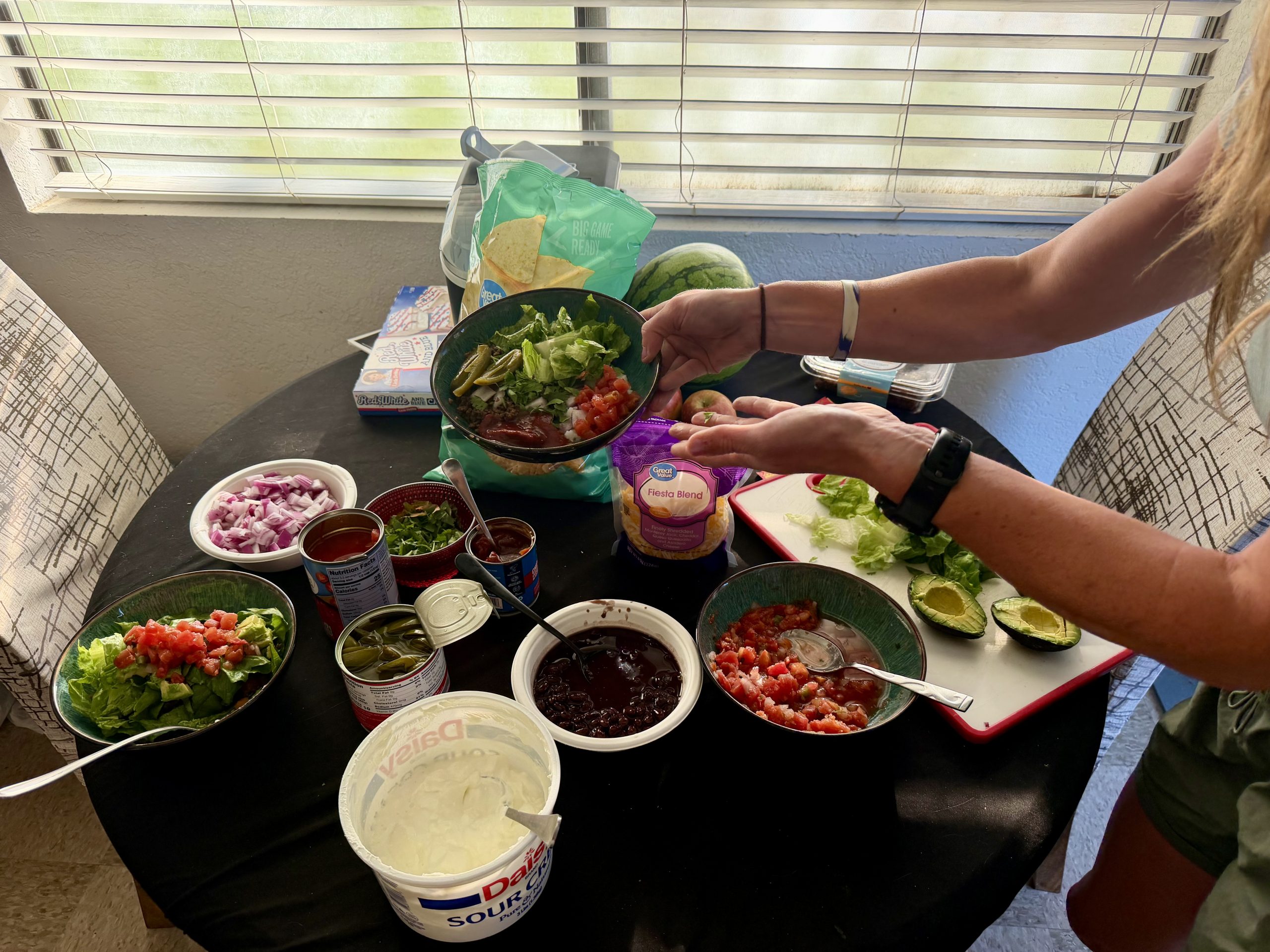
A double zero at Sandy’s meant real food, good company, and a chance to recharge before the final push toward Kennedy Meadows.
She trusted us with her home while she was at work, shared meals with us, and spent her free time helping hikers navigate the trail corridor. Your kindness reminded me once again how much the PCT depends on people who simply want to help.
We spent our days walking the dogs, exploring the area, watching movies, playing pool, and enjoying the rare opportunity to slow down.
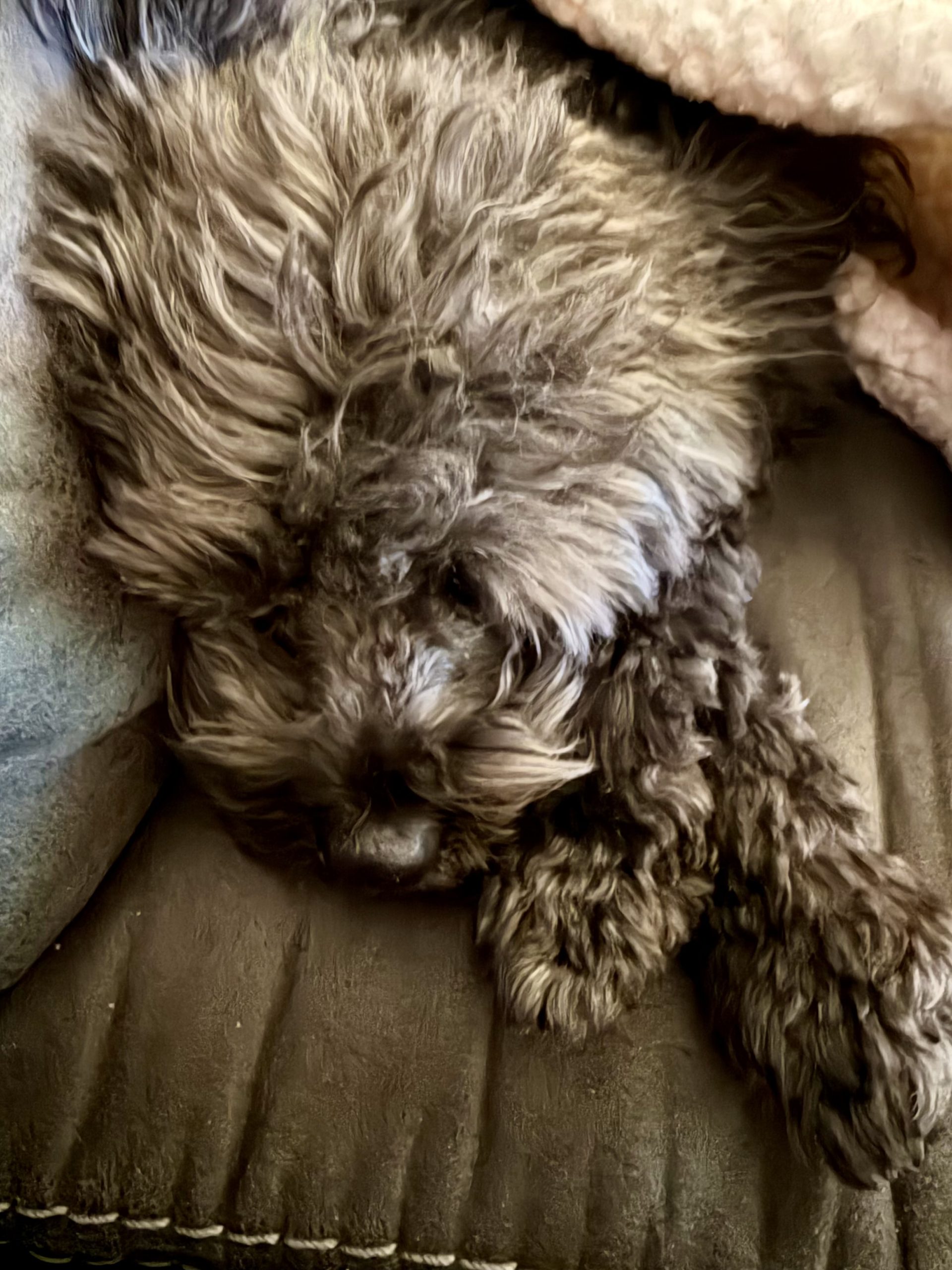
Oliver quickly became one of the highlights of our stay. Miles of trails can wait when good dogs are around.
The body rested, time passed and the Sierra waited.
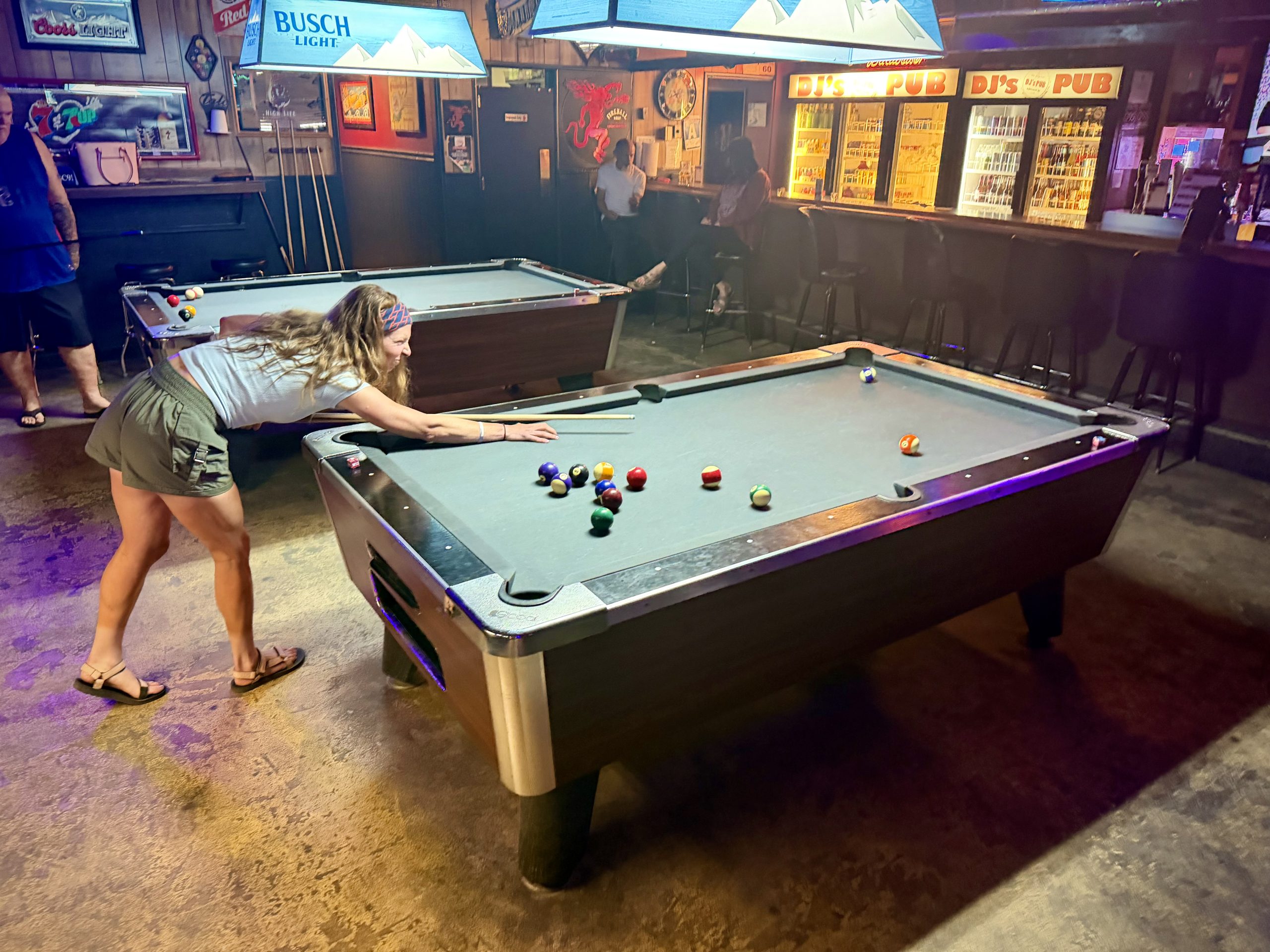
Waiting out the weather meant playing pool with DJ, drinking cold drinks, and trusting that the trail would still be there when the storm passed.
The rain returns
When it was finally time to leave Ridgecrest, Larry drove us back to Walker Pass. The weather was cool and cloudy. What would normally have been a hot and grueling climb seemed manageable under gray skies. For weeks, rain had been little more than an occasional thought. Now it was moving towards us across the horizon.
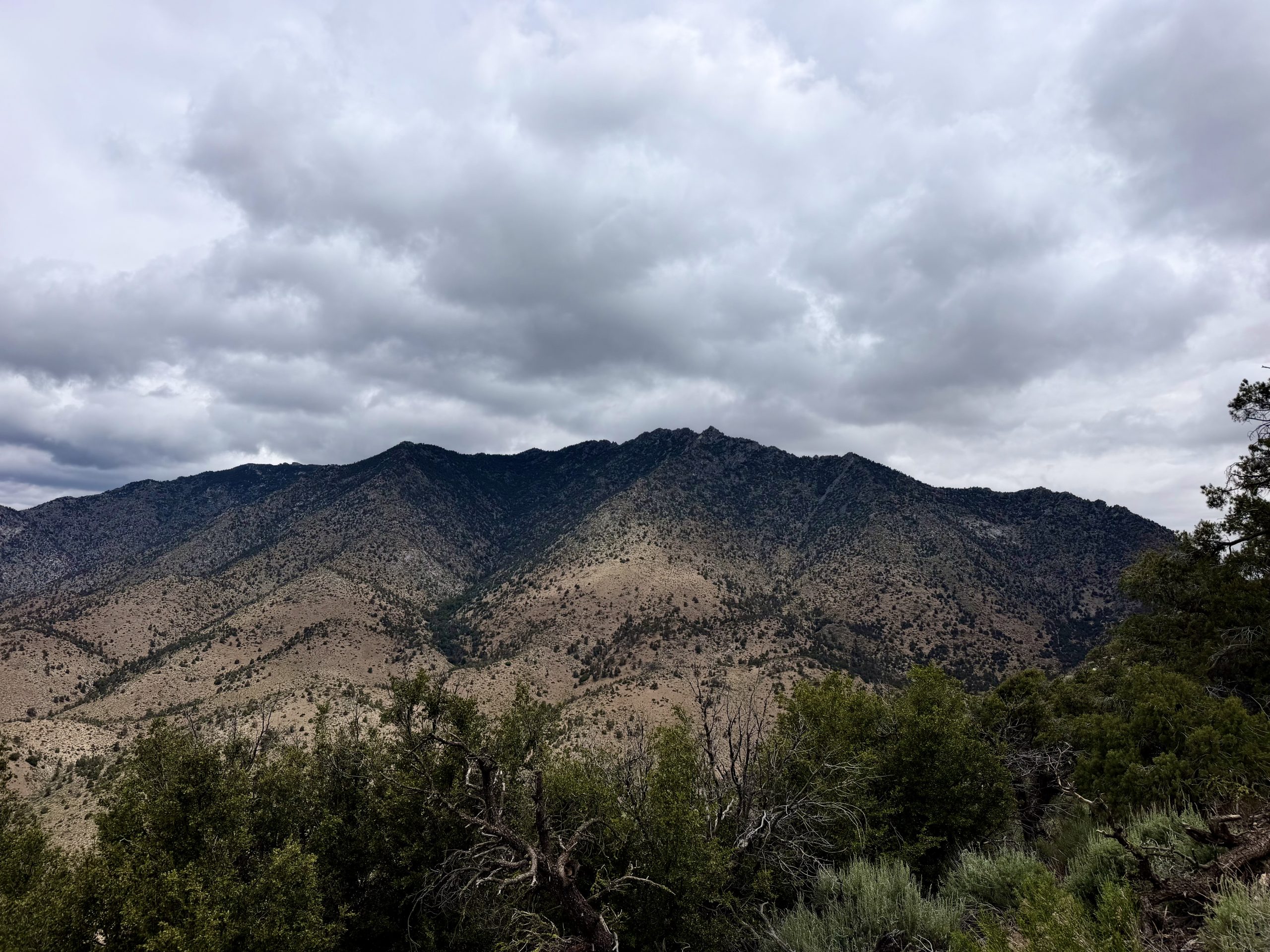
The climate of the Sierra was already making its presence known.
At first it was just a few drops. Then a drizzle, then a steady rain.
We made our way through wet brush, soggy shorts, and muddy trails until we reached camp at Spanish Needle Creek. For the second time in over a month, I set up my tent.
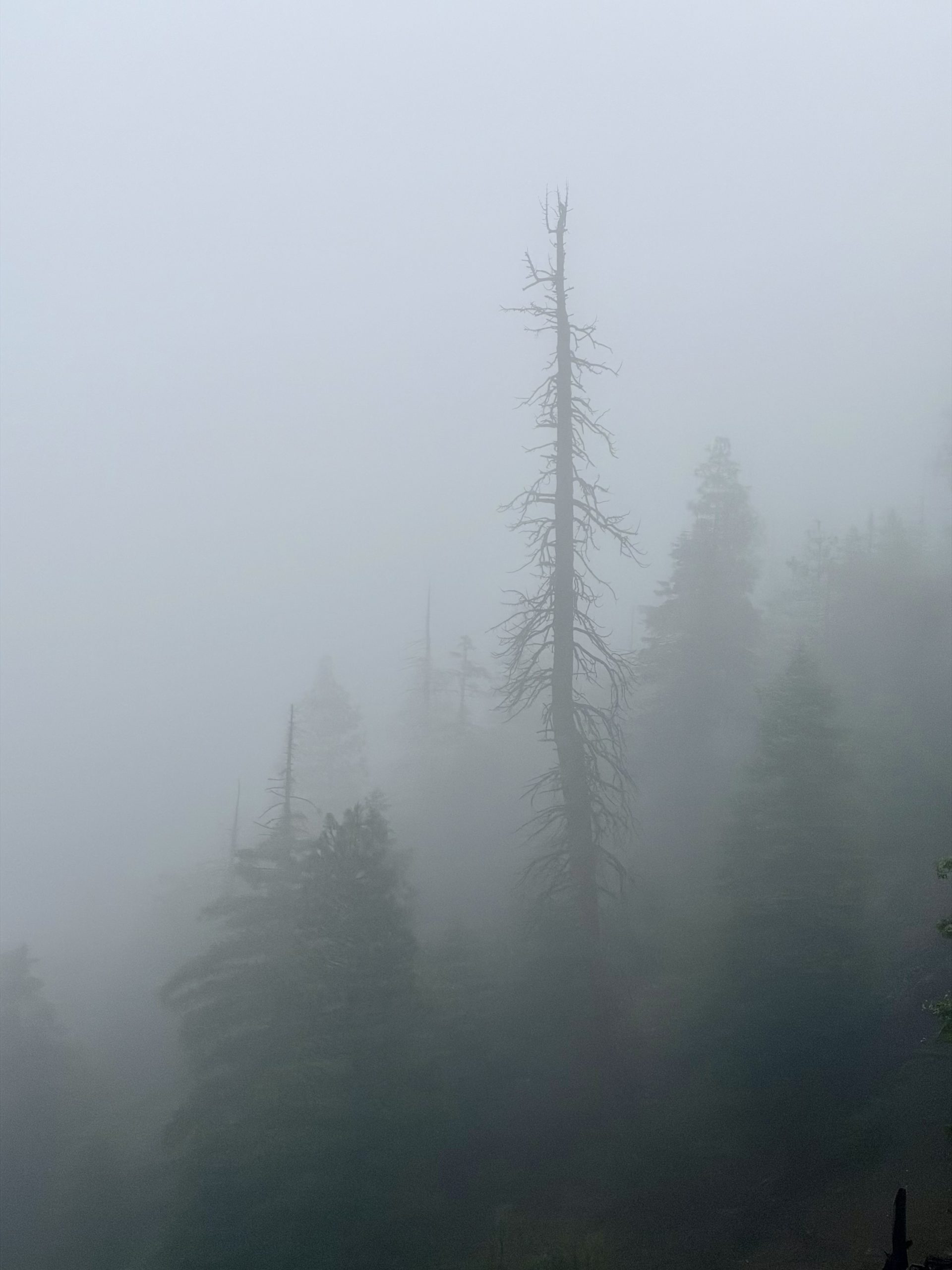
Cowboy camp has finally met its match.
The rain continued throughout the night, pattering softly as it went as the temperature dropped. Lying there listening to the weather, I couldn’t help but think about the Sierra in front of me. This was just a preview.
The last miles of the desert
The next few days felt different. The desert was not completely finished, but it was beginning to loosen. The terrain softened. Water became more reliable. The anticipation grew stronger with each kilometer. We ran into old friends we hadn’t seen since Wrightwood. Shared campsites with trail crews, weekend backpackers, and other hikers. The trail felt alive.
One morning I woke up to what can only be described as a dew-nami. Everything was soaked, my tent was wet. My sleeping bag was wet. Even things that should have been dry somehow weren’t. However, none of that mattered. We only had eight miles left to Kennedy Meadows South. At some point during those last miles of the desert, I crossed another milestone. Mile 700.
Every hundred miles on the PCT feel a little different. Mile 500 felt monumental because it took me beyond the longest trail I had ever completed. Mile 600 felt like anticipation. Mile 700 felt like confirmation. Confirmation that it was exactly where it was supposed to be.
The desert had tested me with the heat, the wind, the carrying of water and the long days. Yet somehow those challenges had become normal. The kilometers that once seemed impossible are now behind us. More than anything, mile 700 was a reminder that Kennedy Meadows was no longer a distant goal. It was just around the corner.
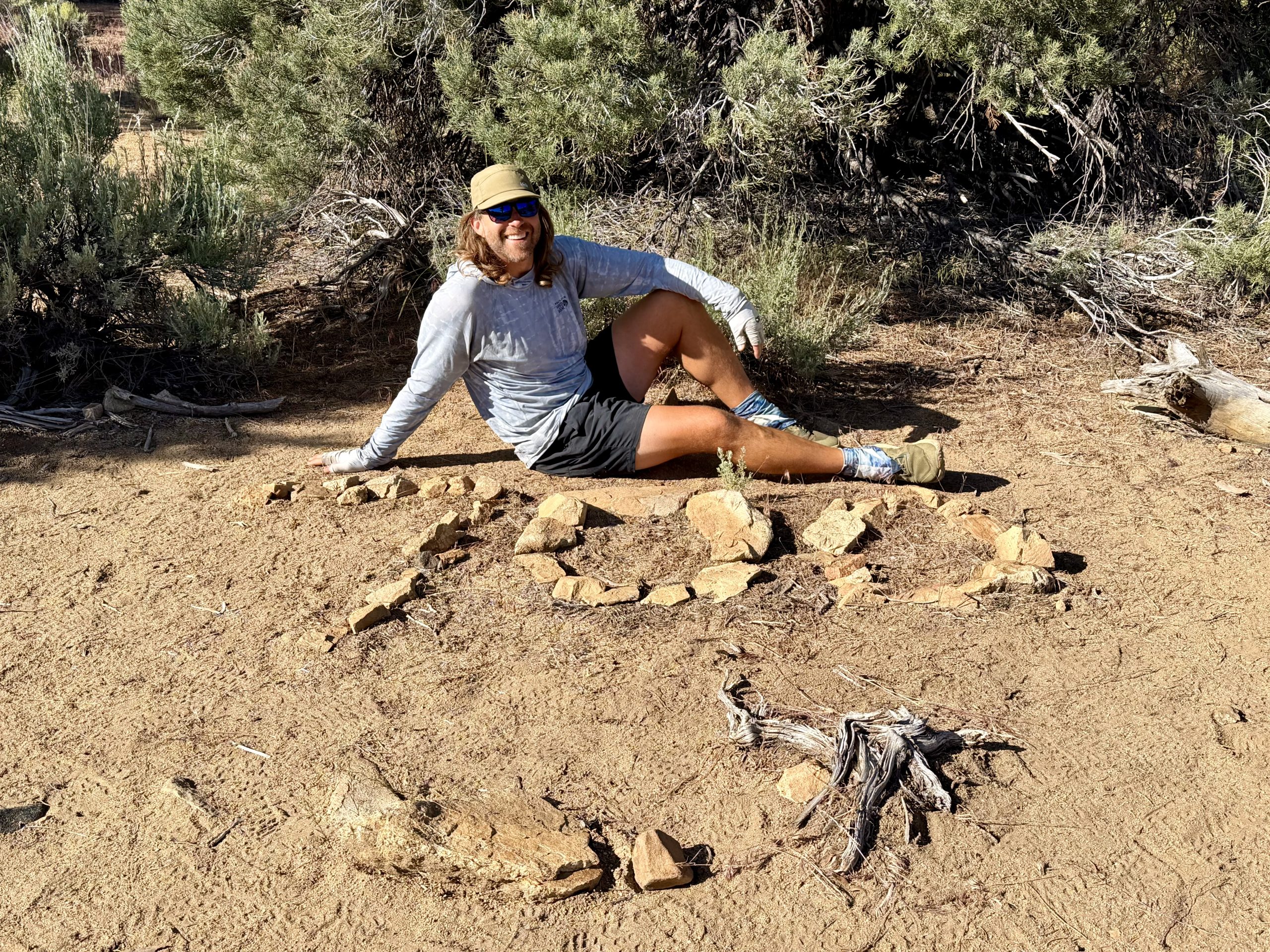
Seven hundred miles deep. The Sierra (and the next chapter of the PCT) were finally within our reach.
Kennedy Meadows
The last few kilometers passed quickly. The excitement made us move forward.
For years I had watched videos of hikers arriving at Kennedy Meadows. I had read countless stories about the famous cowbell and the cheers of the hikers gathered on the terrace. Soon the road appeared. Then the buildings. Then the sound: the cowbell.
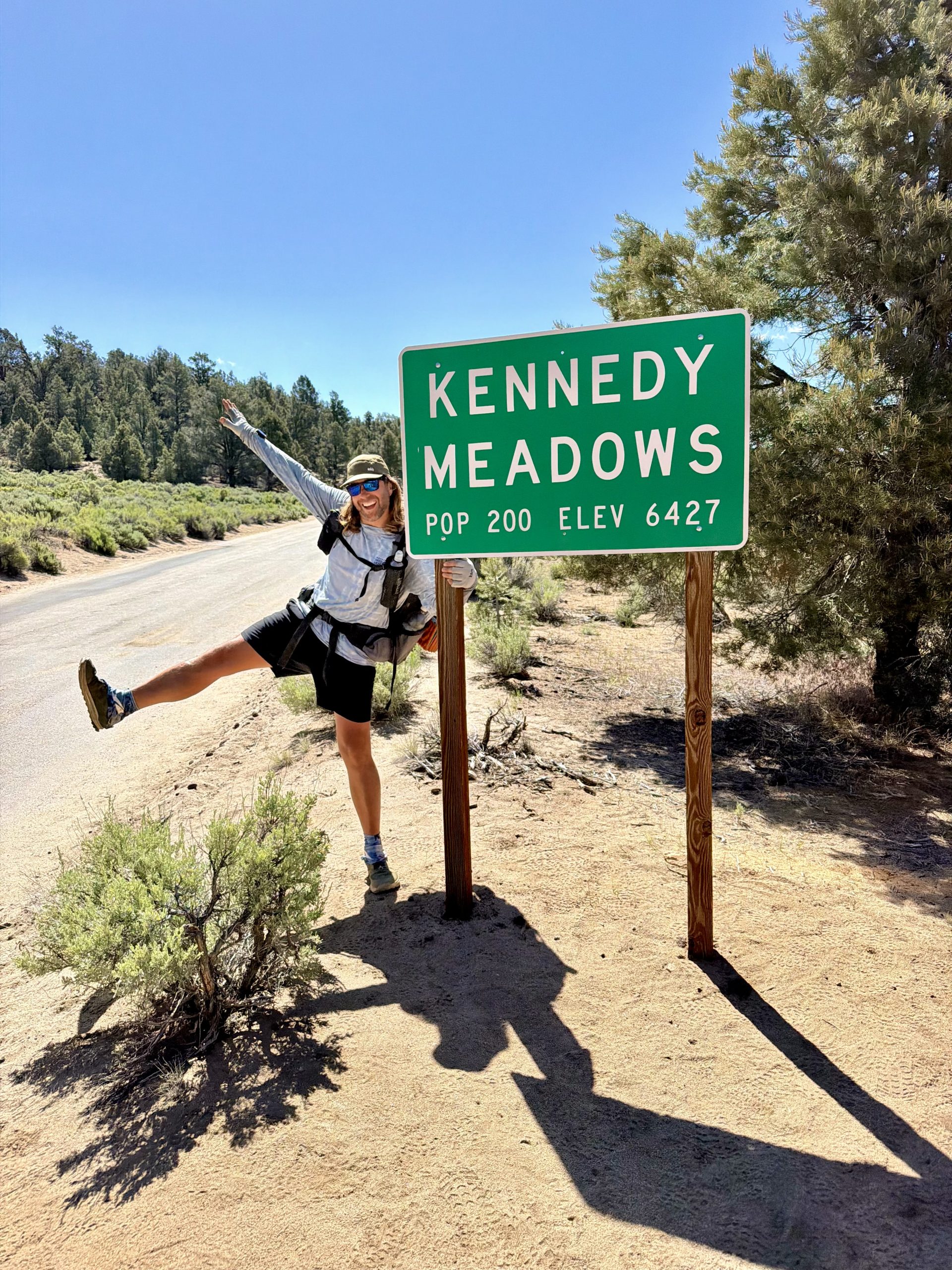
The final approach to one of the most emblematic stops on the PCT.
When we entered, the hikers cheered and applauded. Smiles spread across faces. People got up from their chairs to welcome us.
I couldn’t stop smiling. Neither did Pippy. The packages fell to the ground. Fist blows were exchanged. Cold drinks appeared. For a few moments I just stood there and took it all in.
The cowbell made me cry.
Not because it was over. Because it wasn’t. The Sierra was still ahead. Forest Pass, Whitney. Snow, river crossing and mosquitoes. Some of the biggest challenges of the entire journey were still waiting. But Kennedy Meadows represented something important.
Proof.
Proof that he had crossed the desert. Proof that the training, planning and dream had come true. For months, Kennedy Meadows had been an imagined place. Now he was standing there. A cold beer in hand, surrounded by hikers who understood exactly what the moment meant. The desert was behind me. The Sierra was finally here.
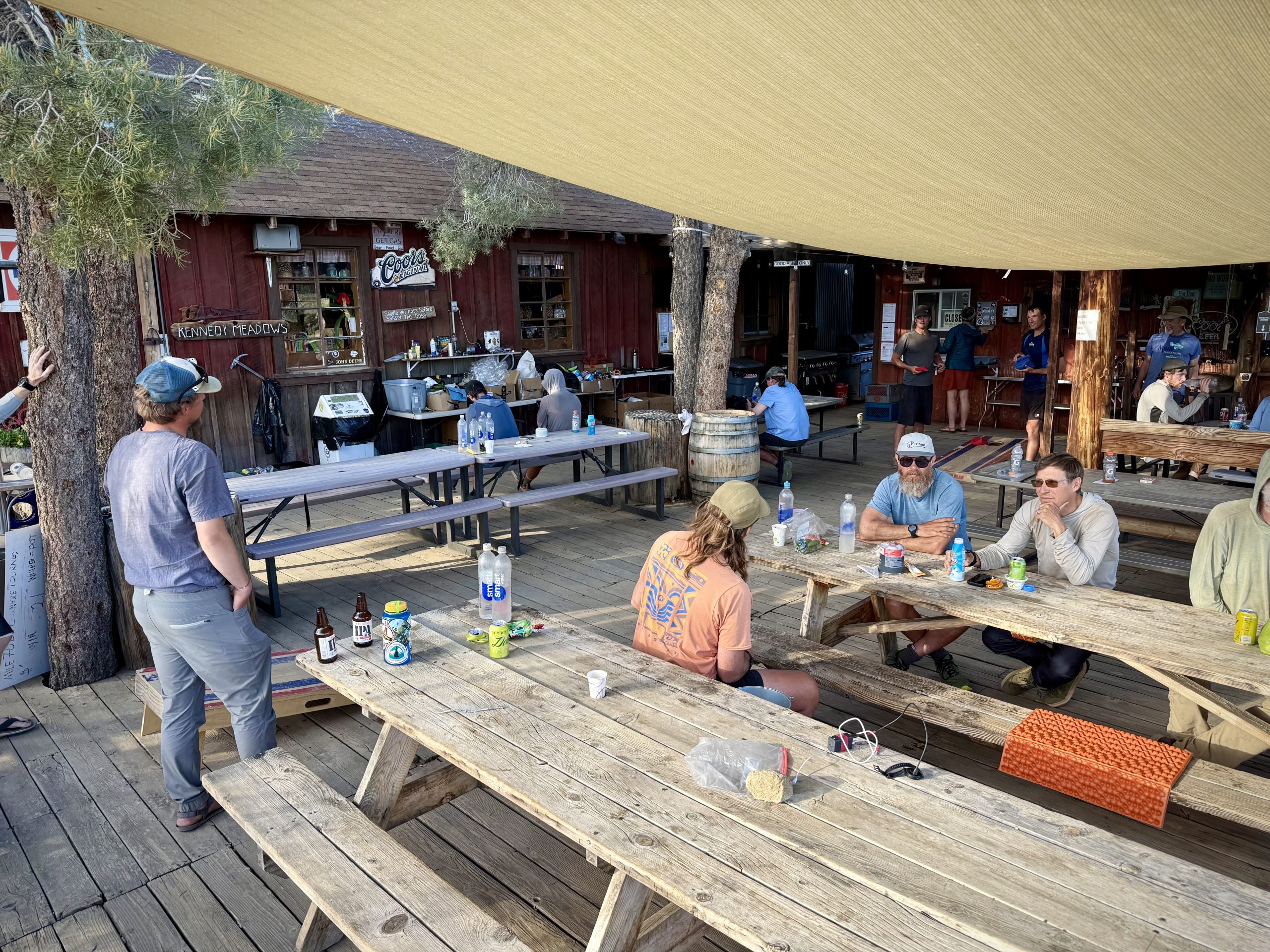
For months, Kennedy Meadows South existed only in my imagination. Then one day I found myself sitting on the terrace, surrounded by hikers chasing the same dream.
:max_bytes(150000):strip_icc():format(jpeg)/Citic-Tower-damage-062726-16ea4721ef324606b8fd871e403cdafa.jpg?w=238&resize=238,178&ssl=1 "Piloto muerto y 13 heridos tras estrellarse un avión contra el edificio más alto de Pekín")




:max_bytes(150000):strip_icc():format(jpeg)/Citic-Tower-damage-062726-16ea4721ef324606b8fd871e403cdafa.jpg?w=100&resize=100,75&ssl=1 "Piloto muerto y 13 heridos tras estrellarse un avión contra el edificio más alto de Pekín")