

Note: I am taking the PCT while working full time remotely. I work Monday through Thursday from my RV, run Monday through Thursday nights, and hike Friday through Sunday before returning to base camp. It’s a balance between miles of trails, logistics and recovery; Learn more about how it works here: https://thetrek.co/pacific-crest-trail/my-plan-to-hike-the-pct.
After weeks of navigating snow-covered passes, crossing icy streams, and endless granite, Section J felt almost relaxing.
The Sierra had not lost its beauty.
It had simply become easier to enjoy.
For the first time in what seemed like weeks, I wasn’t constantly watching every step or searching for the safest route through the snow. I was finally able to look up and appreciate where I was.
Section Snapshot
- Miles: 1018.1 → 1093.4
- Start/End: Sonora Pass → Echo Lake
- Conditions: Cool temperatures, occasional rain, lower mosquito activity
- Land: Forests, alpine lakes, volcanic ridges and open granite basins
- Style: Day hike with road crossings.
- Passed: Faster than previous Sierra sections
- RV Campgrounds: Hope Valley Ski Park
Mileage
- Monday, June 22, 2026 – Tuesday, June 23, 2026 — Zero days (0 miles)
- Wednesday June 24, 2026 — Mile 1018.1 to 1031.7
- Thursday June 25, 2026 — Mile 1031.7 to 1049.6
- Friday June 26, 2026 — Mile 1049.6 to 1064.1
- Saturday June 27, 2026 — Mile 1064.1 to 1078.0
- Sunday June 28, 2026 — Mile 1078.0 to 1093.4
What defined section J
In the J section I felt like the Sierra was finally letting me breathe.
The dramatic setting remained, but many of the biggest obstacles began to disappear. Snow became the exception and not the rule. Stream crossings became easier. The trail itself reverted to long stretches of smooth dirt instead of endless talus and granite.
After weeks of carefully covering each mile, simply walking became enjoyable again.
From Sonora Pass to Carson Pass
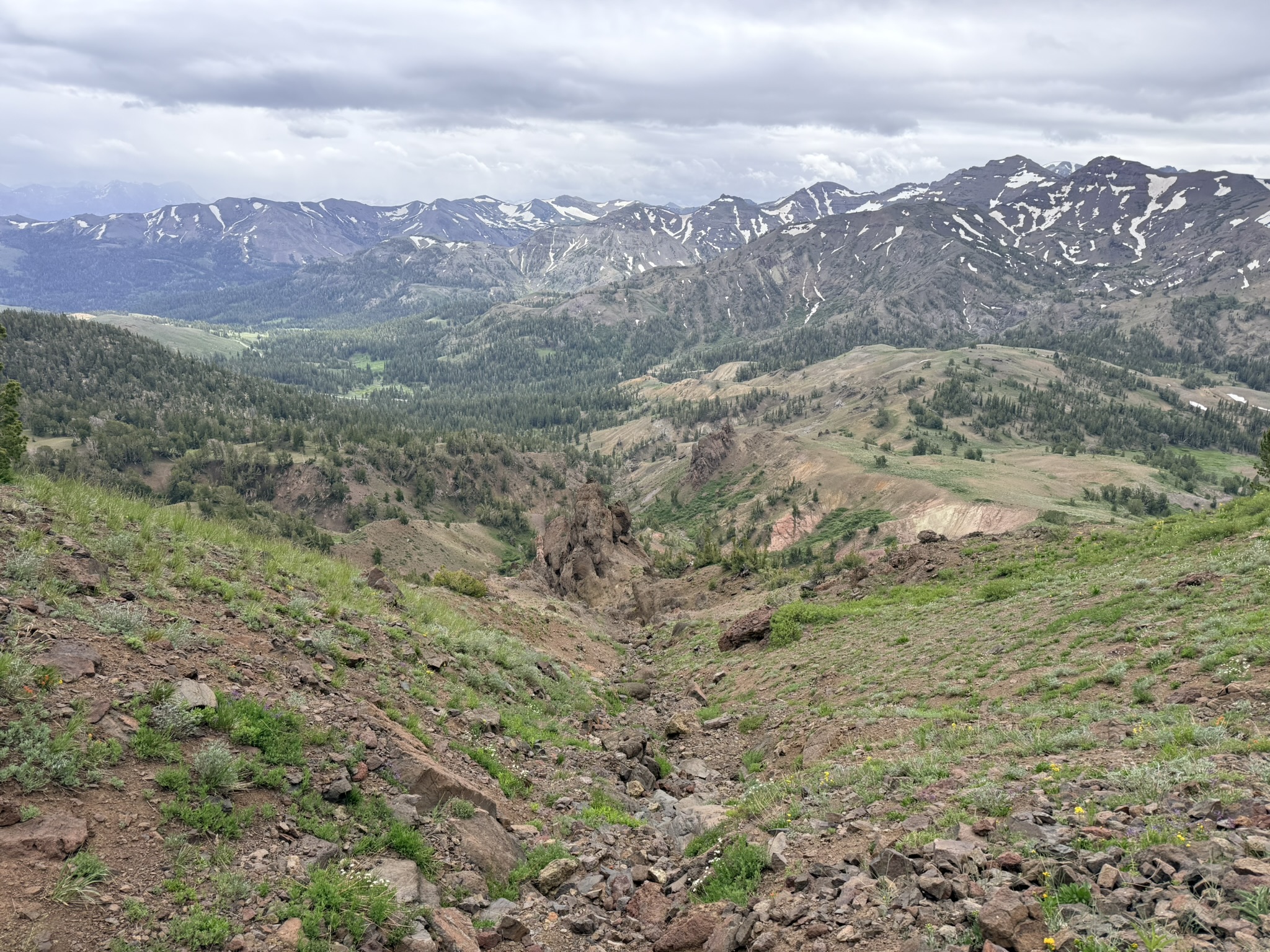 The difference was noticeable almost immediately.
The trail out of Sonora Pass was smoother than anything I had hiked in the Sierra. Instead of constantly walking from rock to rock, I found myself walking long stretches of dirt trails through forests and open meadows. The unevenness was still there, but the balance was much easier.
There were still alpine lakes scattered throughout the landscape and occasional patches of lingering snow on the north-facing slopes, but nothing compared to what I had experienced further south. The few remaining snow-covered switchbacks were short and easy, and most of the stream crossings could be crossed without much concern.
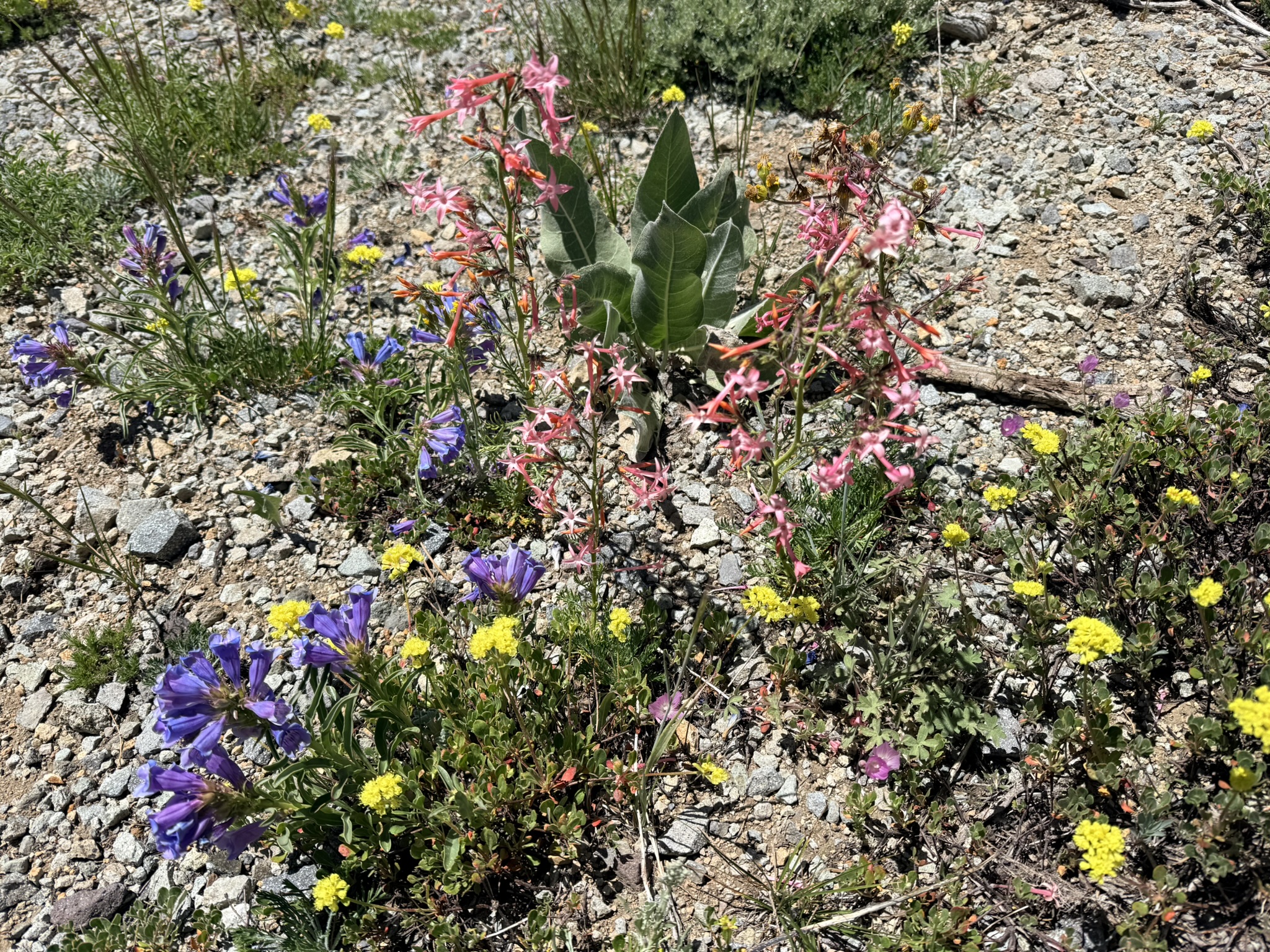
Along the way, I passed colorful wildflower meadows, volcanic ridges, and several lakes that were calm enough to perfectly reflect the surrounding mountains. The landscape was still the classic Sierra Nevada, but now I had the opportunity to appreciate it without constantly thinking about where to place my next step.
Back at Sonora Pass, Nero’s Trail Oasis volunteers greeted hikers with food, drinks, and a place to relax. Like much of my hiking, these magical stops along the trail became some of the few opportunities I had to sit and talk with other hikers. It’s interesting how quickly conversations start when everyone temporarily stands still.
Pass Carson to Echo Summit
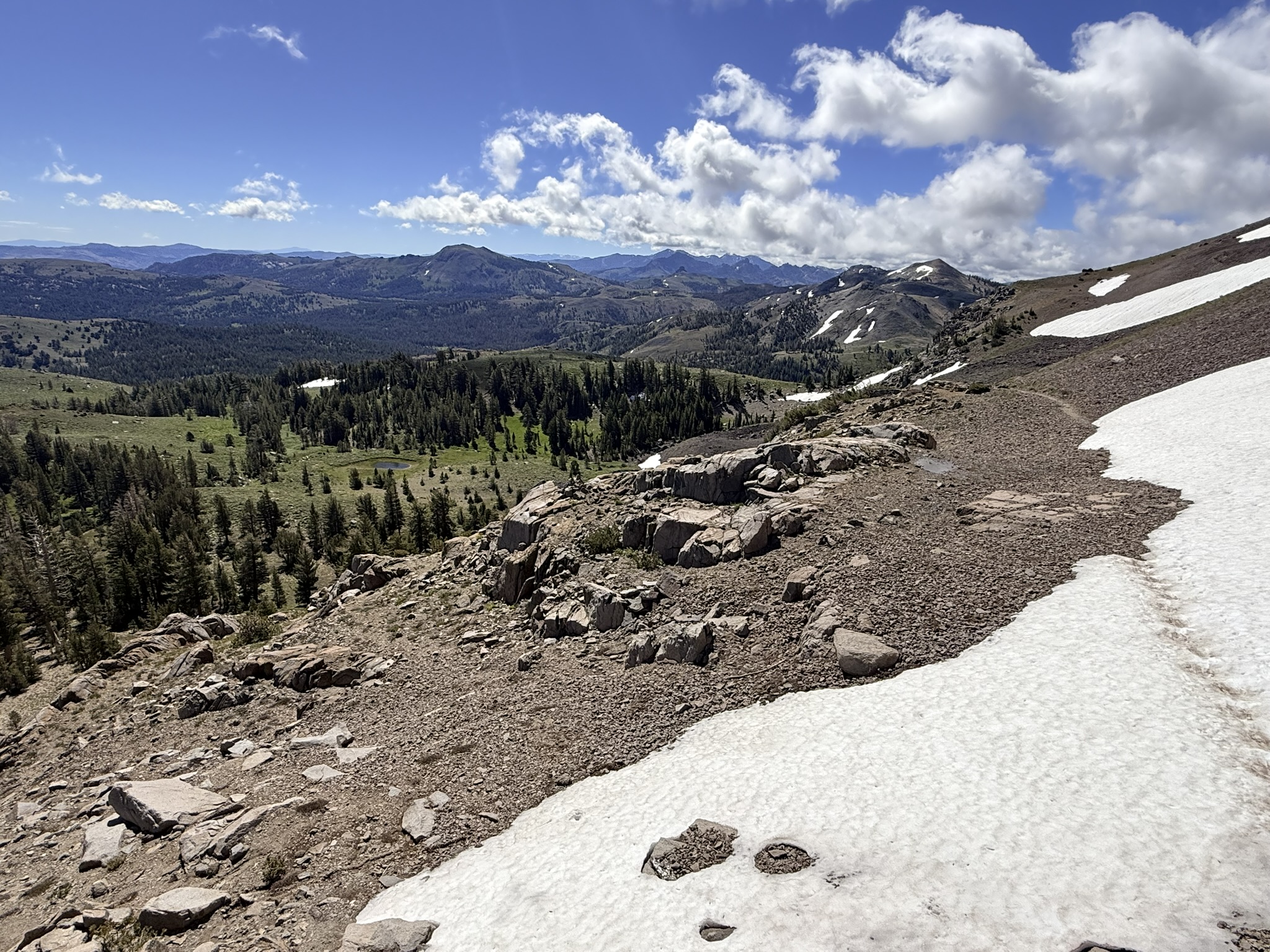 The middle part of the section continued the trend.
The trail ran through dense forests, crossed open granite domes, and often ended next to beautiful alpine lakes. There was still a lot to climb, but it felt more gradual than relentless.
One afternoon a light rain fell that lasted a couple of hours. Instead of becoming miserable, it actually felt refreshing. The cooler temperatures kept the mosquitoes away, which was a welcome change after the previous section. I found myself taking breaks again without being immediately harassed.
At Carson Pass, park rangers handed out snacks and cold drinks to passing hikers. Once again, the magic of the trail was less about the food and more about the conversations. Although I continued to walk alone, these brief stops reminded me that I was still part of a much larger community moving north together.
Echo Summit to Echo Lake
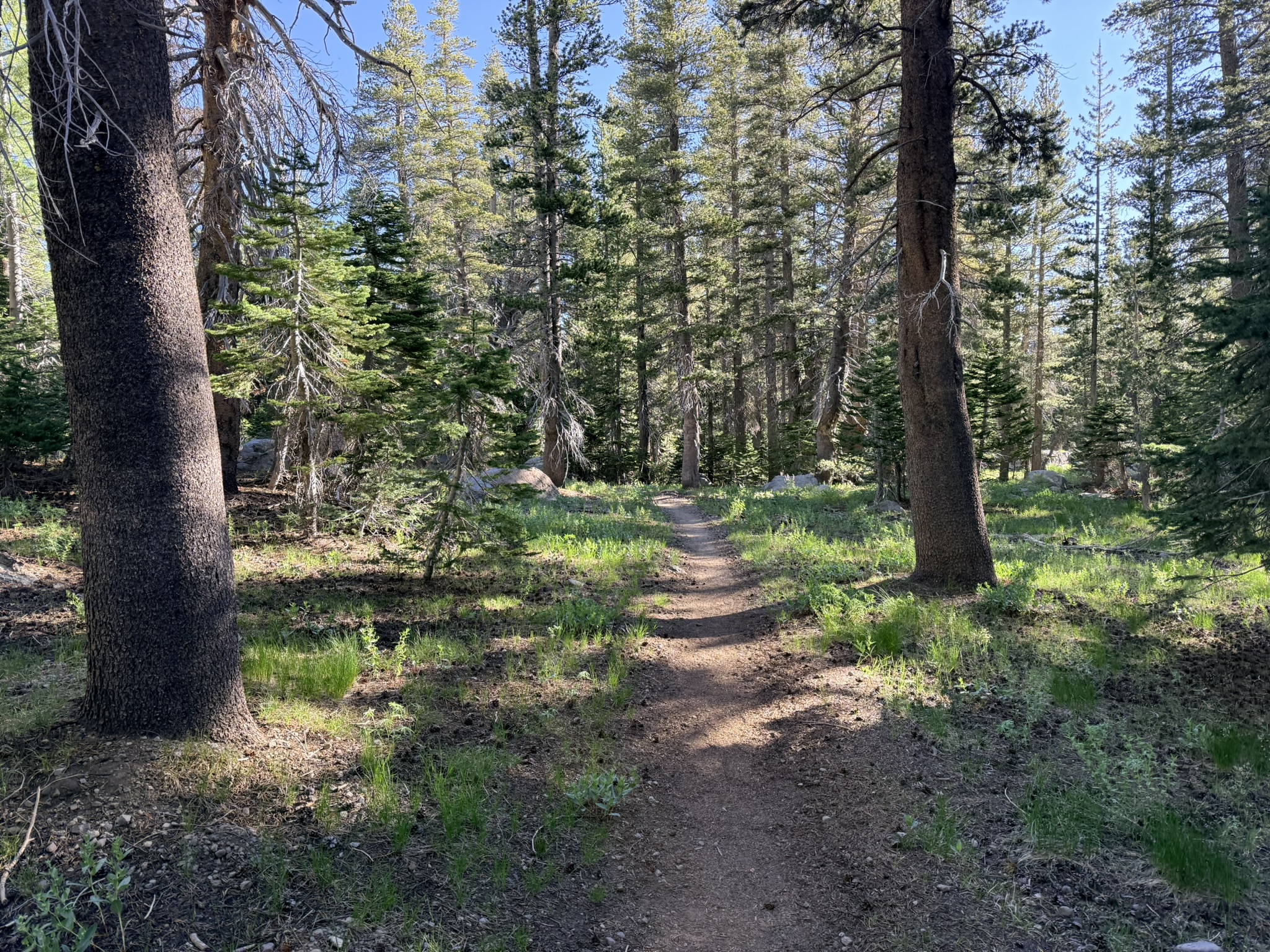 In the final stretch I realized that something had changed.
For the first time since entering the Sierra, I started running again.
Softer tread, gentler slopes and more predictable tread made it possible. Instead of carefully walking among the rocks, he could just run.
It was surprisingly liberating.
Not only because I was moving faster, but because it reminded me how much stronger my body had become over the last thousand miles. At the beginning of the hike, a twenty-mile day seemed intimidating. I was now comfortably covering what had originally been planned as two days of hiking in one push.
The trail itself remained beautiful until the end. Granite outcroppings gradually gave way to thicker forests as I approached Echo Lake, and glimpses of the lake through the trees reminded me that another important section of the Sierra was complete.
- Fewer obstacles
- Snow and difficult stream crossings became much less frequent.
- Hiking felt more efficient and enjoyable.
- Cooler weather
- Lower temperatures dramatically reduced mosquito pressure.
- The rain remained brief and manageable.
- Returning to trail running
- A softer tread made running practical again.
- A reminder of how much my stamina had improved since Campo.
- This is the easiest hike through the Sierra: Expect smoother trails and fewer technical challenges than previous Sierra sections.
- The magic of the trails is common: Sonora Pass and Carson Pass are popular spots for trail angels and volunteers who support hikers.
- Don’t rush: Although the hike gets easier, the scenery is still some of the best on the PCT.
 Section J was not memorable because it was the most difficult.
It was memorable because it reminded me how nice walking can be when I’m not constantly problem-solving.
The Sierra was still spectacular.
The difference was that I finally had the time and energy to appreciate it.
Looking back, this section felt like a payoff for everything that came before. The difficult snow travel, endless stream crossings, and heavy food hauls had slowly transformed into smooth trail, cool weather, and the simple joy of moving through the mountains.
This website contains affiliate links, which means The Trek may receive a percentage of any products or services you purchase using links in articles or advertisements. The buyer pays the same price they would otherwise pay, and their purchase helps support The Trek’s ongoing goal of bringing you quality backpacking information and advice. Thank you for your support!
For more information, visit the About page of this site.