

TO The Catholic high school in New Jersey has an unusual program for its freshman class: a mandatory five-day, 55-mile backpacking trip from High Point State Park in New Jersey to Delaware Water Gap on the Appalachian Trail, supported by adults but guided by the students themselves.
Saint Benedict Preparatory School in Newark, New Jersey, operates under a peer-led governance model in which student leaders take responsibility for managing much of daily school life: monitoring attendance, leading morning assemblies, managing the schedule, and even handling disciplinary issues.
Photo: Michael Scanlan, courtesy of St. Benedict’s Prep.
That emphasis on student leadership extends to the annual rise of freshmen. As unorthodox as Project Backpacking may be, St. Benedict’s has been running the program successfully for over 50 years at this point. The school’s approach to learning has gained national attention: it was featured in 60 minutes in 2010, and more recently, the Backpacking Project was the subject of a segment on CBS News.
“Every year at graduation, our student speakers reference Project Backpacking as a pivotal moment” in their education, says Dr. Glenn Cassidy, who serves as executive director of the school’s outreach division and is a St. Benedict alumnus. “Students in the coming decades will reference their teammates when backpacking and tell their stories.”
Freshmen spend most of spring training for the five-day hike under the guidance of upperclassmen, who also lead groups of students during the hike itself. Each student has a role to play and receives specialized training for that role, whether it is a navigator, cook, camp specialist, medic, or team captain. Children are not allowed to bring their phones (except for trip leaders, who carry one for safety reasons).
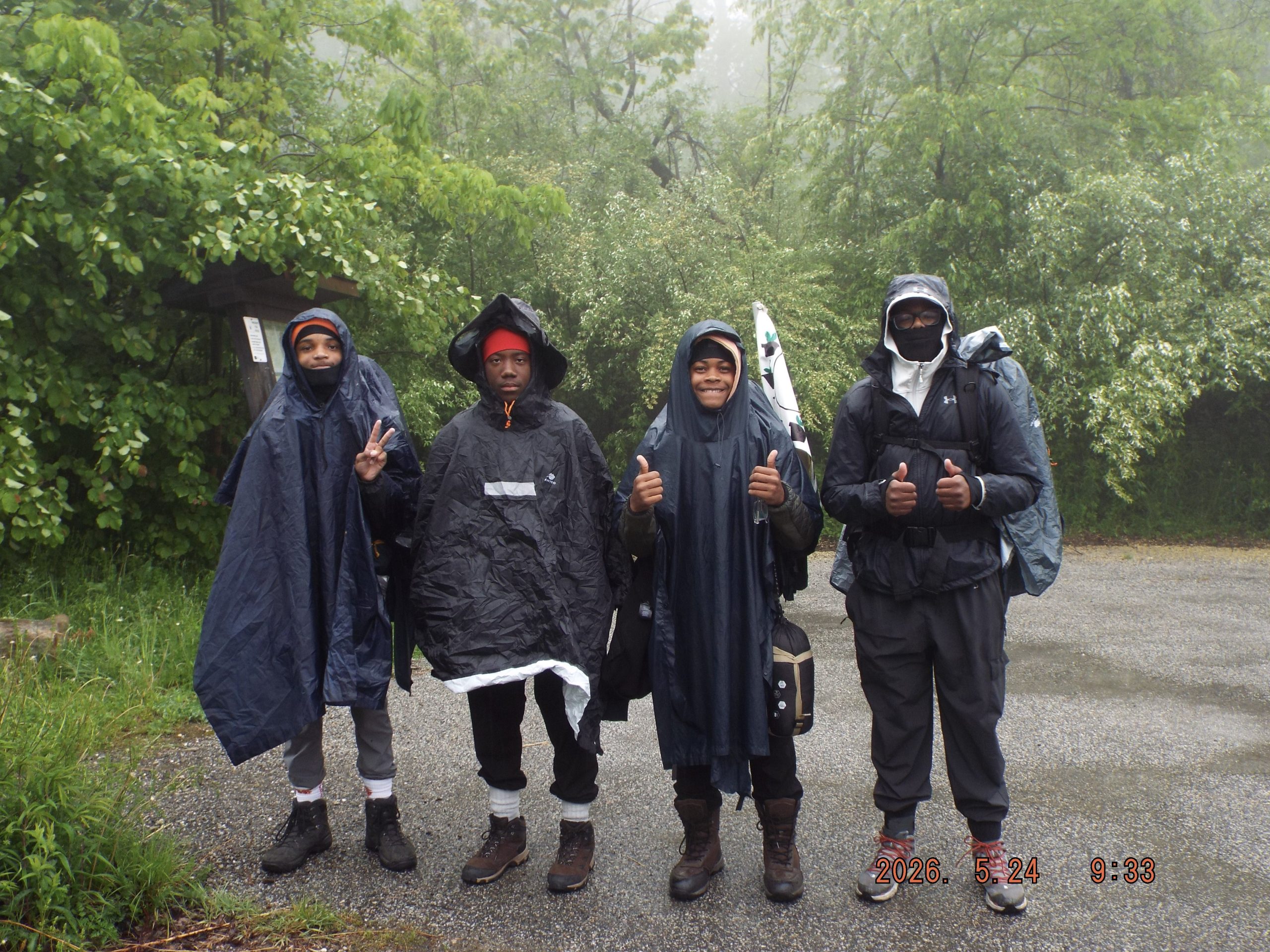
Photo: Michael Scanlan, courtesy of St. Benedict’s Prep.
Carrying out a project of this scale is, as Cassidy says, “a year-round project.” This year’s hike involved about 200 freshmen and seniors organized into 24 teams of eight, plus approximately 15 adult hikers spread out among them. Other students and staff ride in support vehicles parallel to the route, ready to respond if someone is injured, a team loses track or water supplies run out.
The school supplies all of its own water rather than requiring students to purify it from streams, and collects all trash to leave no trace. With so many students on the road at once, the school cannot rely on camps on public lands; instead, program organizers look for private camping areas near the trail. Planning for next year’s hike begins before the current one ends: camps for 2027 are already secured.
Although adults are present on the trail and located nearby, they participate lightly in the hike and the students function largely independently. After all, it’s one of the school’s founding principles: «students step forward when adults step back.»
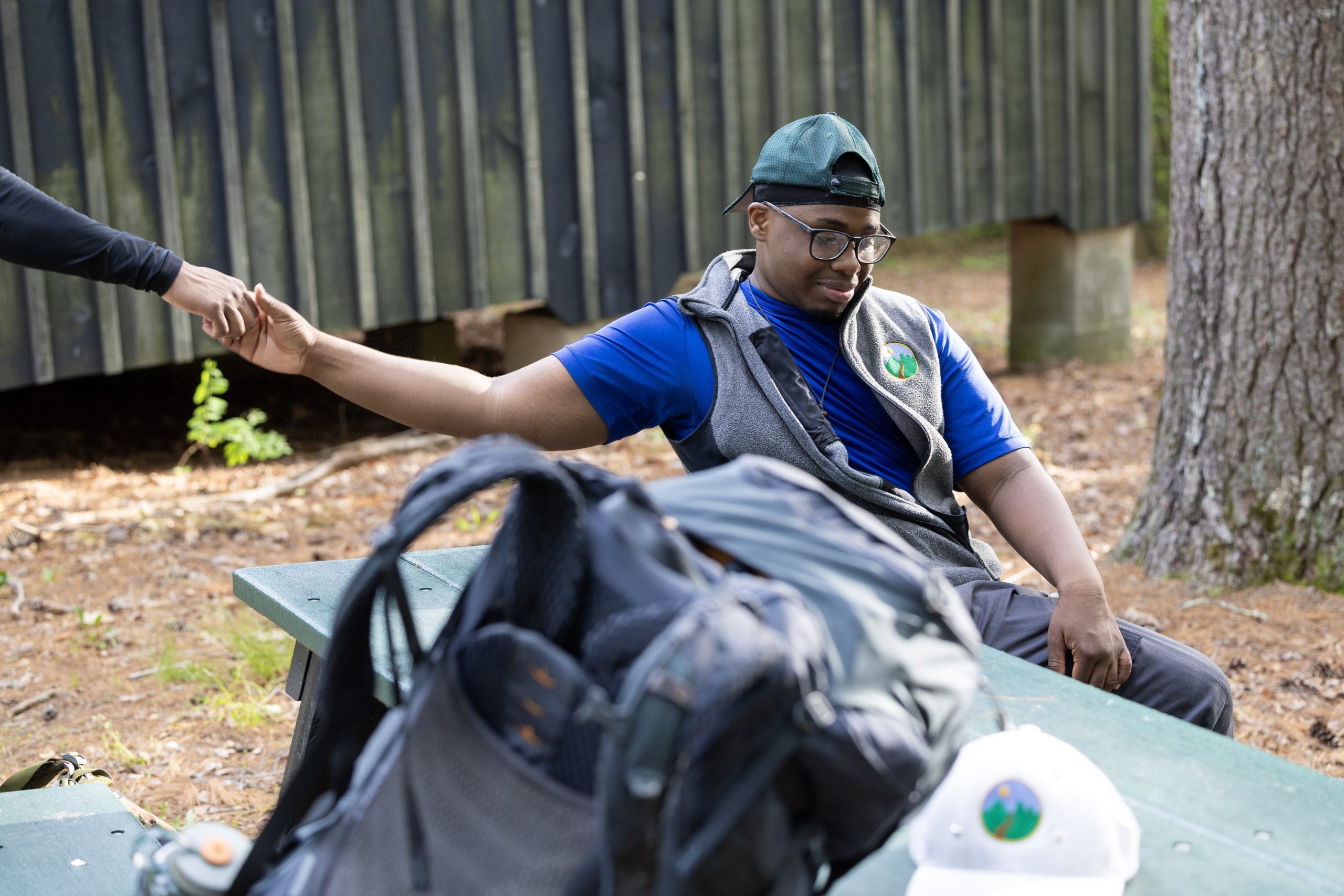
Photo: Michael Scanlan, courtesy of St. Benedict’s Prep.
Through the ups and downs of the road, students learn about leadership, teamwork, ingenuity, determination, and the empowerment that comes from overcoming adversity. And for many, the five-day trip may be their first opportunity to fully immerse themselves in nature, on a hiking trail far from the bustling urban environment of Newark.
Despite the life lessons, not all teenagers instantly head outdoors after a week on what is probably the rainiest long trail in America. Cassidy jokes that some students come home and promise to burn their boots and never return to the woods. But for some, the journey sparks passion. Students who enjoyed the program can volunteer as upperclassmen to coach and lead their own freshman groups in later years.
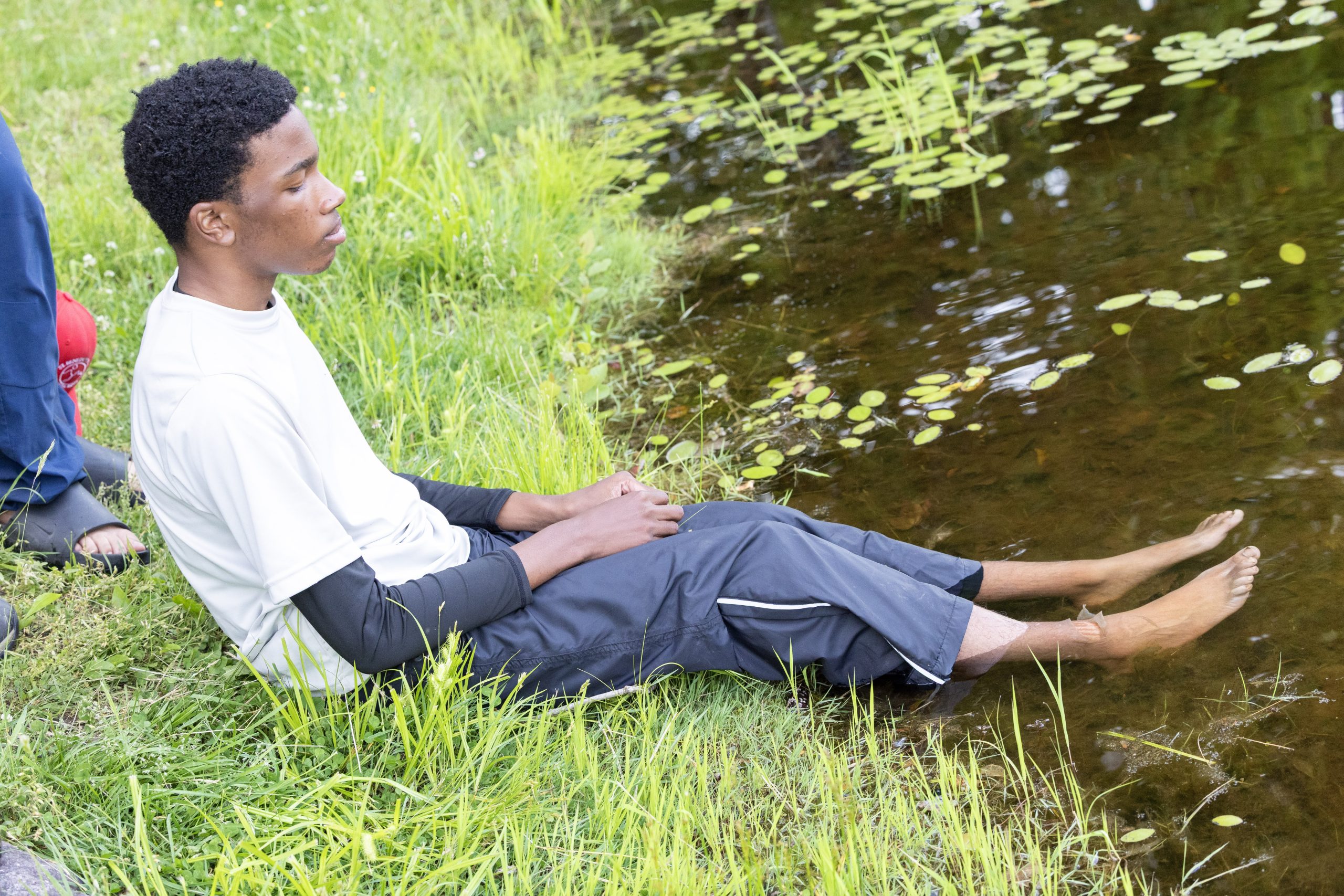
Photo: Michael Scanlan, courtesy of St. Benedict’s Prep.
Some carry their connection with the outdoors beyond their school careers. Just a few weeks ago, Cassidy and her students encountered a St. Benedict student on the road. The student was doing a training hike with Outward Bound, where he now works.
Over the decades, Cassidy estimates that dozens of graduates have worked with outdoor organizations, including Project USE, a Newark-based outdoor education nonprofit. Many more, he says, take the lessons of the road into their careers in schools and organizations that serve young people.
St. Benedict’s is not the only institution to recognize the educational potential of long-distance walking: Emory and Henry College’s Semester by trailFor example, it allows students to earn academic credit for hiking the Appalachian Trail. But as Cassidy told CBS News, his school’s Backpacking Project is probably unique, not only because it focuses on much younger students and is a required part of the first year, but also because of the degree of autonomy that is given and expected of those students.
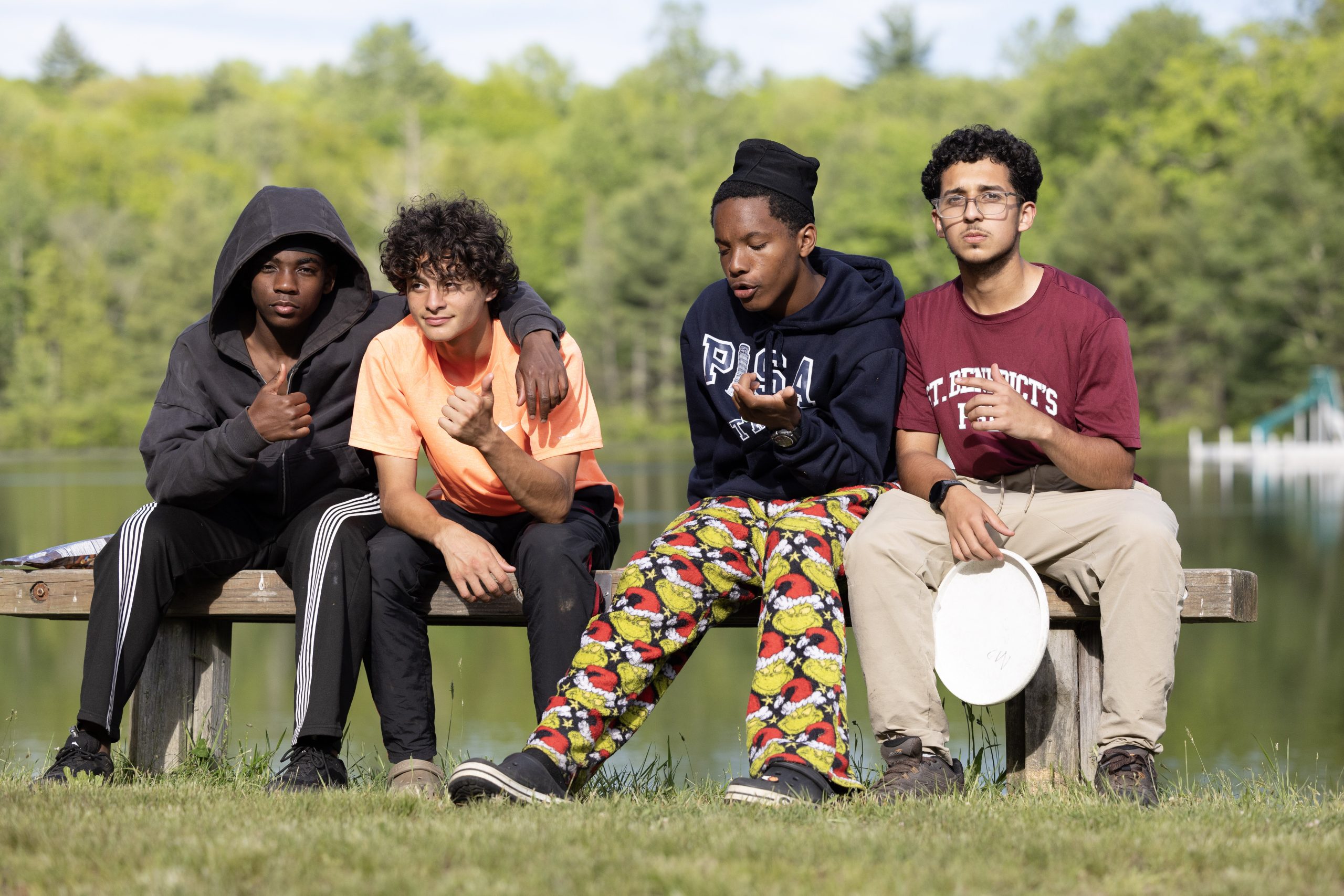
Photo: Michael Scanlan, courtesy of St. Benedict’s Prep.
That emphasis on student independence has been fundamental to the Backpacking Project since its inception. St. Benedict’s started the Backpacking Project in 1973 as an experiential learning option for what Cassidy describes as the school’s «roughest students.» The program itself was also a bit complicated back then. The monks who ran it had little more experience in hiking than their pupils.
“It was, by their description, a miracle that they made it,” Cassidy says of that first group. Father Mark Payne joined the school two years later and took over the program; Payne had significant scouting experience and largely made the program what it is today.
Payne was Cassidy’s predecessor at St. Benedict. Now, Cassidy encourages educators with a passion for the outdoors to consider getting involved at school. “We would love to find outdoor people who find this interesting, who are also English, math, or history teachers,” he says. «Someone has to take this show away from me at some point. I’ve been doing it for a long time.»
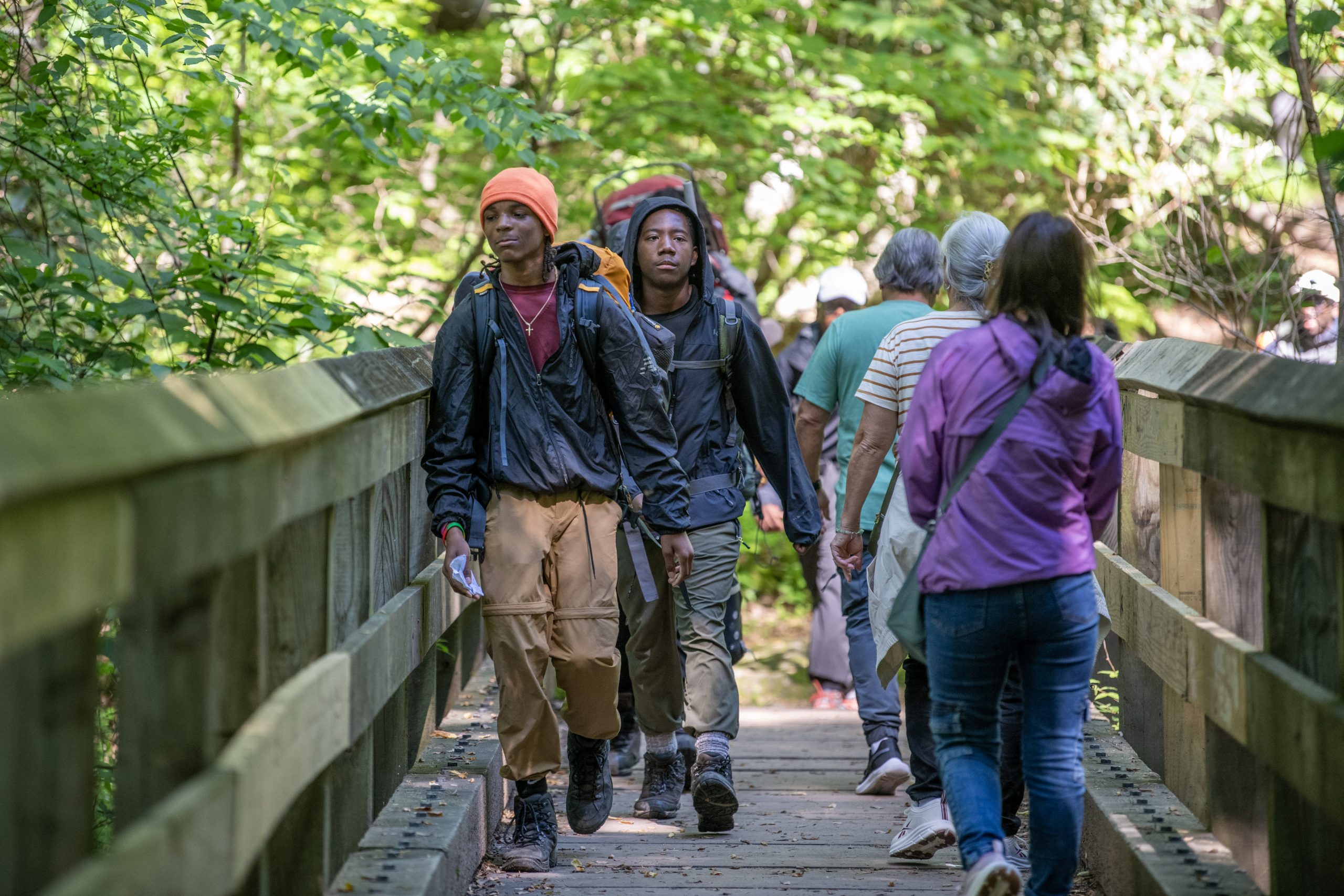
Photo: Michael Scanlan, courtesy of St. Benedict’s Prep.
Along the way, St. Benedict groups inevitably encounter curious hikers. «Most of them are extremely receptive,» Cassidy says. «When we explain it, most people say, ‘This is great. I’m glad you’re doing this.'» He acknowledges that some are less enchanted by the constant flow of teenagers, but they are the exception.
After all, for most hikers, the appeal of the program is easy to understand. Lessons learned on a rain-soaked, mud-splattered trail have a way of sticking with people. Whether students pursue careers in outdoor education, return years later as volunteer leaders, or abandon outdoor activities altogether, the experience is one that many carry with them long after the hike ends.
Featured Image: Michael Scanlan, Courtesy of St. Benedict’s Prep

:max_bytes(150000):strip_icc():format(jpeg)/casey-anthony-then-and-now-061526-0d742938caea4e06996818754da5cde7.jpg?w=238&resize=238,178&ssl=1 "Caylee Anthony fue vista con vida por última vez hace 18 años. Esto es lo que le pasó a Casey Anthony tras ser absuelta de su asesinato")


:max_bytes(150000):strip_icc():format(jpeg)/casey-anthony-then-and-now-061526-0d742938caea4e06996818754da5cde7.jpg?w=100&resize=100,75&ssl=1 "Caylee Anthony fue vista con vida por última vez hace 18 años. Esto es lo que le pasó a Casey Anthony tras ser absuelta de su asesinato")

/https://tf-cmsv2-smithsonianmag-media.s3.amazonaws.com/filer_public/dd/1e/dd1ed3fd-d5ac-4a92-8ef4-038416e7a353/smithmag-comics3.jpg?w=100&resize=100,75&ssl=1 "Las asombrosas historias reales de los creadores de cómics estadounidenses, desde ‘The Yellow Kid’ hasta Superman y los webcomics
|")


:max_bytes(150000):strip_icc():format(jpeg)/prince-george-Wimbledon-2025-110625-1223536e490e4ffca0a504f6a1473af0.jpg?w=100&resize=100,75&ssl=1 "El príncipe George irá al Eton College, al igual que su padre, el príncipe William")
