
North Carolina greeted me with rain.
Until then I had not had a “bad” day and was able to stay dry. However, after crossing the border on that dreary day and toasting Georgia’s kindness with a can full of Yuengling, the rain turned from tolerable showers to heavier raincoat-worthy drops and, finally, to permeable moisture. I arrived at the shelter and decided I was going to spend my first night sleeping there instead of camping outside. I immediately put on my dry thermals and hung my hiking clothes to dry. The next morning it was cold and wet.
Days later, I woke up at camp with the same people I had camped with since arriving in North Carolina: a U.S. Army retiree and her friend, then Melchizedek, whom I had met in Georgia. The forecast called for rain and I got up very early, hoping to make it to the 100 mile mark at the Albert Mountain Fire Tower before the storms predicted for the afternoon. I hurried to pack up my camp in the dark, but was distracted by an adorable salamander I saw in the red light of my headlamp. A gust of wind caught my tent and started to blow it away, but I caught it just in time.

After packing up, I went to the shelter picnic area and had breakfast and coffee with my army vet friend before leaving. It was at that moment that I realized my favorite hat was missing. I went back to my tent site and looked everywhere, but after a while, I was sure it had been blown away by a gust, just like my tent almost did.
I finished breakfast and the raindrops began to hit the roof of the shelter. «Great,» I said.
Putting on my Frogg Toggs and holding my Montbell umbrella, I ventured out into the rain. However, instead of beating the storm, I headed straight into it, hours ahead of schedule.
On a steep, rocky climb up Albert Mountain, I got even more soaked than when I crossed the border. Luckily it was a warm rain so I kept going, just a little worn out. With the rocks slippery, I decided it was best to put away the umbrella and concentrate on using my trekking poles for balance. However, I kept the umbrella accessible in an outside pocket of my backpack, ready to use at a moment’s notice.

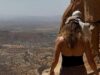
Finally, I climbed the mountain and made it a goal to reach the fire tower before 10 am to beat the storm predicted at 11 am that never came. Fortunately, by then the rain had let up and the previous storm had passed. I was surprised to see that the clouds enhanced the scene rather than blocking it, so I climbed the tower and took some photos of the view.

Although the tower itself had graffiti indicating it was at mile 100 of the Appalachian Trail, my pedantic self couldn’t ignore that it was only at mile 99.9 in Farout. I ended up waiting until Farout reached 100 so I could celebrate by building a “100” out of sticks.

The rain was on and off for the rest of the morning into the afternoon, so I double checked to make sure my umbrella was handy and continued down the trail. One change I noticed from Georgia to North Carolina was that there were a lot more rhododendrons and some of them filled the trail a little more. I kept brushing against them and getting caught as I passed.
An irony, since the sky saw fit to keep throwing water at me, was that I got quite thirsty going up the hills, so I emptied my water bottle a couple of times. I stopped at a stream to take off my pack, eat a snack, and filter water.
When my break was over, I checked my pockets and realized my umbrella was missing. I guess it had gotten caught on a rhododendron branch and slipped out of my backpack.
At that point I still wasn’t sure that the umbrella was an item I would continue walking with, but it was one of the last things I had bought in Okinawa, my home for 13 years, so I had a sentimental attachment to it. Having the option of keeping it or sending it home taken away from me was too much, and my mood went from sour to sour.
I continued on, heading to the Rock Gap Shelter, which was to be my final destination of the day. I was hoping to have a phone signal because I wanted to just sit in the shelter and watch NHK’s Grand Sumo Highlights and leave the day behind.
My internal pity party intensified with every winding road, but the rain eased again. I passed a group of day hikers: eight students dressed in gym clothes instead of hiking clothes and smelling of deodorant, perfume, and shampoo. It was such a strange smell to me.
«Do you know how far the tower is?» asked a young man in the group.
«It’s a few miles up,» I said.
One of the ladies smiled widely and said, «Thank you!»
Shortly after, I arrived at the shelter and saw that it had a toilet and a water fountain, but there was no phone signal. Someone’s team was inside the shelter and I was curious who my new roommate would be.

As I inflated my air mattress, a colorful character approached and greeted me happily. He was an older man with a long white beard and a vibrant rainbow shirt printed with a marijuana leaf pattern.
«Do you want a beer?» asked.
«After the day I’ve had? Yes, I would.»
I learned that the name of the man on the trail was Listener, and that he was clearly one of the many living legends of the Trail.

Before we were there long, my campmate Melchizedek also arrived and the three of us were sharing stories and having a great time. It made it easier to put the day’s woes behind me, and it was even better to know that the next day I would make a nero (almost zero miles) to catch a ferry to Franklin, North Carolina, where I planned to meet my son in town.
That’s how quickly the tides can change on the Appalachian Trail.
This website contains affiliate links, which means The Trek may receive a percentage of any products or services you purchase using links in articles or advertisements. The buyer pays the same price they would otherwise pay, and their purchase helps support The Trek’s ongoing goal of bringing you quality backpacking information and advice. Thank you for your support!
For more information, visit the About page of this site.

:max_bytes(150000):strip_icc():format(jpeg)/prince-george-princess-charlotte-trooping-the-colour-061326-3-56b1db7fa7b447009c2c27da046c7a27.jpg?w=238&resize=238,178&ssl=1 "El vestido de la princesa Charlotte presentaba un pequeño detalle que la ayudó a coordinarse con Kate Middleton y sus hermanos.")





:max_bytes(150000):strip_icc():format(jpeg)/prince-george-princess-charlotte-trooping-the-colour-061326-3-56b1db7fa7b447009c2c27da046c7a27.jpg?w=100&resize=100,75&ssl=1 "El vestido de la princesa Charlotte presentaba un pequeño detalle que la ayudó a coordinarse con Kate Middleton y sus hermanos.")