

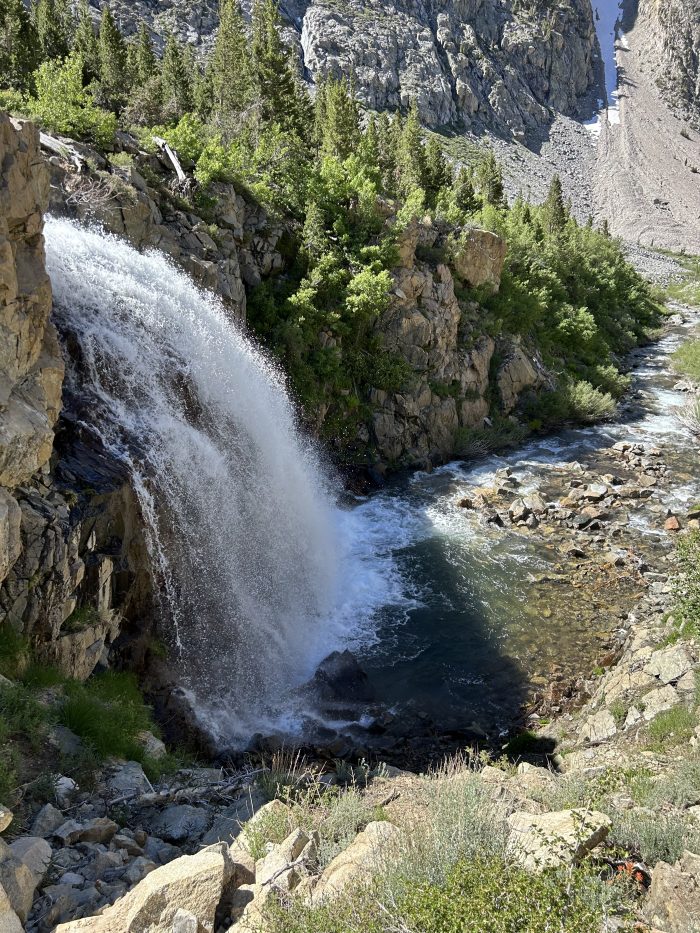
Although I am in a better mood now, I reached a very low point in the hike on this last stretch. A friend I thought highly of told me that he sees me as the stray cat in the group of friends. Without meaning to, those words hurt me deeply. I thought about them for days. Seemingly out of nowhere, I was crying to my father. After five years, I was actually crying for the first time in one of the most picturesque places I’ve ever visited.
Apparently I’ve been over-tightening my tent and the zipper has finally broken. My tent is dying after 3000 miles. To top it all off, I came across a very young fawn, who seemed lost from his mother. Curled up, blurry-eyed, breathing slowly, with nothing he can do but pray that his mother finds him.
I felt many emotions, at the same time I tried to assimilate the intense serenity of the valleys and mountains that surrounded me. But apart from my emotions, not much happened during this stage. We took the rhythm of the trail: waking up, doing the snowy pass early in the morning, walking to prepare for the next one the next day. Rinse, repeat. That’s why I want to write about that day to day.
He who gets up early gets the worm
Then I realize it’s four o’clock and I go back to sleep for another hour. Then get up at 5 when there is no more rest because the sun’s rays really appear on the horizon. I uncork the mat, releasing all the air, to avoid falling asleep again. From there it’s time to get dressed, since I sleep in the clothes I walk in, this means putting on socks from the day before. Put on your shoes and I’ll come out of the tent flaps.
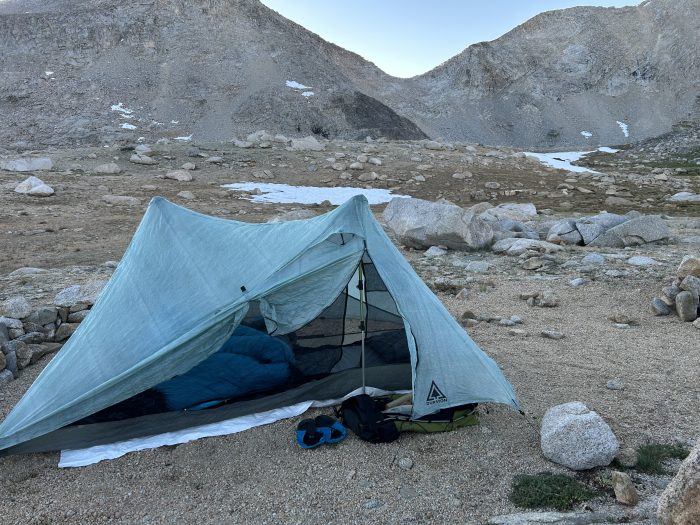
I grab my bear bag from the tree I hung it from, or I just place the bear canister 70 steps away. I haven’t seen bears, but many other creatures that will make a hole in the tent to eat something. From there I take out my stove and place it on top just for the night and breakfast, which is also near the top of the food bag. The food bag is organized so that as I eat, the next food is the one below the one I just ate.
breaking my fast
I break my fast with Pop-Tarts or cookies, an easy 800 calories. I don’t like to boil water in the morning. I could eat and break camp at the same time, depending on how cold it is. If it didn’t rain or the humidity dropped last night, the next task when leaving camp is usually to pack your sleeping pad. Otherwise, it’s trying to dry things that are wet and then packing up the quilt.
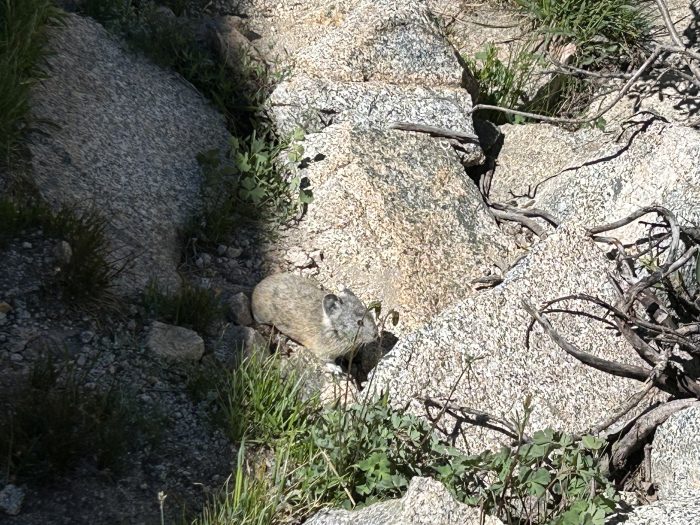
America Pika – A mini bear
Now I grab my dry bag, a black compactor garbage bag, from inside the store, empty it of a few extra items, and line the top of my empty backpack with it. From there I grab the quilt, a sleeping bag without the back half, and shake it clean. Compressing the air from the down, I put it in the trash compactor bag and the bag to the bottom of the backpack.
I quickly put the pillow (after deflating it with the mat), the back sheet, extra toilet paper rolls, extra socks, and extra underwear into the trash compactor bag. These are all items that I really don’t want to get wet. The trash compactor bag will keep everything dry even if it has small holes. And it can be easily replaced once it starts to wear out.
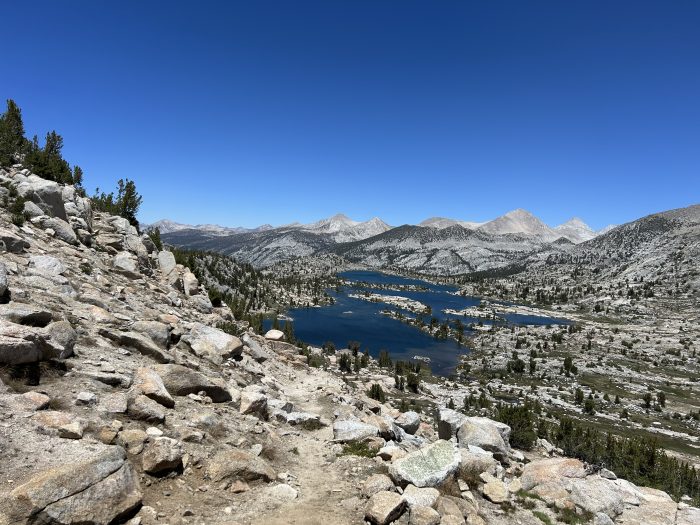
View from Selden Pass
The physics of a backpack
Now, the reason for the sleeping bag on the bottom is because it is the second heaviest thing I carry inside my backpack. Do a quick experiment, take a fairly heavy object, 5 pounds works. Now hold it in front of you, with your arm fully extended, for 30 seconds. Now do the same thing as close to your chest as you can without touching it. You will find that it is easier to hold it close, even without pressing it against yourself.
This is due to torque or a force that is applied outside the center of mass. The farther from the center the force is applied, the greater the torque. For humans, our center of mass is located in our chest, more or less behind our belly button. Since weight is a measure of force, not mass, carrying things further from our center of mass literally makes them heavier. So I fill the backpack with heavy objects low and close to the back.
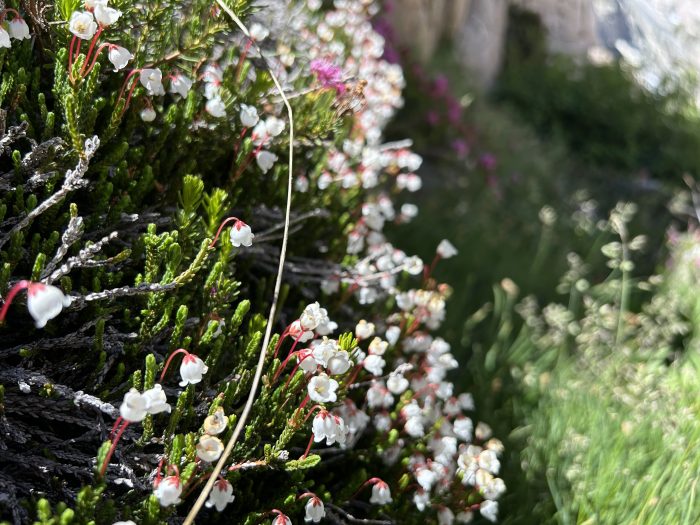
Western moss-heather
A force of habit
Next comes the bag of food, which is usually the heaviest object. Then I flatten and fold my sleeping mat, squeeze all the air out of it, and roll it. This goes behind the food bag, with the cooking kit on top. My battery bank, camping shoes, head net, and rain gear are stored in the space around the stove kit and food bag.
Then I take the tent down, collect and count the stakes, and roll/put the tent into my backpack. Sliding the stake bag to the side. There are few elements that live outside the pack. Water bottles, water filter, Garmin (satellite phone), ground cover and permit. All things I can use during the day. I also carry my snacks for the day in my fanny pack, which holds my lipstick, sunscreen, and flashlight.
That’s it, I might leak water before I go out, but I clip on my fanny pack, I put on my backpack. Tighten the lap belt as much as possible, as the weight needs to be transferred from my shoulders to my hips. Adjust my trekking poles so that my arm forms a right angle when I hold them up. Check if I missed something, walk a few steps and then check again.
we’re leaving
It’s not much, it’s one foot in front of the other. Sometimes it is a strange walk over rocks, over a fallen tree, or wading through a river. Then there’s the occasional walk around a tree, a laundry area, or a door that needs to be opened. But it’s a simple life, just you, nature and your mind.
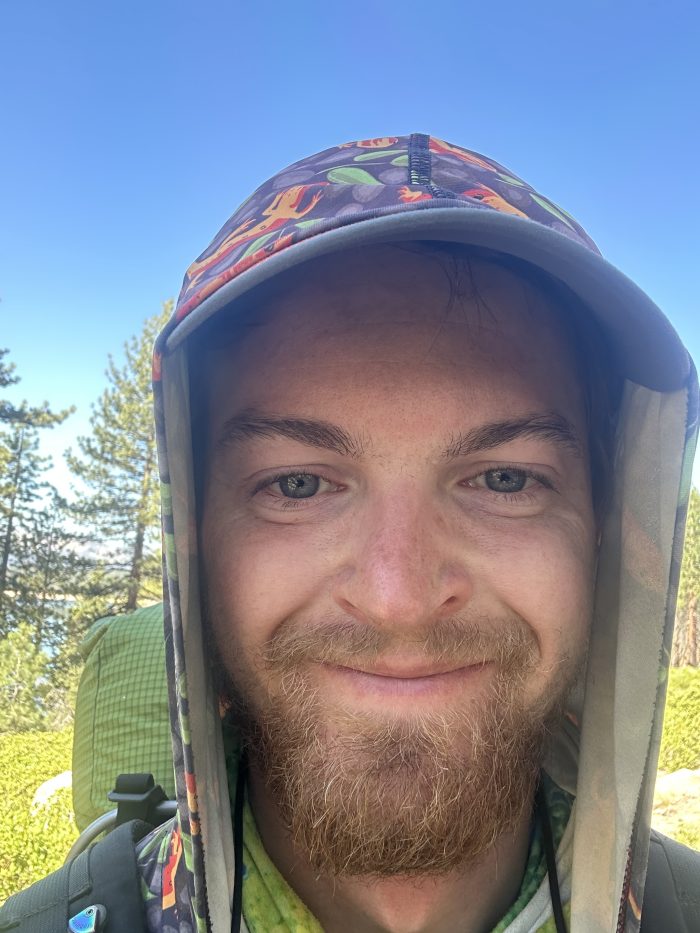
I try to take pictures of everything, but I often forget or just can’t capture the scene properly. But I do take a photo of my face, a video of me walking away, and a video while hiking every day, to compile at the end. That and reapplying sunscreen and filtering water are the only tasks I do during hiking hours.
I try to have a snack every hour of the day, about 200 calories each. This also corresponds to me taking a short break every hour or so. Drink water, eat something, maybe apply sunscreen or take off my shoes and socks to let my feet air out.
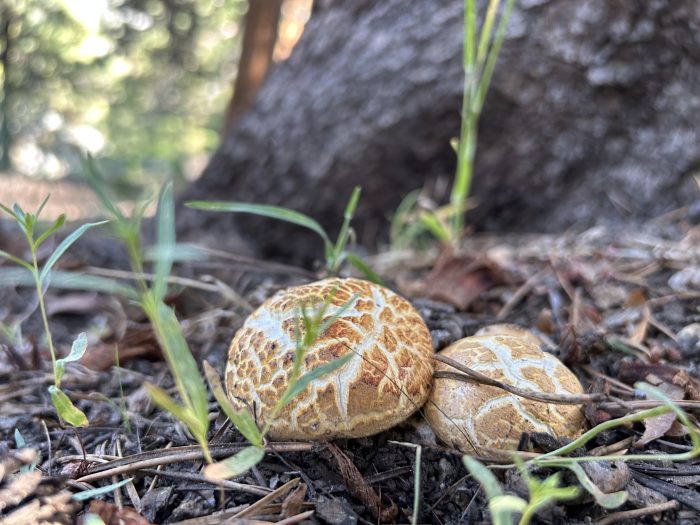
giant sawmill
Don’t eat or read
About once a day, my intestines call me. I try to find a good spot and can hold it for hours before I find one. An ideal location has cover from the trail, is not sloped, and is easy to dig. Either when I can’t and have to choose a non-ideal spot, or when I find a decent spot, I ditch the backpack and pull out my poop gear from the bottom pocket.
I’ll take out my poop kit and a water bottle about 200 feet away. Take out the entire poop kit, screw the bidet to the water bottle, and use the trowel to dig a hole for the cat. The cat hole is usually 6 inches deep, with some width. I do my thing, I’ve gotten better at aiming over the years, and then I plug the hole. From time to time, I take a stick, put a little dirt on it and stir it. It helps the material decompose faster.
I wipe myself with toilet paper, which I then put in a separate ziplock for packing. I take a sheet of soap in my hand. Imagine a bar of soap cut more than paper. I will wash my hands with the water bottle, the bidet giving it pressure with volume. I repack the poop kit, half before hand washing (the dirtiest half) and the other half after (the bidet prevents everything from being packed away sooner). I walk back to my backpack and continue.
Camp Sweet Camp
Around 4 I’ll start considering where to camp, usually it’s where I thought I’d be at the start of the day, but not always. Once I get there, usually before sunset, I’ll start setting up camp.
My backpack is packed, so the top item is usually what I want. First is the store. I spread it out, target one corner, and then squeeze the adjacent corner. At the other end, I’ll grab the two corners and the middle, then pull lightly until I have the most tension. This will square the tent, important with a trekking pole tent.
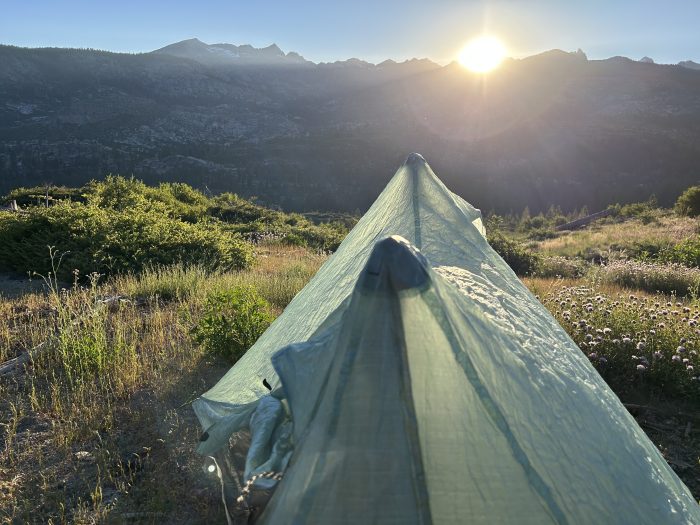
Once set up, I set up the poles, lift them up to give the tent some height, and then unzip it to start on the inside. Then I took out my bag of food and miscellaneous equipment to reach my sleeping mat. I’ll roll it up inside my tent, put on my little inflator, and let it inflate while I deal with the next thing I need to do.
The next step is to remove my compactor bag from the bottom and dig until I find my back blade. While the pad is still inflating, I will throw the sheet back. It slides over the top of the pad and clips around twice the midpoint. At this point the inflator has done all it can, I will remove it and then put the last 5 breaths on the pad.
Then I’ll blow up my pillow, a good 3 breaths actually, and then tuck it into the hood of my back sheet. I will fluff my sleeping quilt before bed too. I pack all my extra clothes and other soft items into the compactor bag and put it at the bottom of my pad. I can put my foot on the bag and that helps keep the pad from sliding down at night.
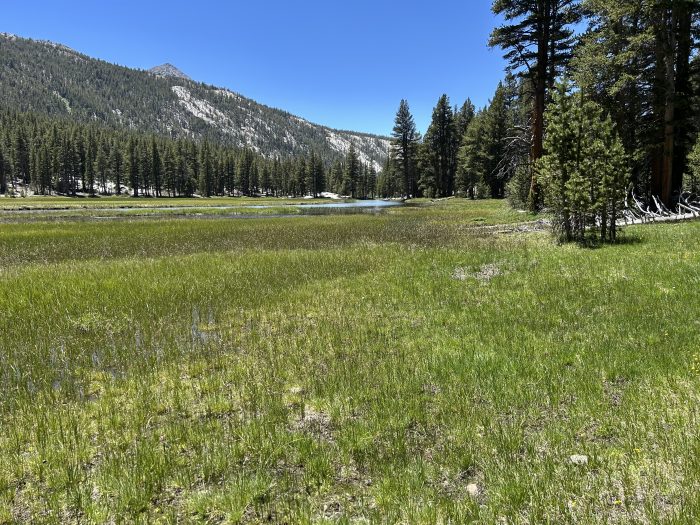
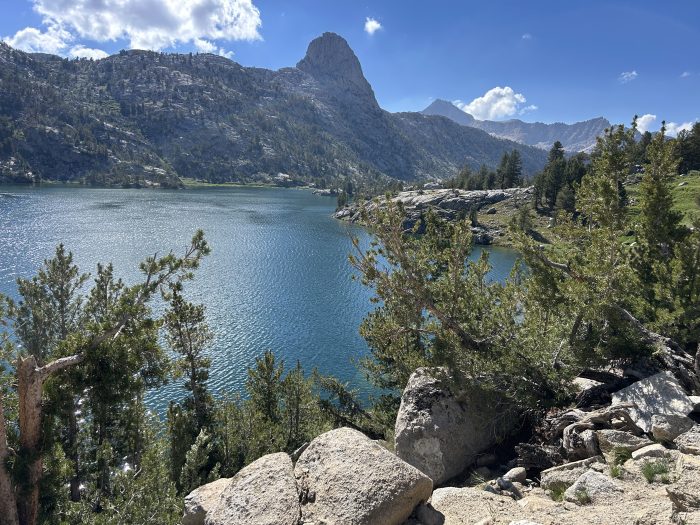
I spent a few minutes enjoying the serenity of this meadow.
go out to dinner
Then I prepare dinner and hope to find a good table and a good chair, but it’s usually a short stone and dirt. My stove kit fits inside the fuel container, burner, scraper, titanium pot and fork. The carabiner on my Garmin also has a ferro rod that I use to light the stove. The burner screws onto the fuel canister, I will pour water into the pot, turn on the gas, light it with the carabiner and the water will start to boil.
It’s usually just water or water and ramen. I’ll use the hot water to make instant mashed potatoes (my trail name is Mash, after all) or Knorr sides. Both can carry hot water in their original bags, so you save on cleaning. No matter what I eat, it doesn’t take me long to “cook” and eat it. Since I eat two packages, dinner is about 800 calories.
After dinner, dessert arrives immediately. My goal is to consume something high in protein and fat compared to my high carb diet. Fat burns longer and protein is needed for recovery, both good for you during sleep. They are usually peanuts. Either as raw scoops of peanut butter or as Snickers bars.
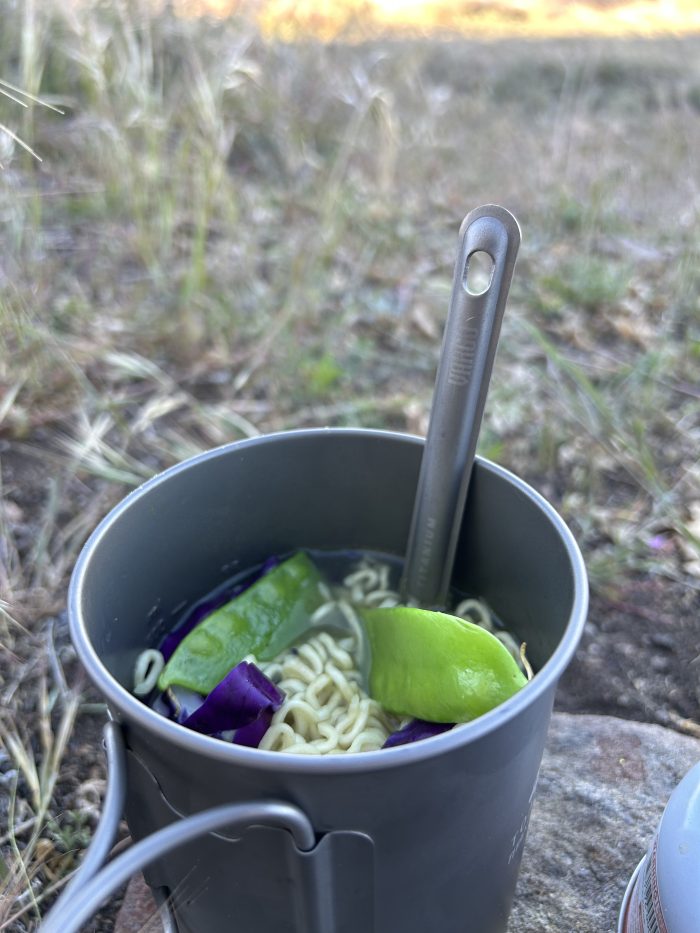
before going to bed
After dessert, I clean and pack the kitchen kit. I filter water, I may be thirsty in the middle of the night. I brush my teeth, spit the waste into my garbage ziplock, which is replaced in each town. But yes, I pack everything except number 1 and number 2. I’ll take my food bag, with the cooking kit inside, and tie it to a tree. My food bag is grizzly bear proof so no need to hang it up. I’ll take number 1 before entering the store, avoiding having to get up in the middle of the night.
I’ll go into my tent, zip it up, and get into the quilt. I will stuff my pillow with my fleece to give it a little more height and fluff it up. Then I’ll journal until I fall asleep, although journaling is harder than falling asleep. And the next day the same thing happens, with changes in the scenario and logistics. But it’s simpler than normal modern life, that’s for sure.
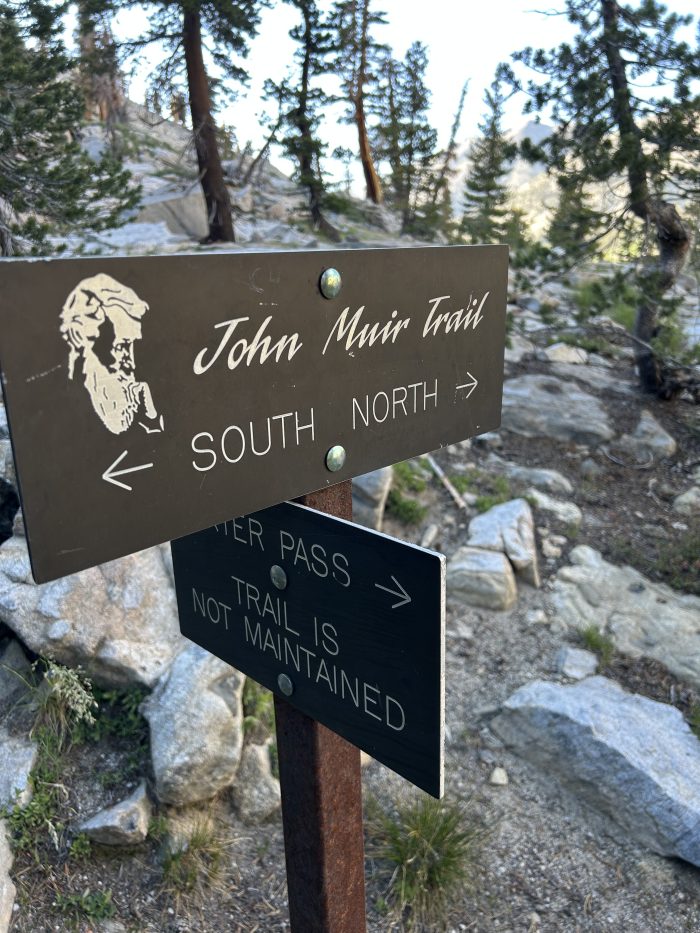
PCT overlaps JMT
:max_bytes(150000):strip_icc():format(jpeg)/Kelsea-Ballerini-Marshmello3-62626-69baa65959164186927df5270b2573f7.jpg?w=238&resize=238,178&ssl=1 "¡De abajo hacia arriba! Kelsea Ballerini y Marshmello lanzan Summer Banger «Another Drink»")



:max_bytes(150000):strip_icc():format(jpeg)/Kelsea-Ballerini-Marshmello3-62626-69baa65959164186927df5270b2573f7.jpg?w=100&resize=100,75&ssl=1 "¡De abajo hacia arriba! Kelsea Ballerini y Marshmello lanzan Summer Banger «Another Drink»")