

Everyone’s talking about Kennedy Meadows South.
For months before I started the Pacific Crest Trail, it existed in my mind as one of those legendary places. A milestone. An entrance door. The place where the desert ends and the Sierra begins.
Then, suddenly, it was there.
Every PCT hiker leaves their mark at Kennedy Meadows South before entering the Sierra.
After the cowbell, the cheers, the handshakes and the cold beers, there wasn’t much left to do but enjoy it. We spent another day at Kennedy Meadows South, soaking up the atmosphere that makes it one of the most iconic stops on the entire trail. There were hammocks, cornhole games, and hikers gathered under canopies to share desert stories. That night a bonfire attracted more than twenty hikers while Kill Bill played on a projector under the stars.
It looked like a summer camp for hikers. More than anything, it felt like anticipation. The Sierra was finally here!
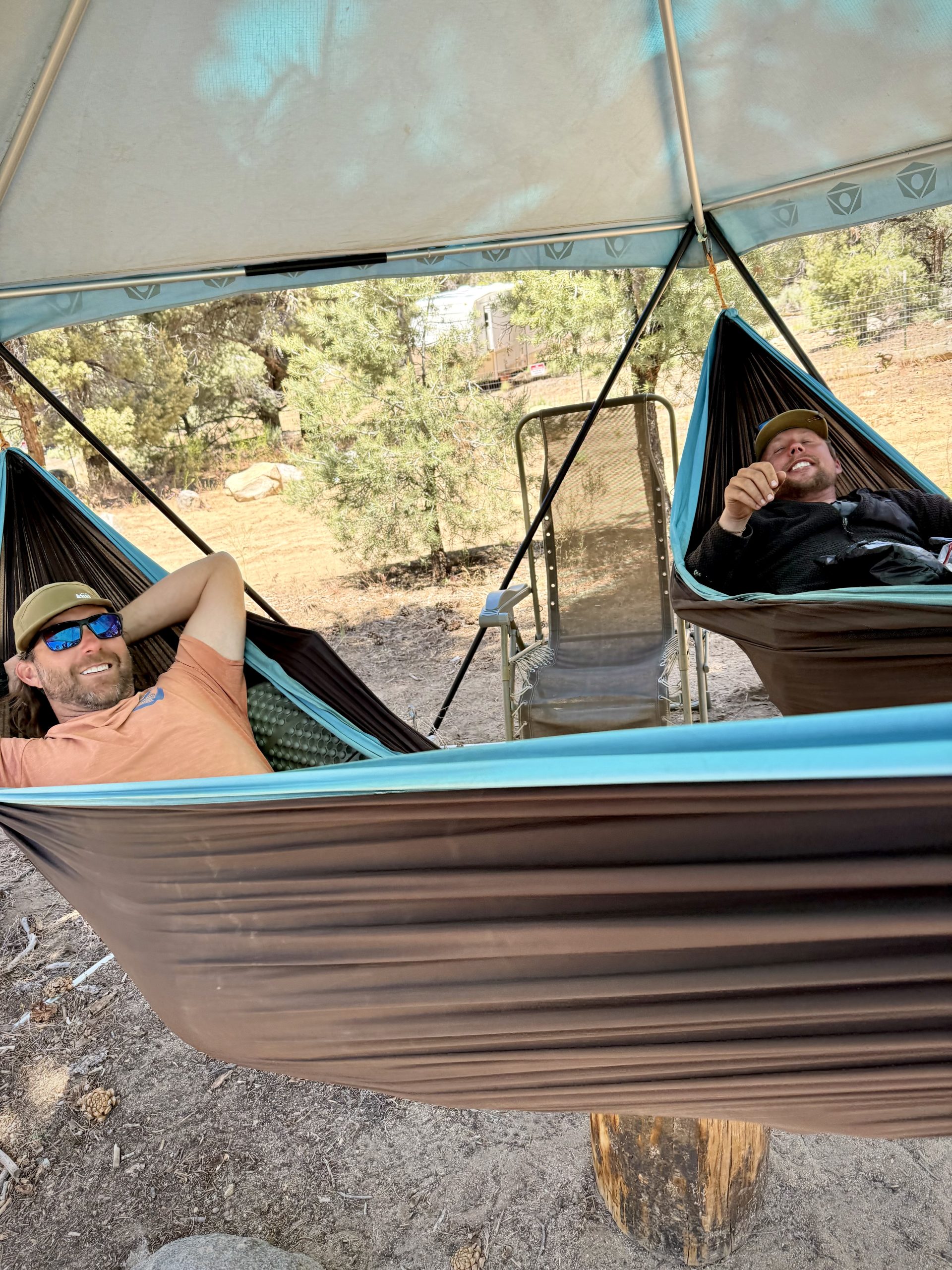
Relax at Kennedy Meadows South before heading into the Sierra.
Entering the high country
The first few days beyond Kennedy Meadows felt different than anything before. The desert was defined by water hauling, heat, and long stretches of dry trails. Rivers, meadows, granite peaks and snow-capped mountains suddenly appeared on the horizon.
Our first night out was along the South Fork Kern River near Monache Meadow. After a warm day of hiking, I spent twenty minutes floating in the river before drying off in the sun.
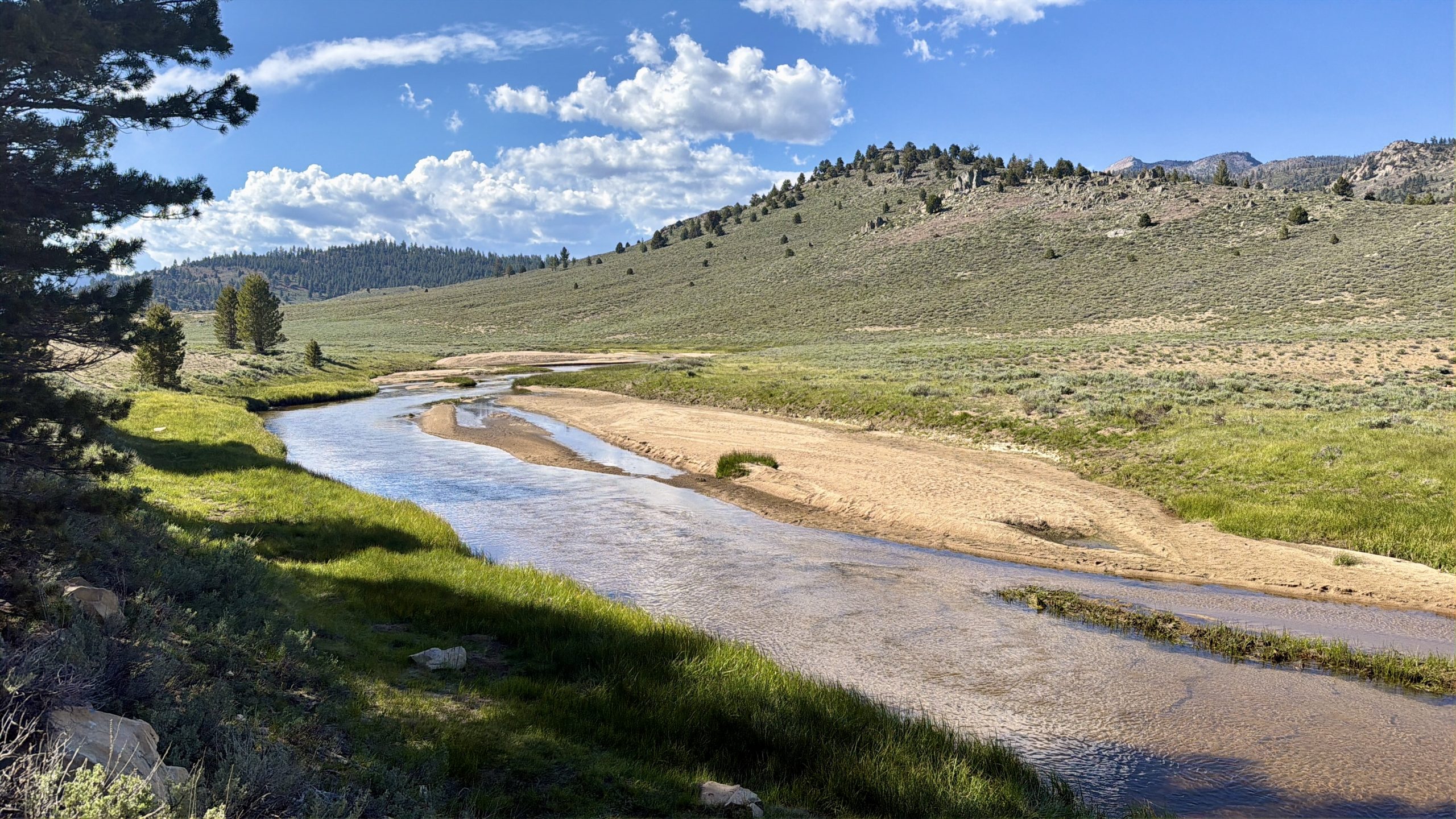
The first real afternoon in the Sierra felt like it was worlds away from the desert.
Later that night we watched the sunset from the bridge as the river flowed beneath us. The rhythm felt different. The landscape felt different. Even the air felt different.
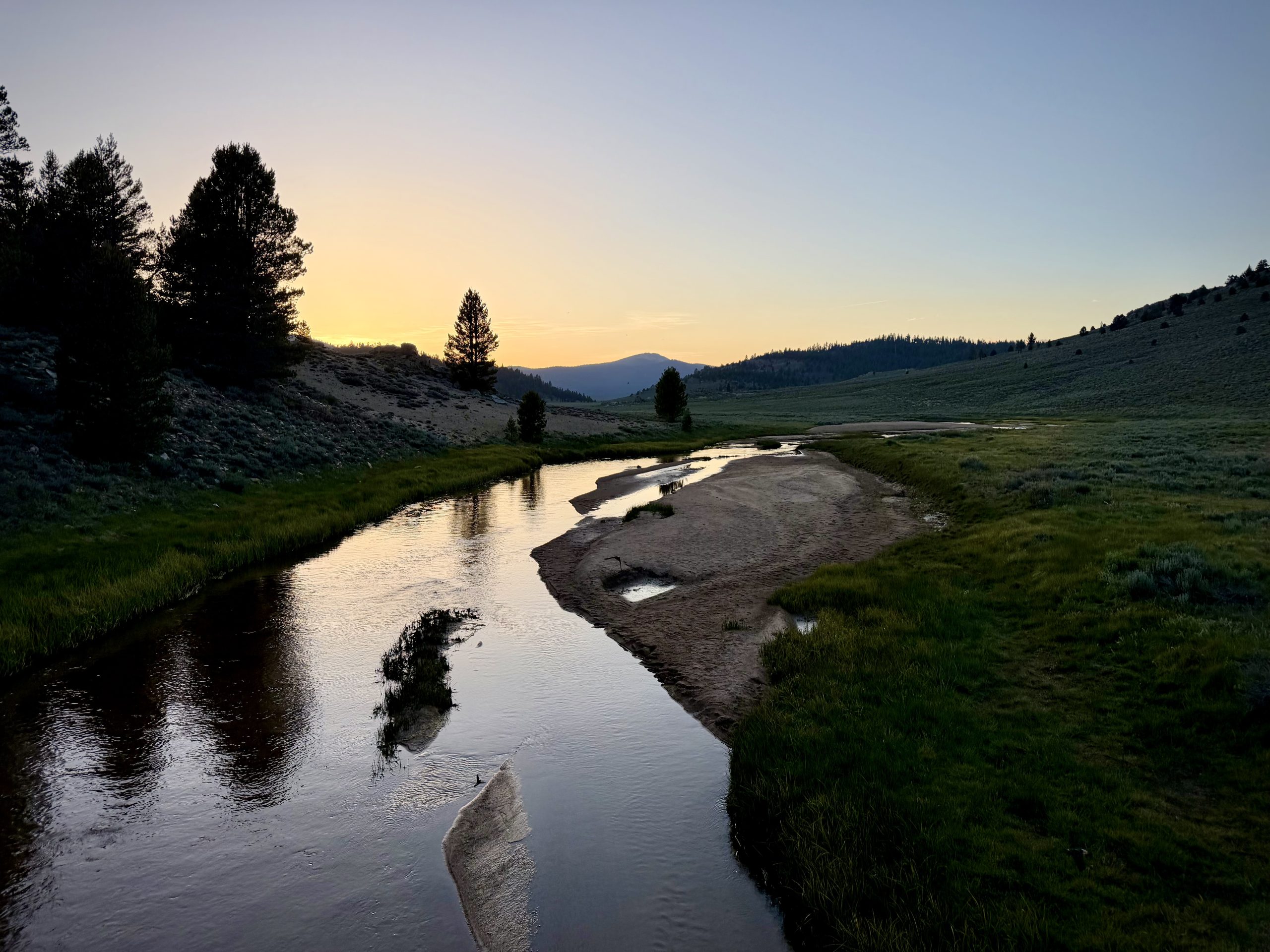
Monache Meadow gave us our first true Sierra sunset.
For the first time since Campo, we felt as if we had entered a completely new path.
The next day brought one of the biggest climbs since I entered the Sierra. Almost 5,400 feet of elevation gain. Mosquitoes invaded all water sources, turning every break into a battle. Despite the mistakes, the landscape continued to improve with each kilometer. The further north we traveled, the more familiar the mountains became. Soon I could see Mount Langley. Circus Peak. The high country I had spent years exploring. I wasn’t discovering these mountains. I was coming back to them.
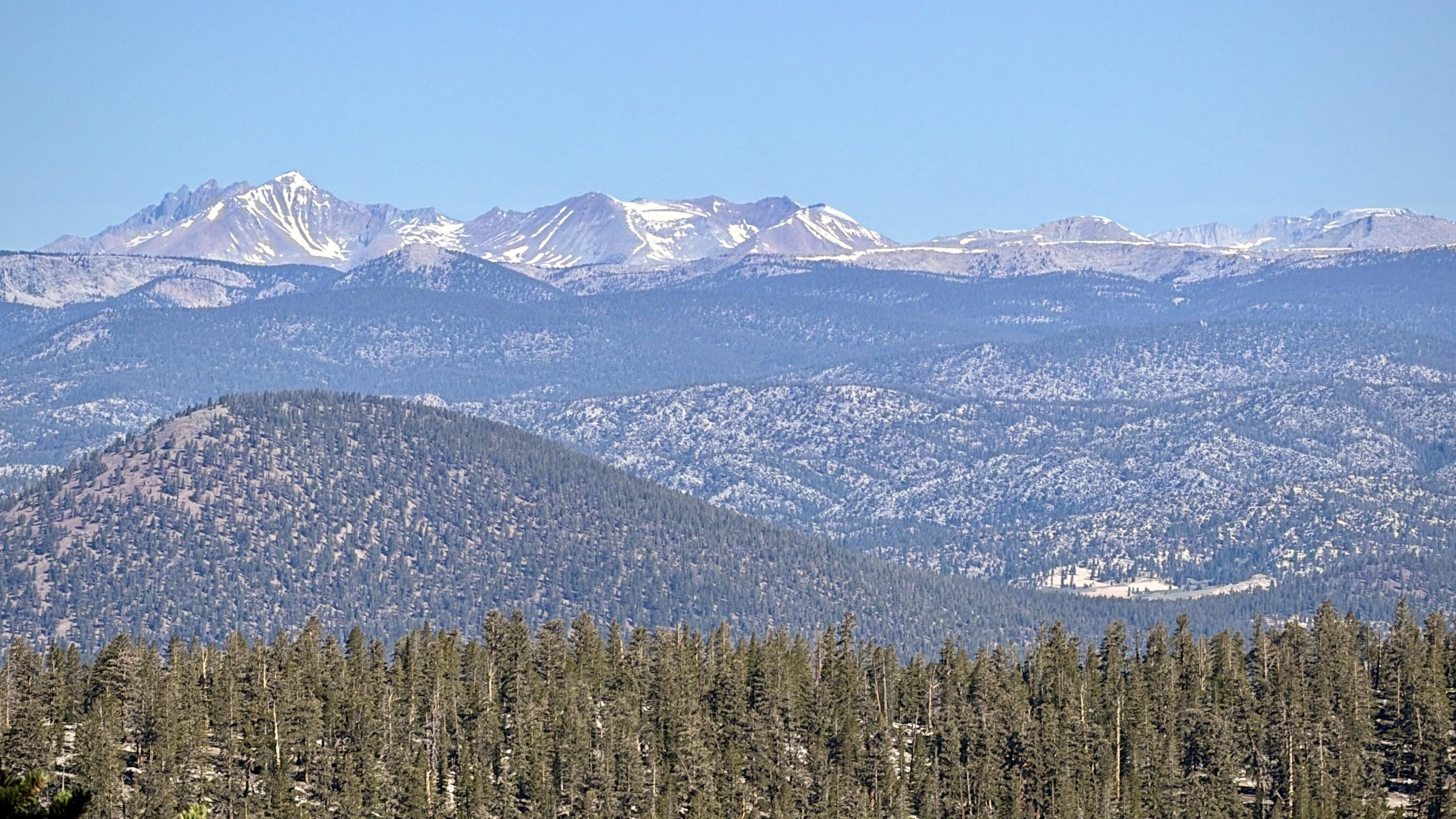
The mountains I had spent years exploring were finally on the horizon again.
A family place
There was something comforting about arriving at Cottonwood Pass. For weeks, the trail had taken me through places I had never seen before. Now, for the first time, I was walking through a country I knew. Every turn brought a memory. Each peak looked familiar.
The Eastern Sierra has always had a special place in my heart and returning as a PCT hiker gave those mountains a completely different meaning.
At Cottonwood Pass, my dad was waiting. Forty-eight days had passed since I saw him. Before the trail, we had spent a lot of time together working on projects and preparing for this hike. Seeing him standing there felt normal in the best way possible. As if a small piece of home had somehow found its way into the mountains. I want to bring it to light one day. He loves these places as much as I do. We arrived at Lone Pine and immediately switched to city mode. Double cheeseburgers. Pool at Jake’s Saloon. A hot shower. A clean shave. A filet mignon dinner.
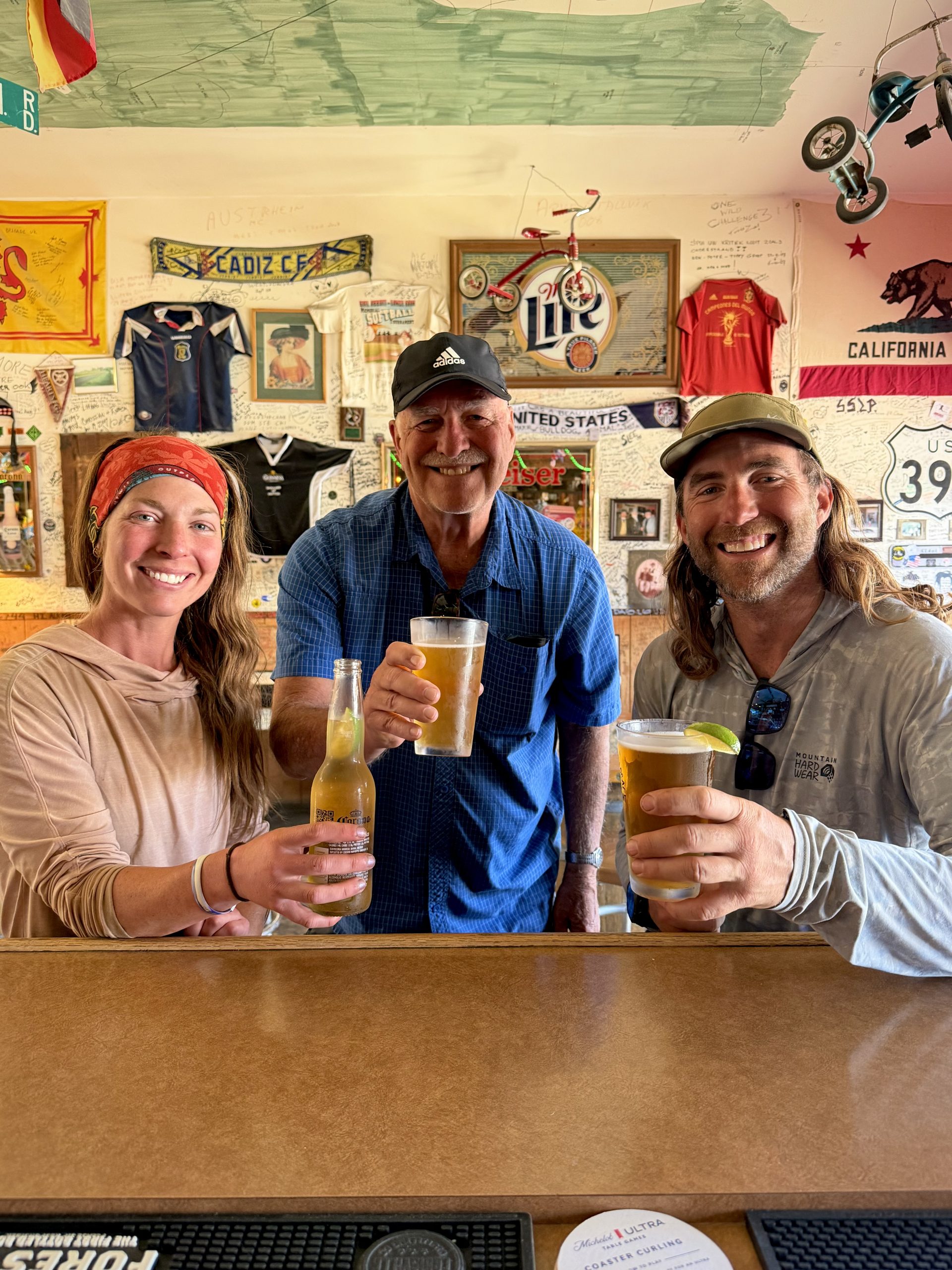
Trail Town priorities: food, pool and recovery.
Simple luxuries seemed extravagant after nearly seven hundred miles of trail.
The next day was spent sorting through supplies, doing laundry, and preparing for the largest section of the trail yet. The bear cans were packed. The layers were adjusted. Decisions were made about the team. The Sierra was waiting.
Coming back home
Back on the road, the feeling of familiarity grew stronger. Rock Creek was one of the first places I truly felt like I was home.
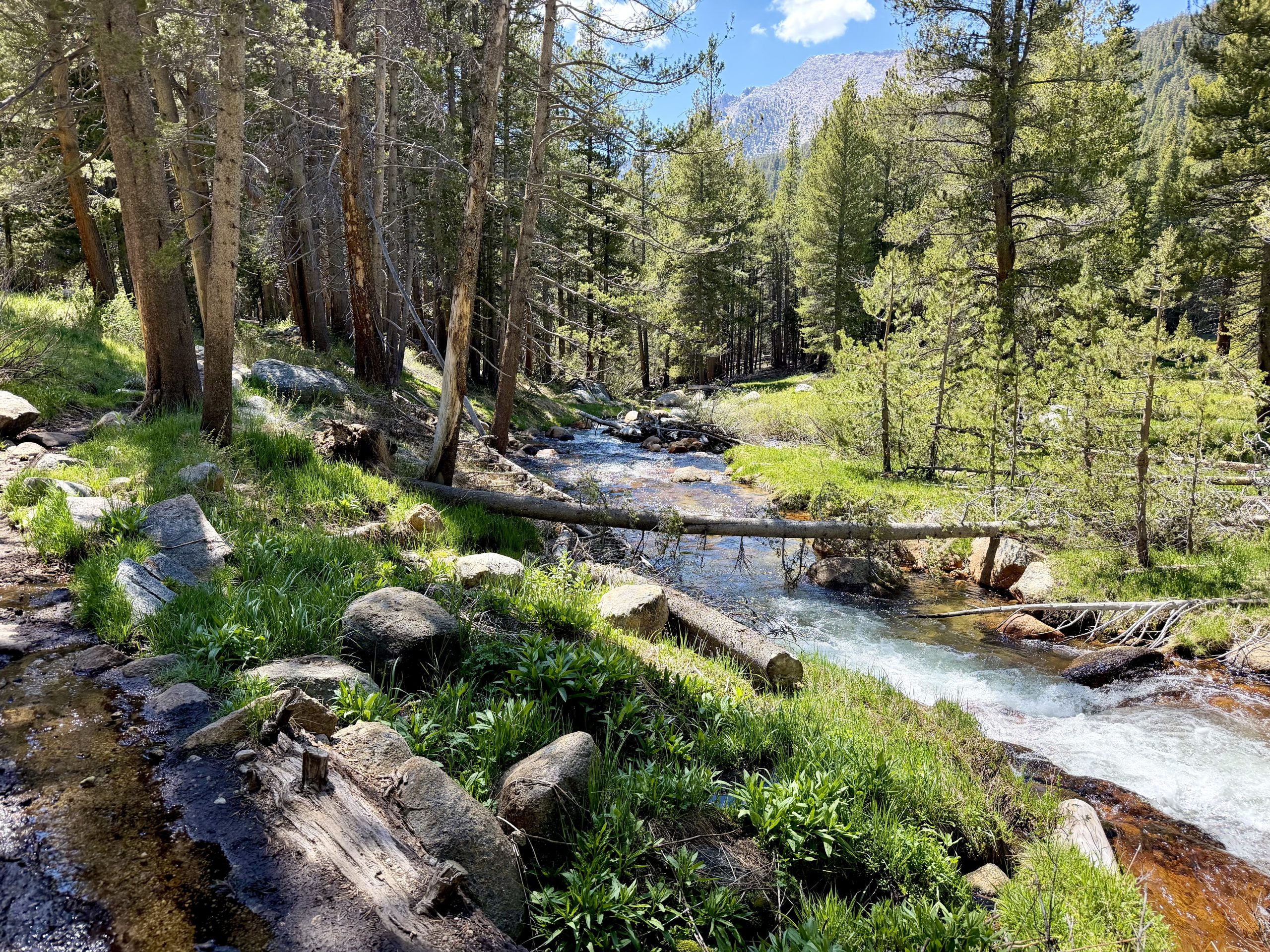
Third trip through the Sierra. I keep finding new reasons to love him.
I camped there during my northbound John Muir Trail hike in 2021, and returning four years later brought back a flood of memories. The campsite was as beautiful as I remembered: green grass, cold water, and granite peaks in every direction. The best part was realizing that even on my third trip to the area, I was still noticing new things. La Sierra has a way of doing it. No matter how many times you visit, it always seems to reveal something new.
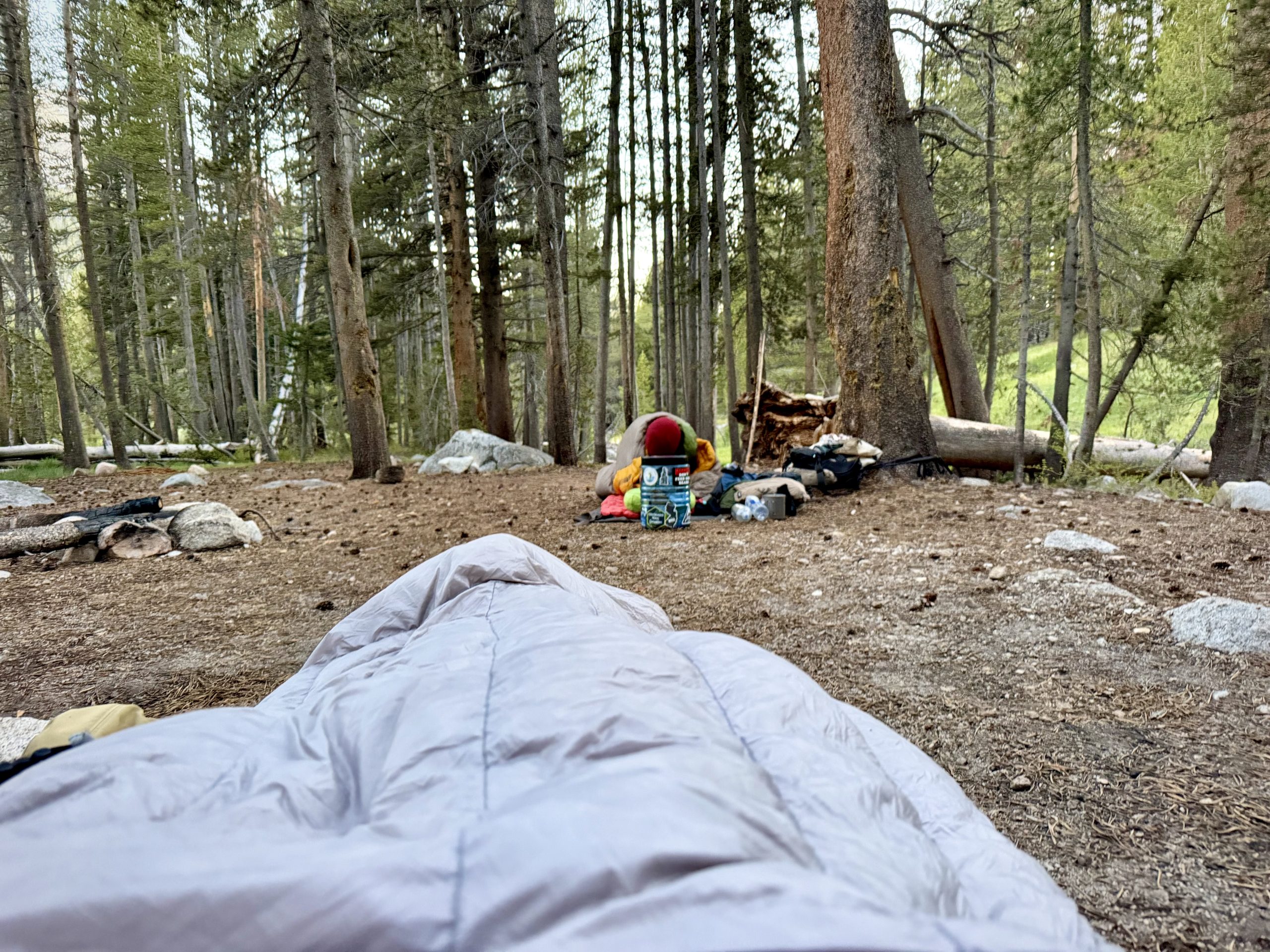
My first cowboy camp in the Sierra. No tent, no rush, just a sleeping bag under the pines.
The next day we took a short hike to Crabtree Meadows and settled into camp early. The plan was simple: Mount Whitney at dawn.
Whitney from Mexico
My alarm went off at 11:30 p.m.
A few hours earlier I had gone to sleep next to Whitney Creek. Now I was making coffee under a star-filled sky and preparing for a midnight departure. The goal was dawn.
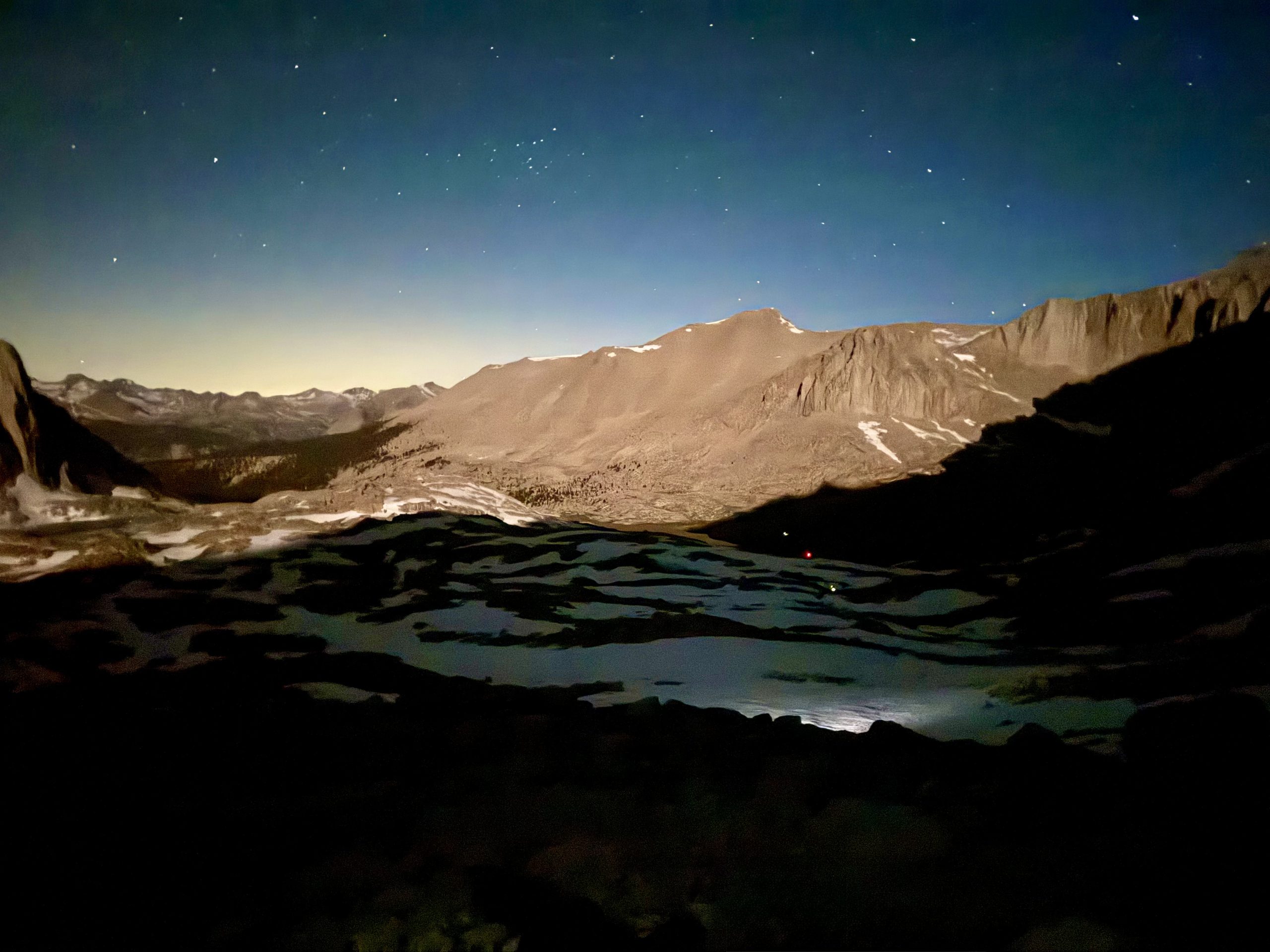
Midnight departures are part of the price of a Whitney sunrise.
The trail climbed steadily past Timberline Lake and Guitar Lake as temperatures dropped below freezing. Snow fields appeared high on the mountain, illuminated by headlights in the darkness.
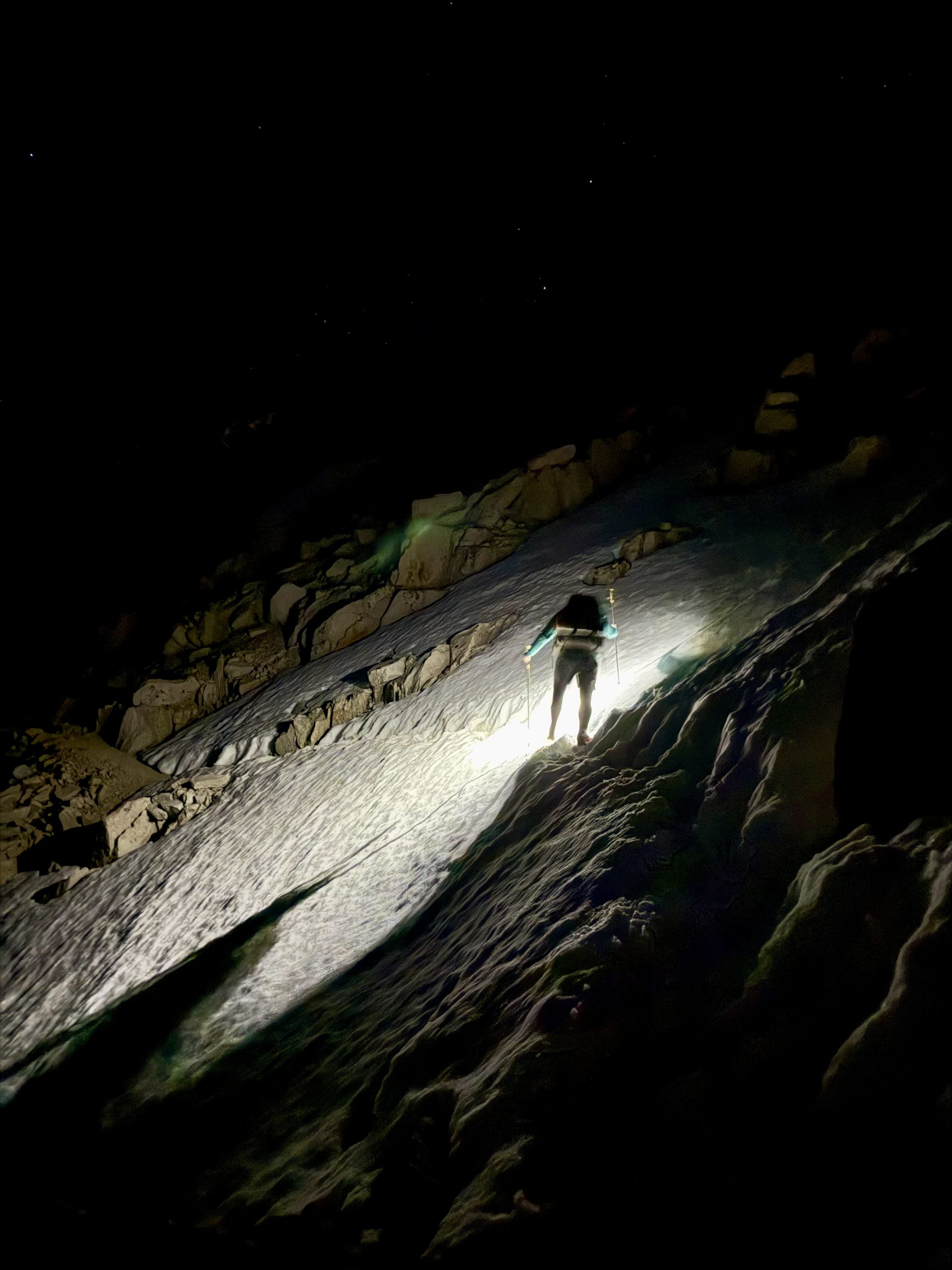
Everything seems steeper in the dark.
Everything always feels steeper at night… One step… Then another. Finally, the curves gave way to the final climb. At 5:02 am I climbed to the top of Mount Whitney. There were still thirty-six minutes until dawn. Enough time to find a sheltered spot among the rocks and make another cup of coffee.
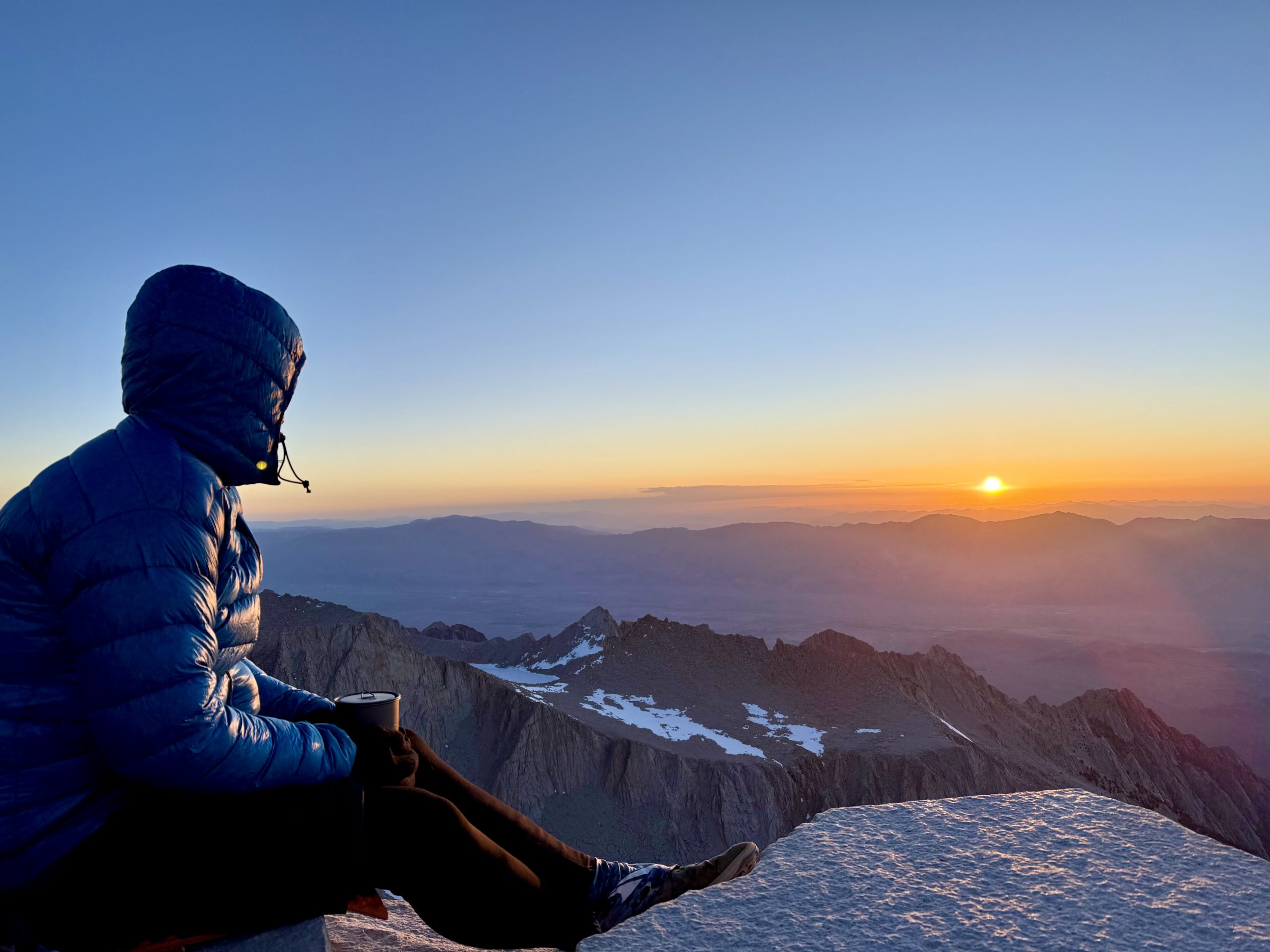
Coffee at 14,505 feet while watching the sunrise.
This was my twelfth summit of Mount Whitney. But it was also my first time hiking the Pacific Crest Trail. And that made it more significant. I have always had a deep appreciation for Whitney. Maybe even an obsession. The mountain commands respect for its size, elevation and inherent danger. However, it rewards those who ascend with views like no other place in the Lower Forty-Eight.
As the sun rose over the horizon, painting the Sierra in shades of gold and orange, I couldn’t stop smiling. This summit came from Mexico.
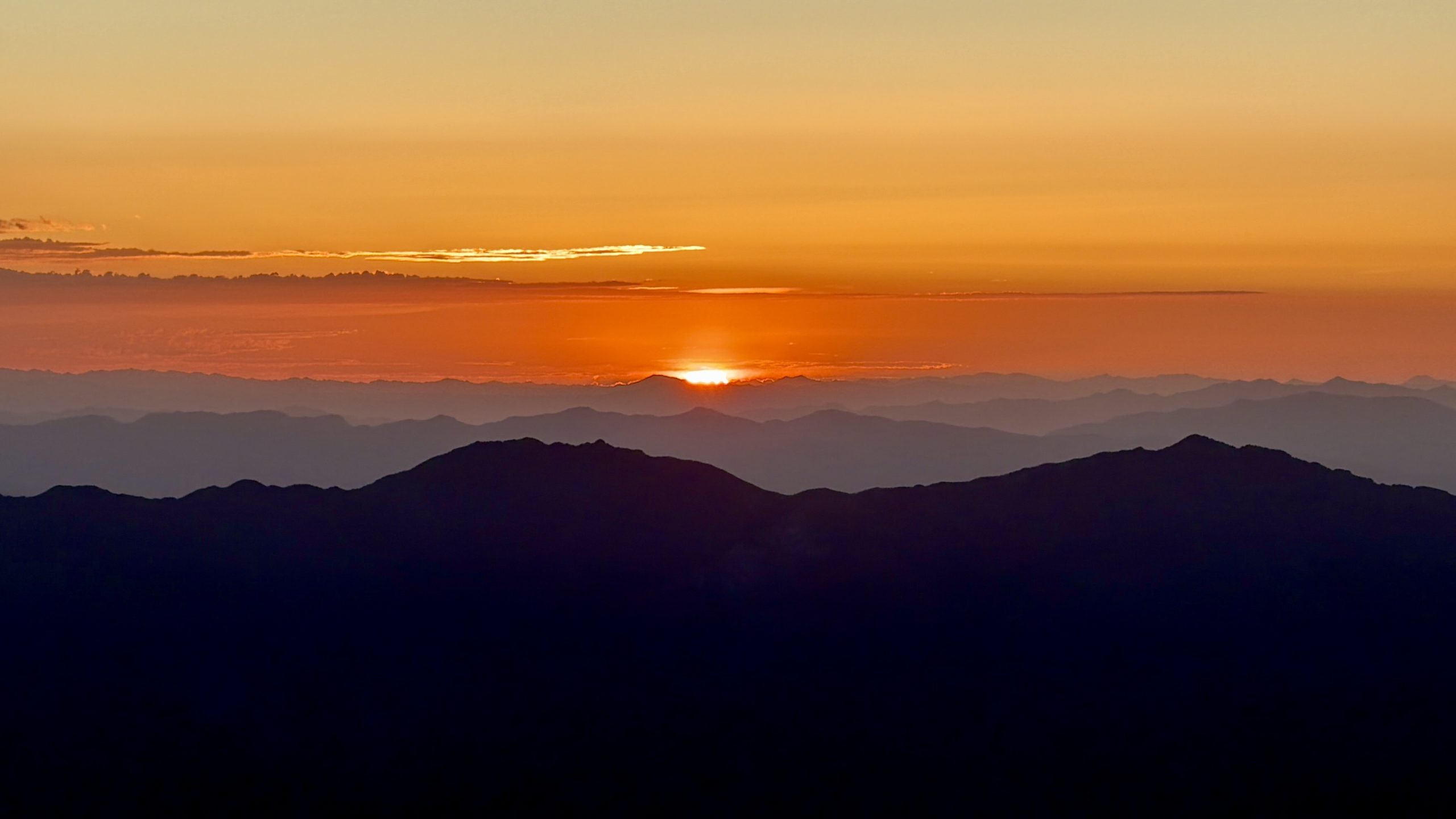
More than seven hundred miles of trail led to this sunrise.
Not Whitney Portal. Not at Horseshoe Meadows. Mexico. More than seven hundred miles of trail had led to that moment. For years, Whitney had been a destination. Now it seemed part of a much bigger journey.
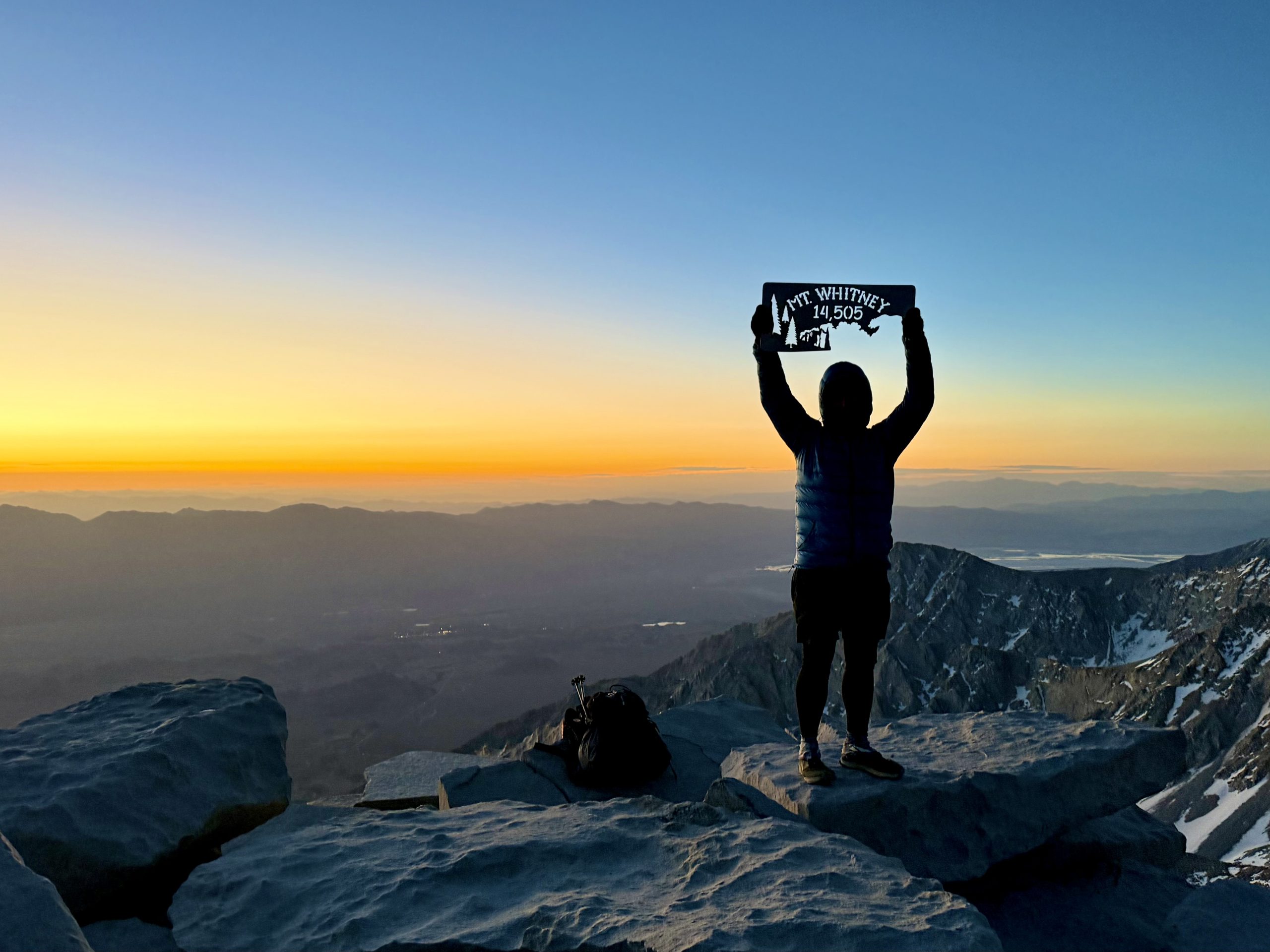
Summit number twelve. The first one that started on the border with Mexico.
Forestry and beyond
Whitney may attract attention, but Forester Pass deserves its reputation. Access from Tyndall Creek passed through snowfields and alpine terrain before finally reaching the highest point of the Pacific Crest Trail. Being at the top of Forester was like being at the gateway to the heart of the Sierra.
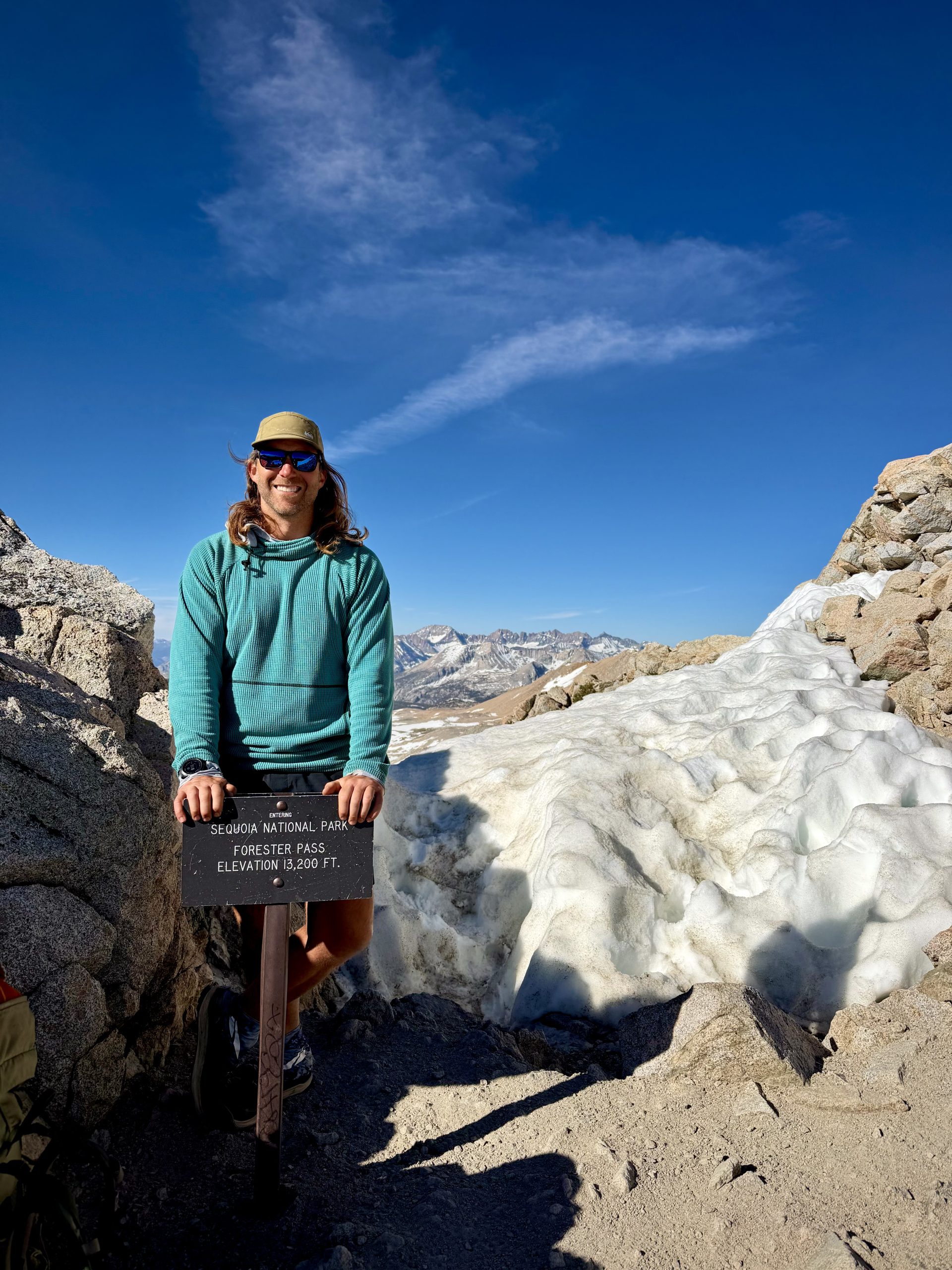
The highest point on the Pacific Crest Trail.
The descent brought soft snow, post holes, glissades, and enough adventure to remind us that the mountains still demanded respect.
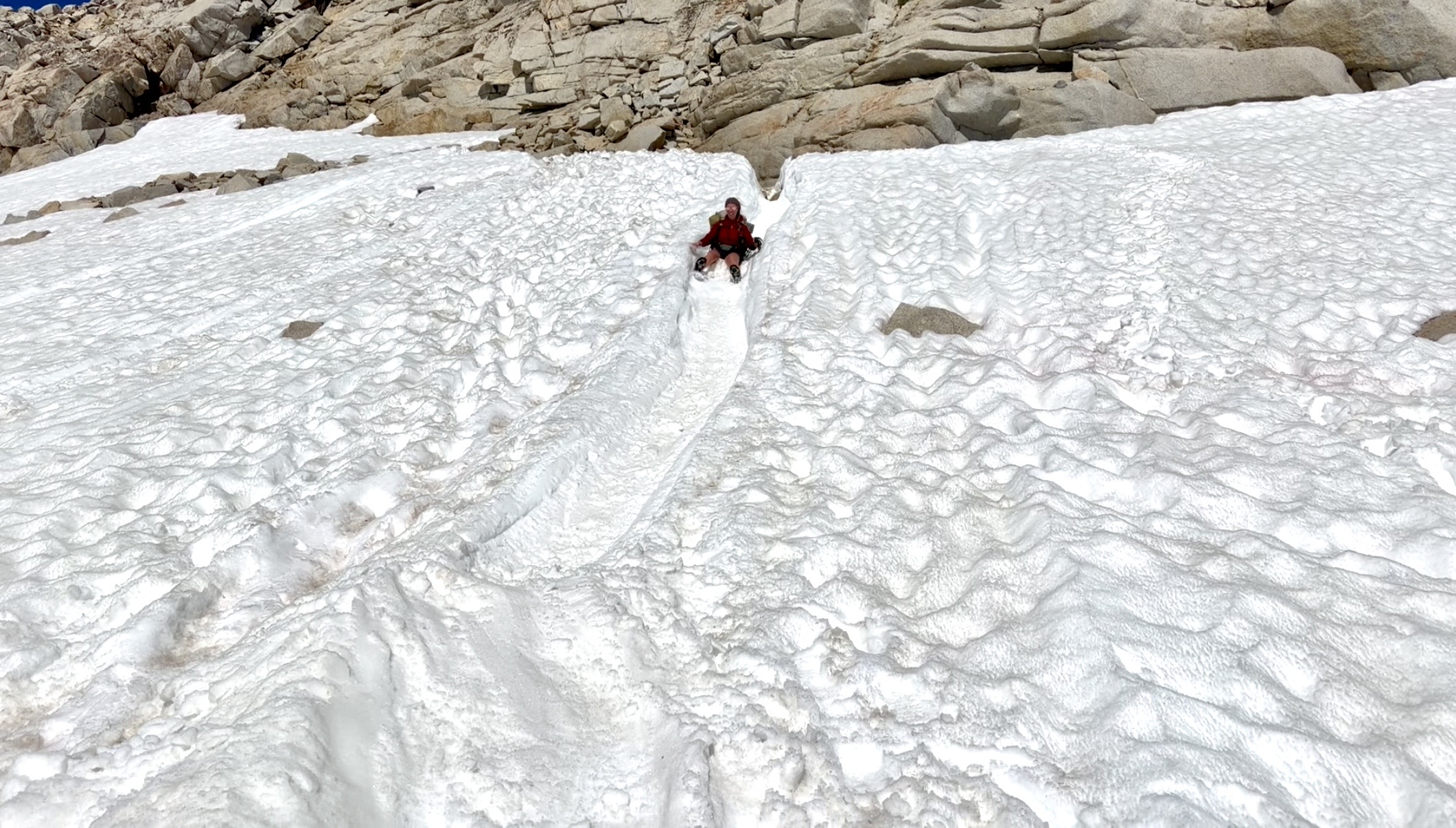
Sometimes the fastest way down is also the most fun.
The further north we traveled, the more the Sierra was revealed. Furious streams. Meadows full of wildflowers. Marmots. Mosquitoes. Endless granite.
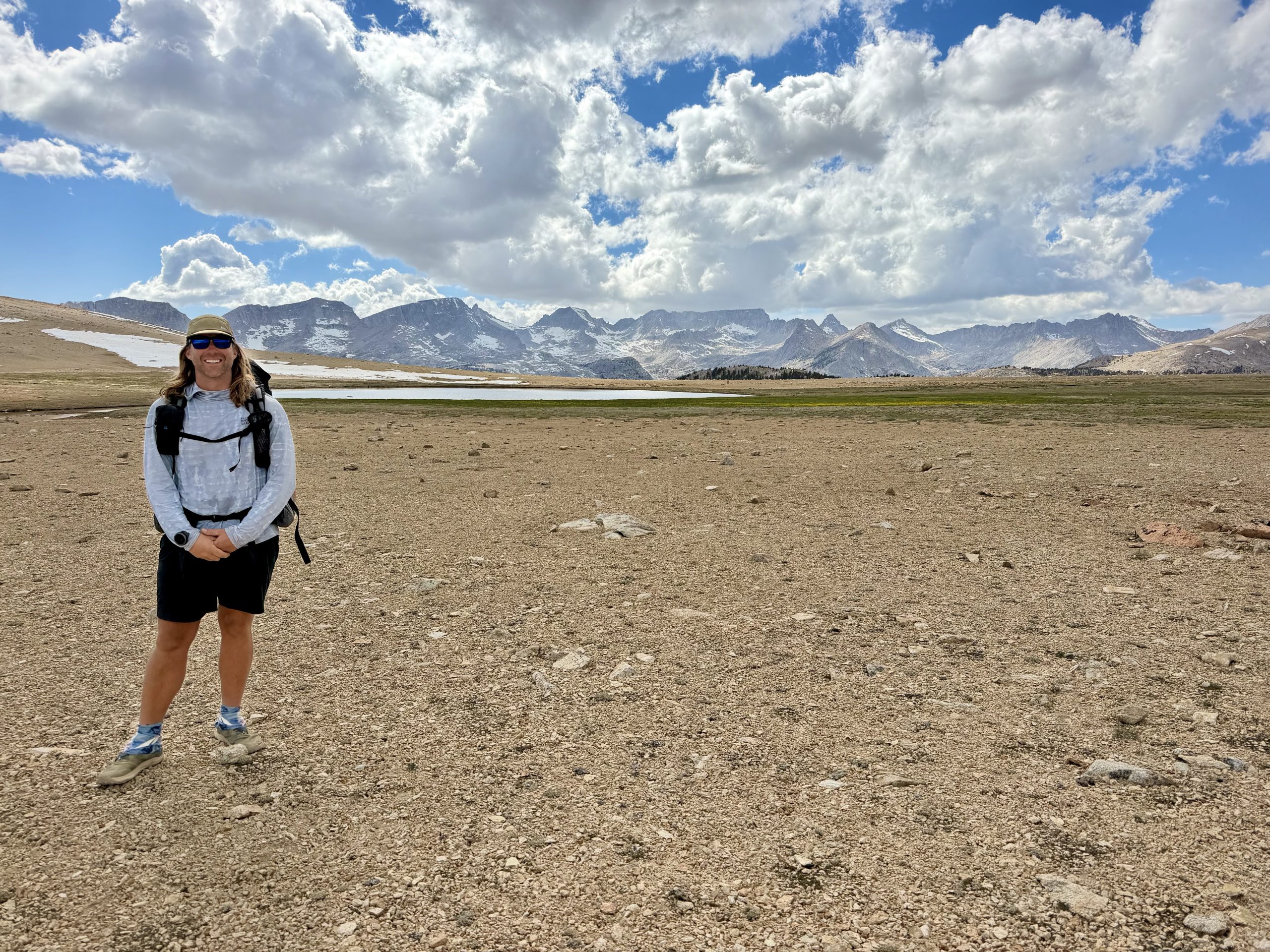
The Bighorn Plateau remains one of my favorite places in the Sierra.
Shortly before reaching Woods Creek, we crossed mile 800.
It seemed like it took forever to arrive. Between Lone Pine, Kearsarge Pass, Whitney, and all the bonus miles that come with trips to the Sierra, we added almost fifty additional miles that don’t appear in the official PCT miles. Maybe that’s why it felt more meaningful. Every hundred miles is a reminder that this journey is becoming real. Mile 800 wasn’t just another marker. It was confirmation that I was exactly where I wanted to be.
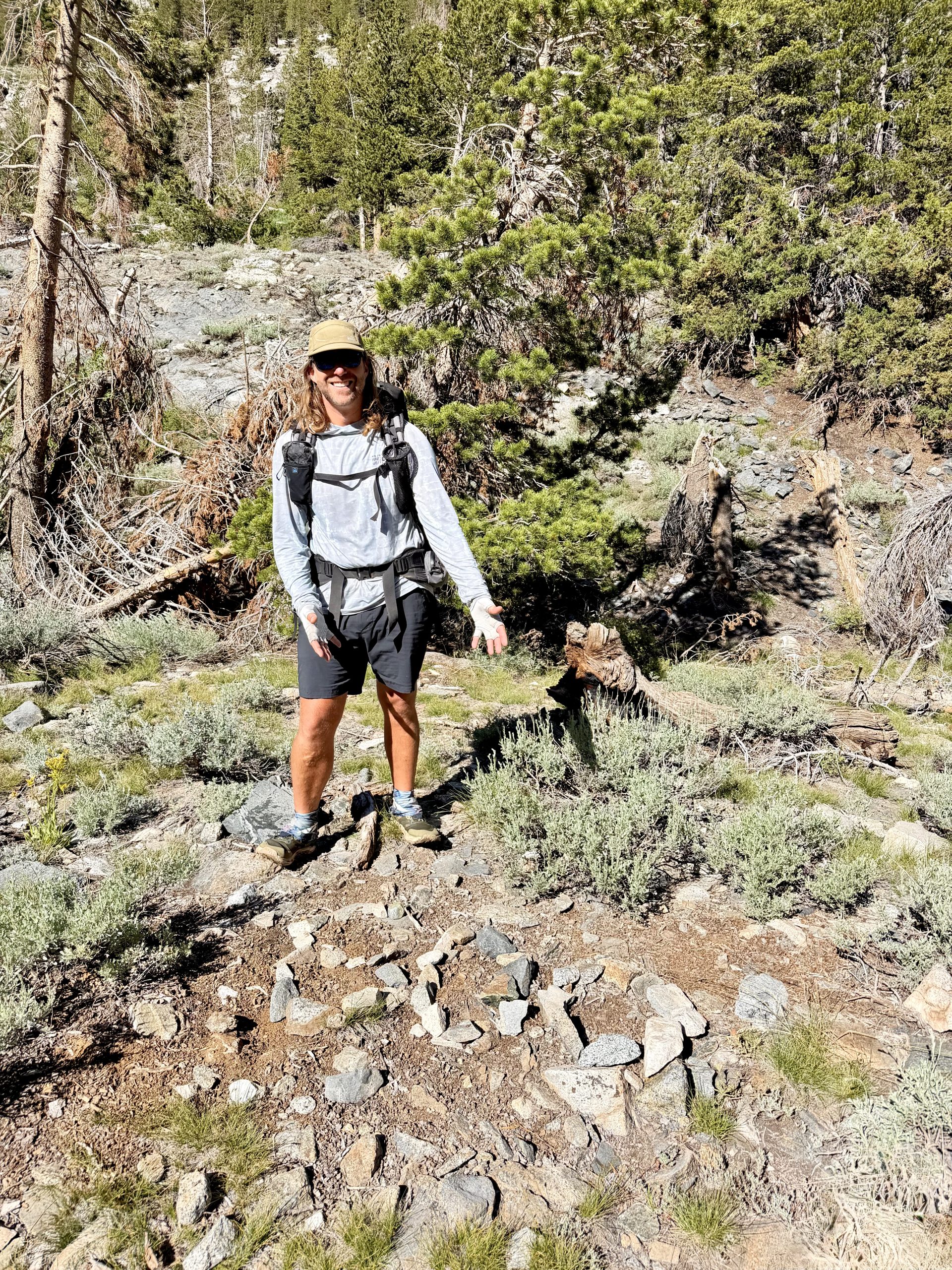
Mile 800. The official mileage doesn’t count Whitney, Kearsarge, or city miles, but my legs definitely do.
:max_bytes(150000):strip_icc():format(jpeg)/Kinzley-Smerer-Bentley-Smerer-Kayleb-Smerer-Jeffery-James-Smerer-070126-60be45ce2f20430c9769324235d9398c.jpg?w=238&resize=238,178&ssl=1 "Papá se despertó y mató a su ‘hijo favorito’ la mañana en que iba a ser sentenciado por exhibicionismo")





:max_bytes(150000):strip_icc():format(jpeg)/Kinzley-Smerer-Bentley-Smerer-Kayleb-Smerer-Jeffery-James-Smerer-070126-60be45ce2f20430c9769324235d9398c.jpg?w=100&resize=100,75&ssl=1 "Papá se despertó y mató a su ‘hijo favorito’ la mañana en que iba a ser sentenciado por exhibicionismo")


