

Getting started…
I feel a trickle of excitement run down my spine, or maybe it’s sweat caused by the 30 degrees Celsius (86 Fahrenheit) heat we’re exposed to as we take our first tentative steps on the Hexatrek. My partner Mark and I say goodbye to my family until they are just a small blur beyond the vineyards of Wissembourg. We have been brought here from my home in Germany and we have spent a very pleasant couple of days in the Alsace region. A big plus of having these extra days was that we had the opportunity to check our gear once again and do some necessary shopping for trail essentials and food supplies in Strasbourg. We still had a lot of gear from our Thruhike of the Appalachian Trail in 2022, but a couple of things needed to be changed or added to our gear. Strasbourg has several sports and outdoor stores, one of which is a large Decathlon (which is a well-known European sports equipment center). As a large city and travel hub, Strasbourg is a convenient starting point for many hikers on their way to the charming but much smaller town of Wissembourg, on the German border, where the trail begins. Wissembourg can be reached from Strasbourg by train in about an hour.
My mind is everywhere as I walk the first few miles. I’m very excited to spend all my time in nature again, immerse myself in the calm of the forests and mountains and hopefully meet like-minded people like us who are enjoying the transition to (and I say this with all admiration and love) ‘Hiker Trash’. It’s a term of endearment among Thruhikers and shouldn’t be taken too seriously, because yes, we get dirty and stinky, and yes, we shovel food like we’re in a competition, but we also have a deep love and respect for the environment we walk and sleep in and make sure we leave no trace behind. I am filled with happiness to jump into this experience and community once again and I keep wondering what it will be like. What parts will feel similar to long hikes in the United States and what parts will be unique to the Hexatrek?
Week 1 – Blisters and Bakery
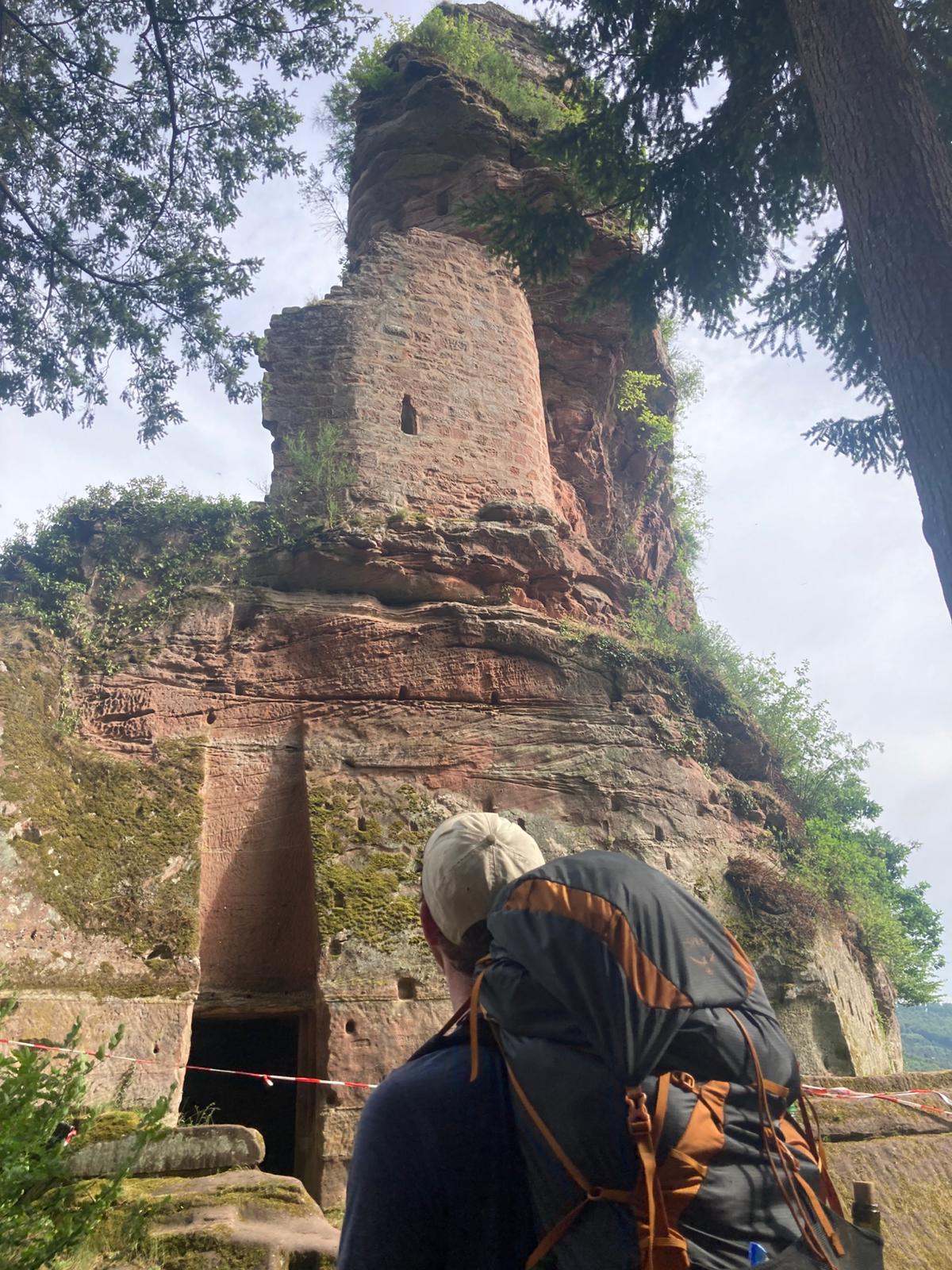
The trail is divided into six sections and eventually extends through the Alps and the Pyrenees for a total of 3,035 km. The first section is called The Great East and covers a distance of 670 kilometers and 21,185 meters of elevation gain through the landscapes of the Vosges, the Doubs and the Jura. Already during the first days we came across multiple castle ruins and cultural heritage sites. It’s incredibly cool to walk through these ancient ruins. Some of them have been restored and are well preserved, sometimes including an entrance fee, but others are simply open, impressive monuments, where wildflowers grow through the cracks in the bricks and you can sit on medieval window sills and admire the valley.
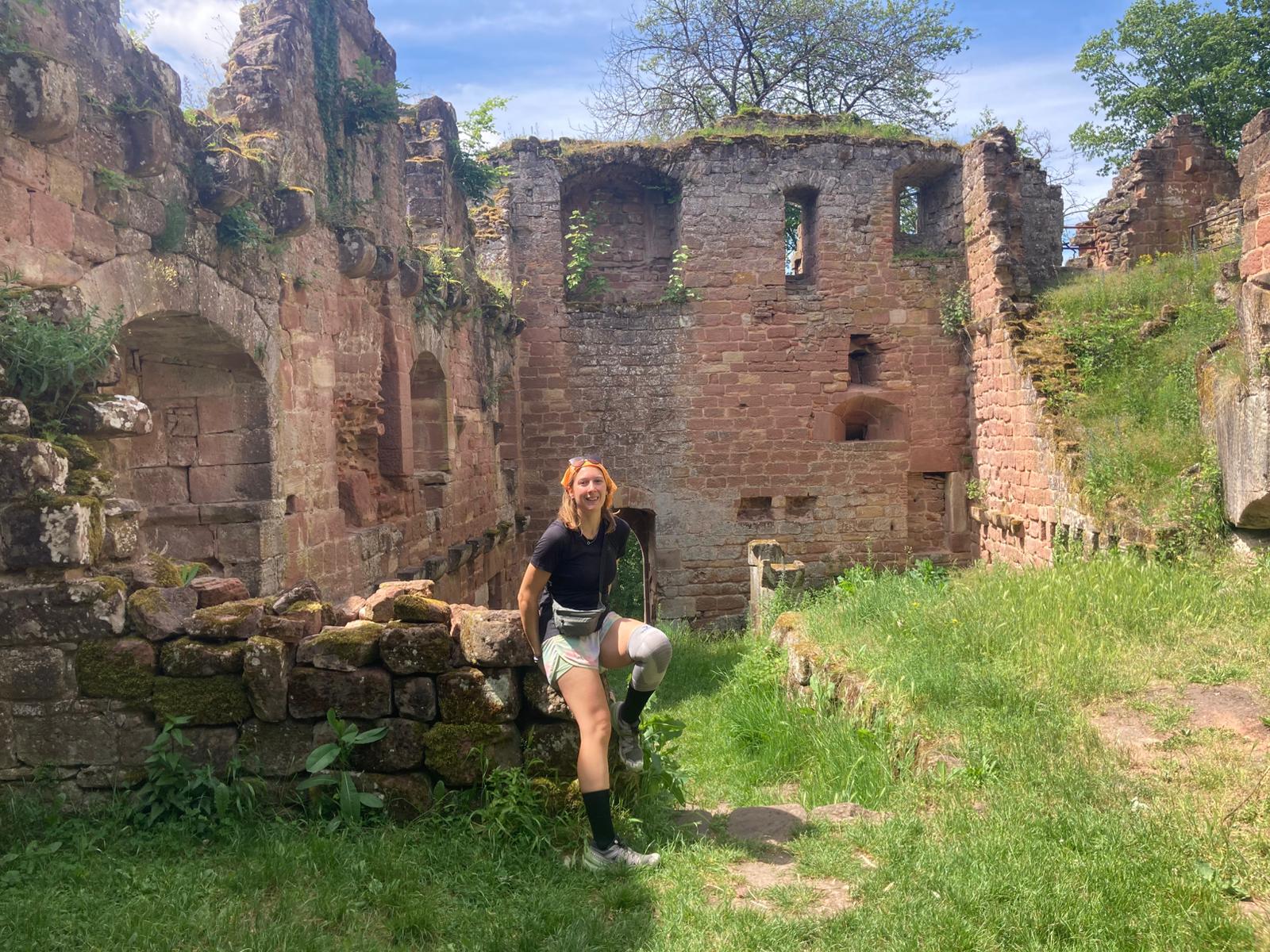
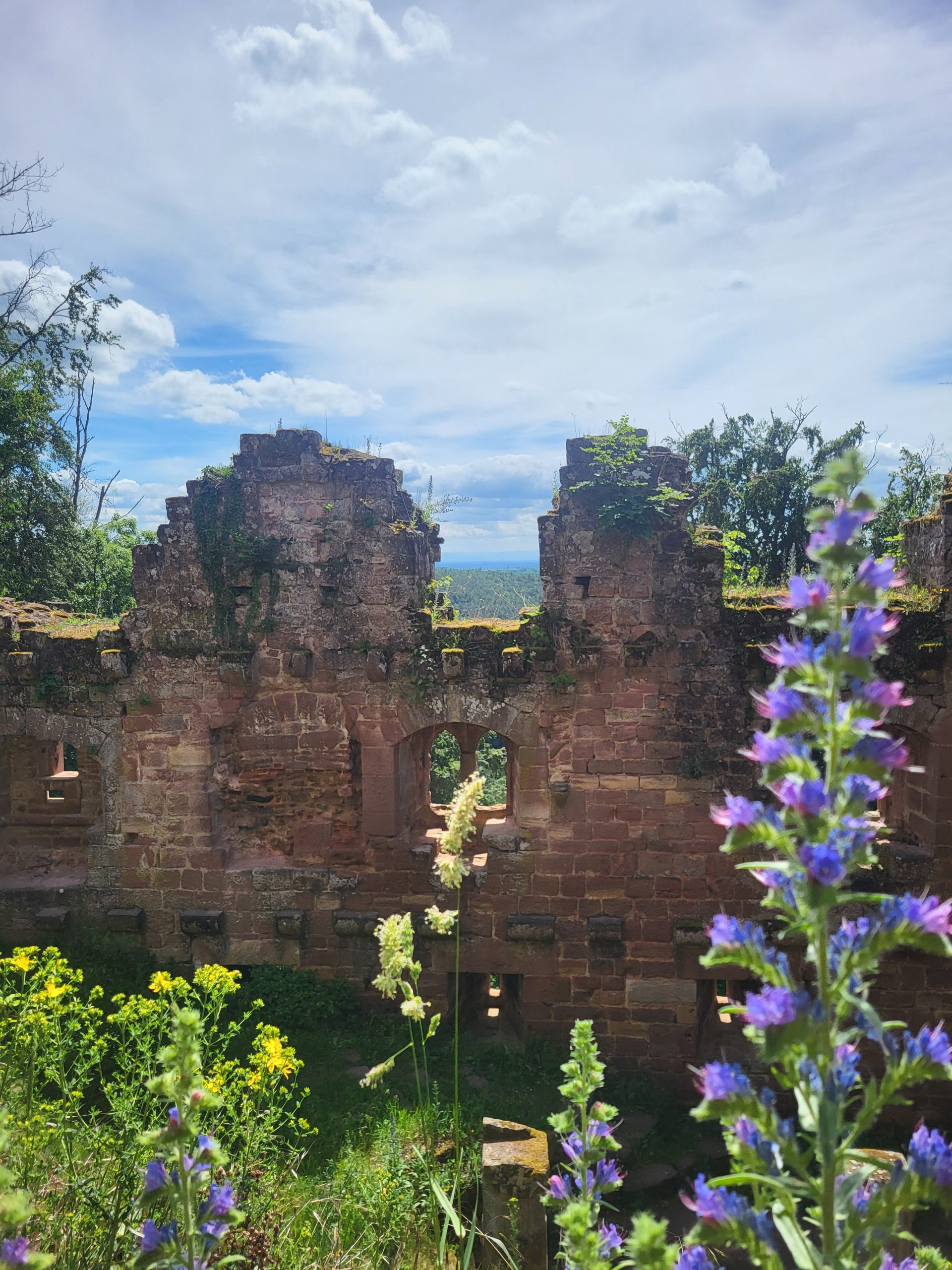
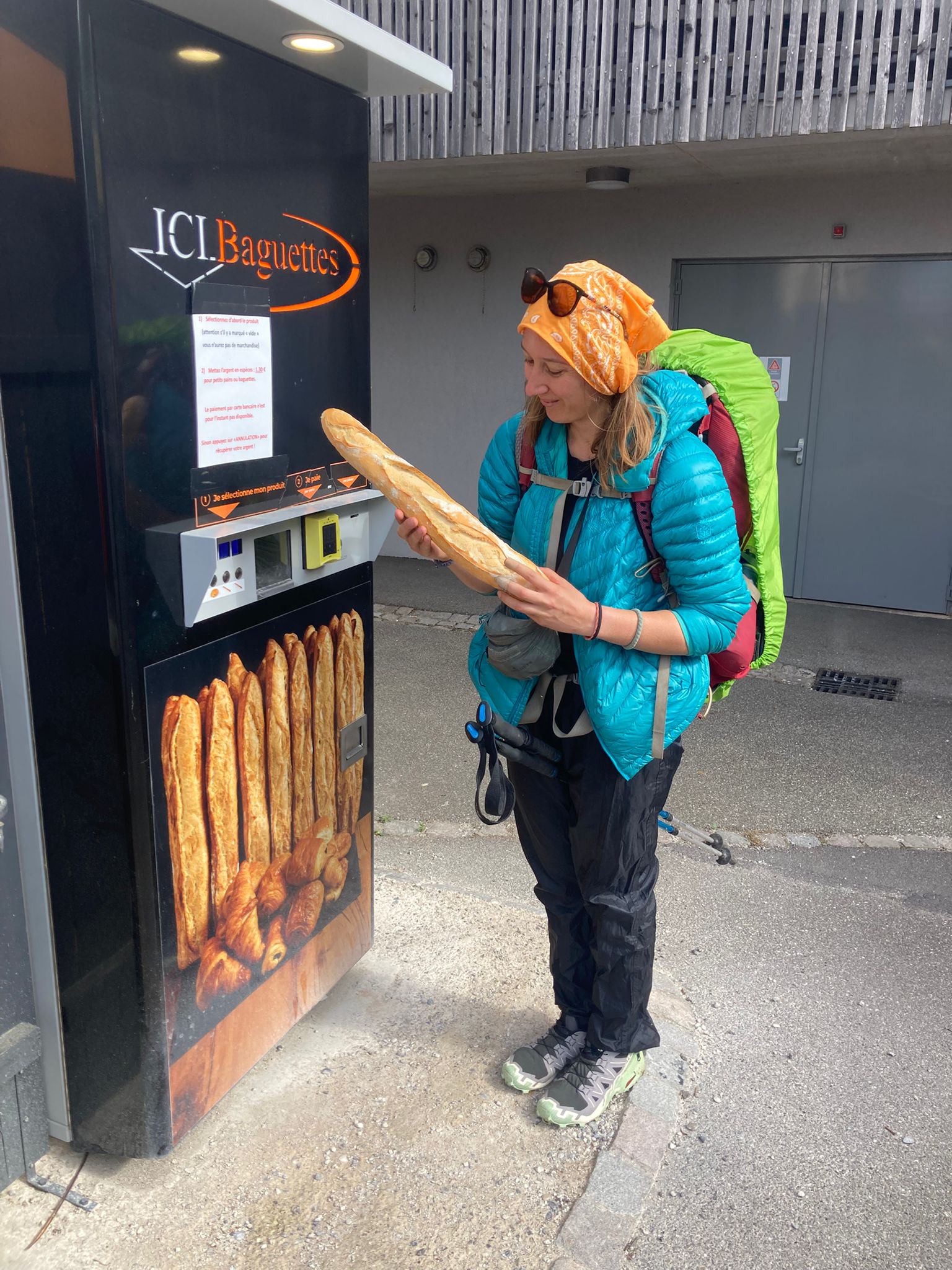
Another great plus that has already crystallized in this first section is access to boulangeries (local bakeries). We didn’t really need to pack four days’ worth of food for the first few days of the hike, as we even came across a baguette machine in a small town. Does this mean that for every new blister on our sore feet, we will be compensated by the same number of bakeries containing freshly baked goods? If so, what could be more encouraging?
Week 2 – Challenges and castles
We felt like we were walking through the sets of the movie ‘Beauty and the Beast’, through fairytale pine forests and through picturesque French villages on the Hexatrek. It’s good that we go slowly, about 20km a day to start, because there is a lot to discover in the early stages here and we are conscious of giving our feet time to get used to this again.
As we get into the rhythm of this adventure, foolishly thinking that we’ve done this before and it could go wrong, the journey humbles us a little. The hiking part is not the problem; In fact, it’s really beautiful here, with rolling hills and mossy forests, and the elevation starts off quite calmly.
One of our first struggles on the Hexatrek comes in the form of camping logistics or, as it is known in French, «bivouac.» In certain areas of France, it is permitted to install a type of light shelter for one night between dusk and dawn, with minimal impact on the environment. In other areas it is strictly prohibited, such as around cities and towns, cultural sites or in protected areas. Luckily for us, we have access to the Hexatrek app and it mostly shows us which areas bivouac is tolerated. Unfortunately for us, no-go zones (or «red zones» in the app) currently govern our daily mileage. Given the number of cities and cultural sites since the beginning, there are many areas where bivouacking is prohibited. In addition to this, points of interest in the app marked as good places to camp, shelter or water may be inaccurate now, as many of them would have been added by hikers in previous years and the situation may have changed in the meantime (for example, a stream may have dried up or a place that tolerated bivouac may now prohibit it). The app is still a great tool for information on upcoming sections and helps us a lot with navigation, since the Hexatrek doesn’t have many custom trail signs like the Appalachian Trail blazes. The Hexatrek often follows existing trails for sections at a time (like the European GR5 at the beginning), which have their own trail markers, but the trail can deviate from those paths without warning unless you keep an eye on the app.
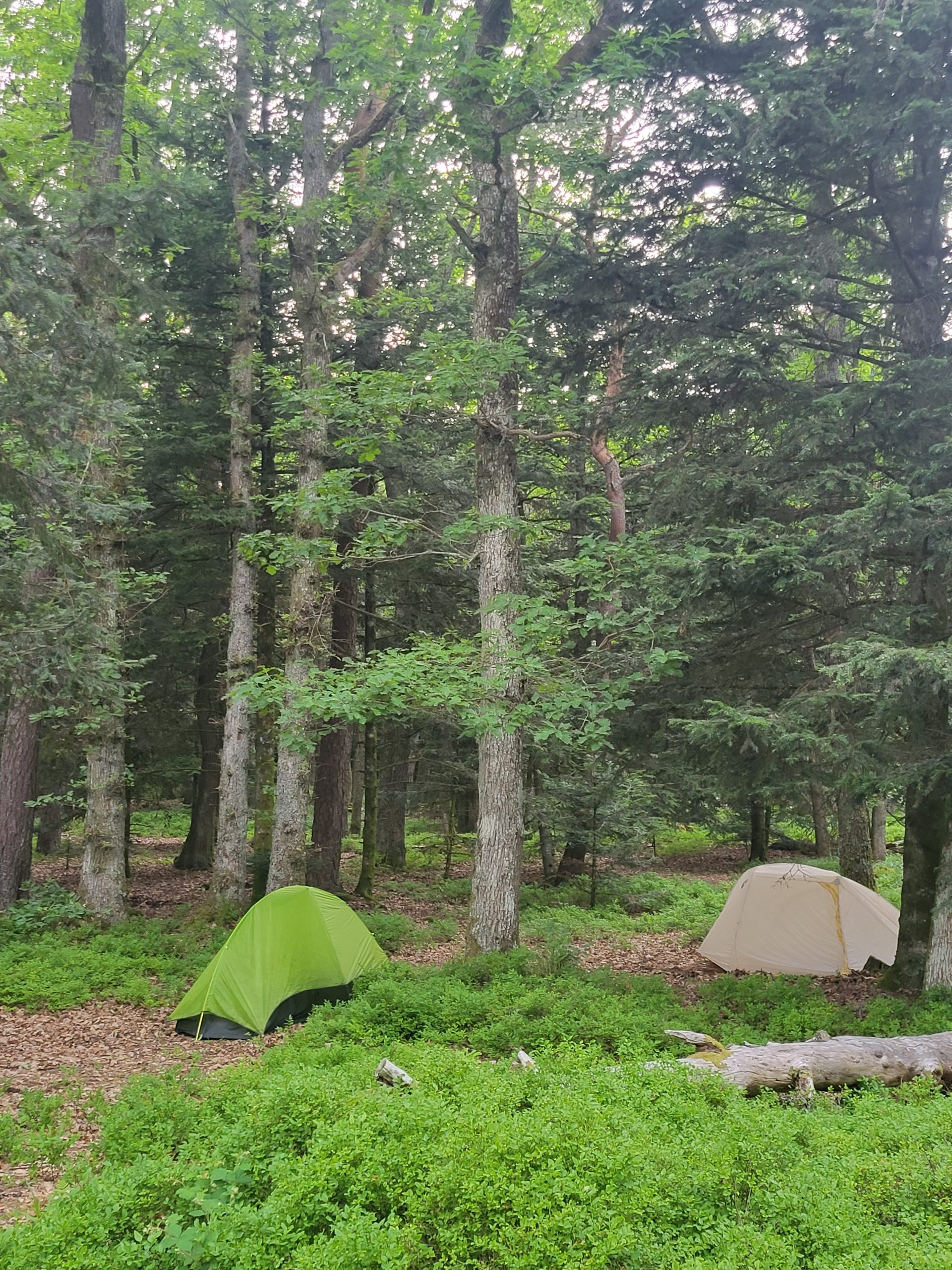
Another big problem lies in our team. We were very unlucky with equipment failures during the first two weeks. Sure, a few things fell on us: we didn’t inspect our 4-year-old tents thoroughly enough and we didn’t spot small holes in the vestibules before we left, for example (although this was easy to fix after acquiring some duct tape). A bigger problem was when Mark’s sleeping mat broke, so we had to order a replacement through Mondial Relay (a French parcel delivery service) to one of their storage boxes in the neighboring town. Although thankfully this worked without a problem, one night later his new pad also started to deflate. We felt a little burned out by the amount of time we had to spend troubleshooting (or «trouble time» as we called it) so early in our trip. We made plans to go off the road in another city to go to another outdoor store, replace the second deck, and hopefully have better luck with this one.
Fortunately, there is still time to explore outside of the «problem time.» In this first stage of the Hexatrek, this also means spending pleasant moments in picturesque villages, such as Saverne and our favorite Ribeauvillé, with houses from the 16th and 17th centuries. We especially enjoy all the amazing fresh food that France has to offer and often indulge in ‘urban picnics’, when we buy lots of delicacies in supermarkets (baguettes, cheese, hummus, wine, fruits, salads…) and indulge in these feasts on the streets of ancient cities or occasionally on the road (yes, we have brought wine… no, we are not ultralight).
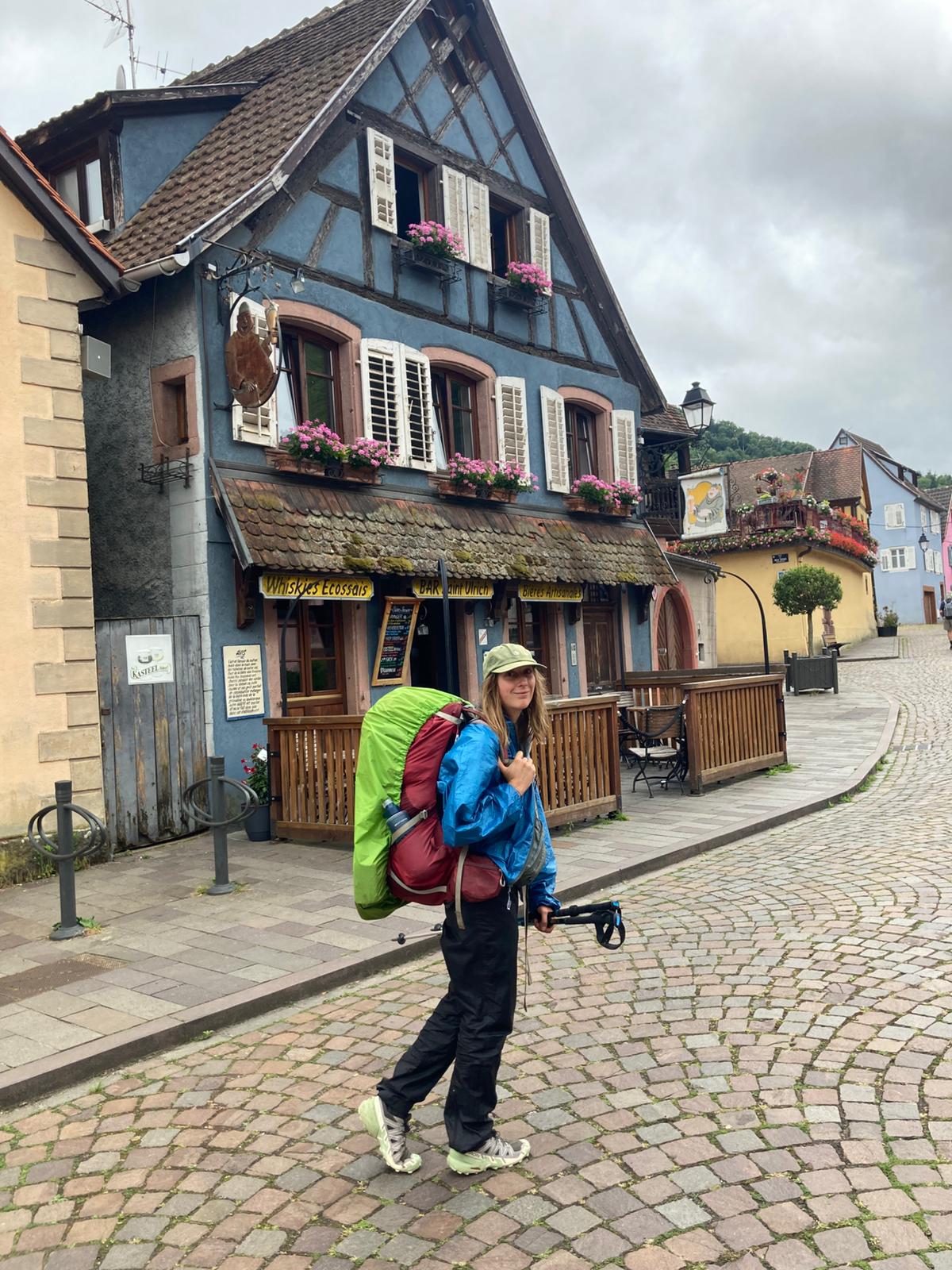
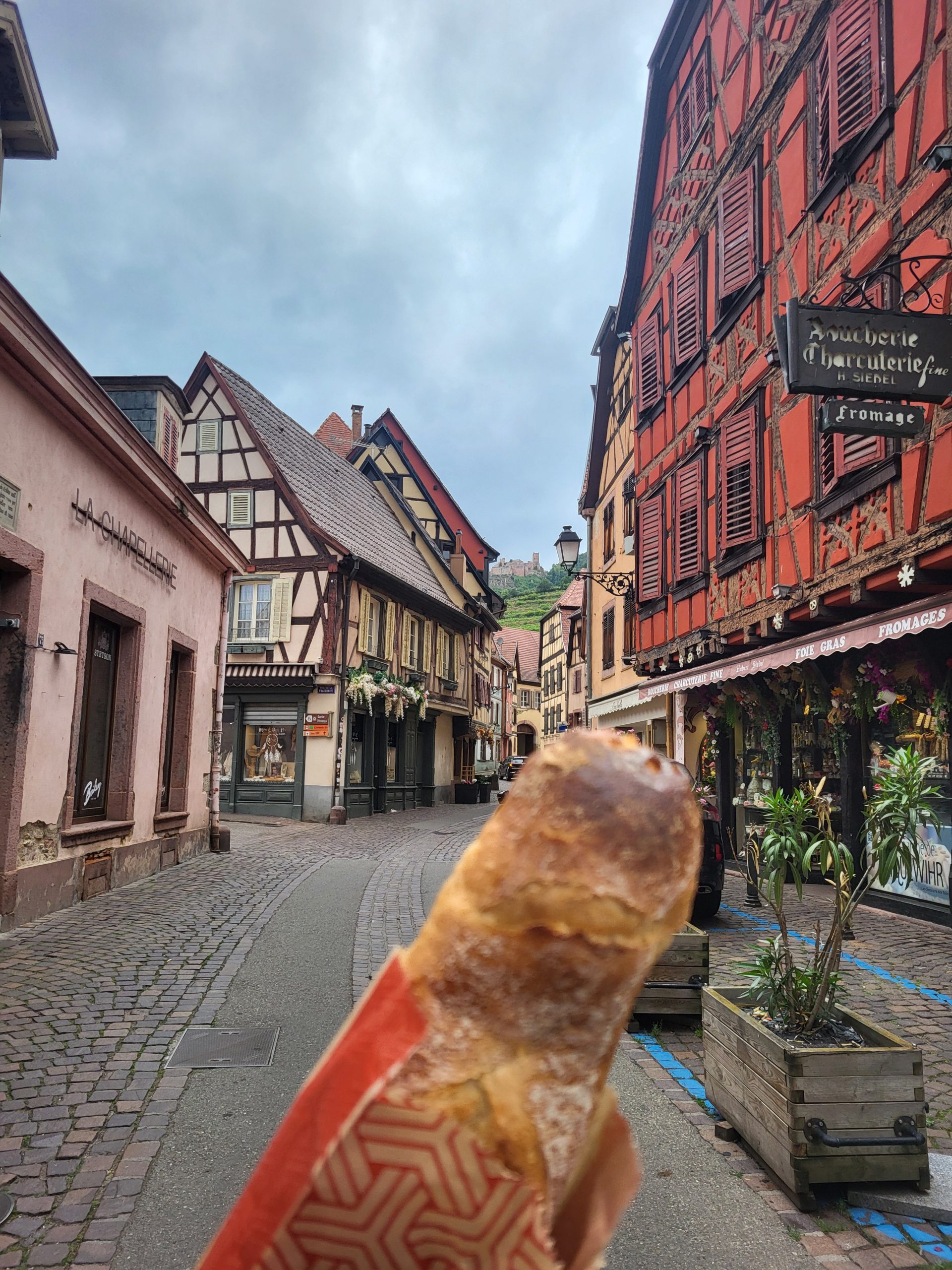
So, long story short, despite the problems that started, life on the Hexatrek seems pretty good so far!
This website contains affiliate links, which means The Trek may receive a percentage of any products or services you purchase using links in articles or advertisements. The buyer pays the same price they would otherwise pay, and their purchase helps support The Trek’s ongoing goal of bringing you quality backpacking information and advice. Thank you for your support!
For more information, visit the About page of this site.





:max_bytes(150000):strip_icc():format(jpeg)/AbigailAndersontaylorswift02082015-39-a048589bbb064d299d3ad826b29fb76a.jpg?w=100&resize=100,75&ssl=1 "Todo sobre la mejor amiga de Taylor Swift, Abigail Anderson")