

When I decided to hike the Pacific Crest Trail, there were a lot of things I thought I already knew about it. I knew about the changes of the biome: from desert to high mountains, to volcanically formed mountains, to beautiful pine forests. I knew what gear I would need from previous hikes and some new pieces I would add for types of hikes I had never done before. I knew the signs of altitude sickness, dehydration, exhaustion, etc. But I couldn’t have predicted how difficult the hike would be.
From everything I had heard about this trail, it was easy. All the climbs were rated for pack mules with graceful curves. There will never be a vertical rock climb or a trail so steep that it erodes underfoot as you step. The trail would have beautiful streams but would not be swampy or flooded. People talked about how they would never hike the Appalachian Trail because it was too wet; but here, on the best coast, you didn’t have to deal with those things.
The things I had heard and the assumptions I had made based on stories about the PCT were false. This trail was hard. He was hitting me. I cried as much here as I have on any walk along the east coast. My feet were as wet in the Sierras as they were in the creeks of Vermont and the swamps of Maine, but it was bitterly cold here, too. However, the views were more spectacular, as were the climbs. Our next climb was no exception.
Starting the climb to Donahue
Donahue Pass was one of those that no one talked about. No one who has walked the trail before said, «Be careful, this one is stalking you!» None of the videos we watched or read even mentioned it. That made me think it would be a small feat, hardly a challenge. And so, we got up early and navigated through over 2 miles of snow to the top. We’d done this before, at Forester and Whitney, and it wasn’t a big deal. The boot prints went in all directions and in the end we crossed the bowl directly to the top of the pass.
The views from the top were beautiful. The moon was still visible in the sky, illuminated next to a jagged peak in the distance. In the other direction, the sun was barely cresting the distant mountains, coloring them in smoky shades of pastel blue. I was in awe of this place and feeling a pang of regret at our decision to wait out the snow on the big passes south of us. We continued, crossing the frozen snowfield in search of a path on the other side.
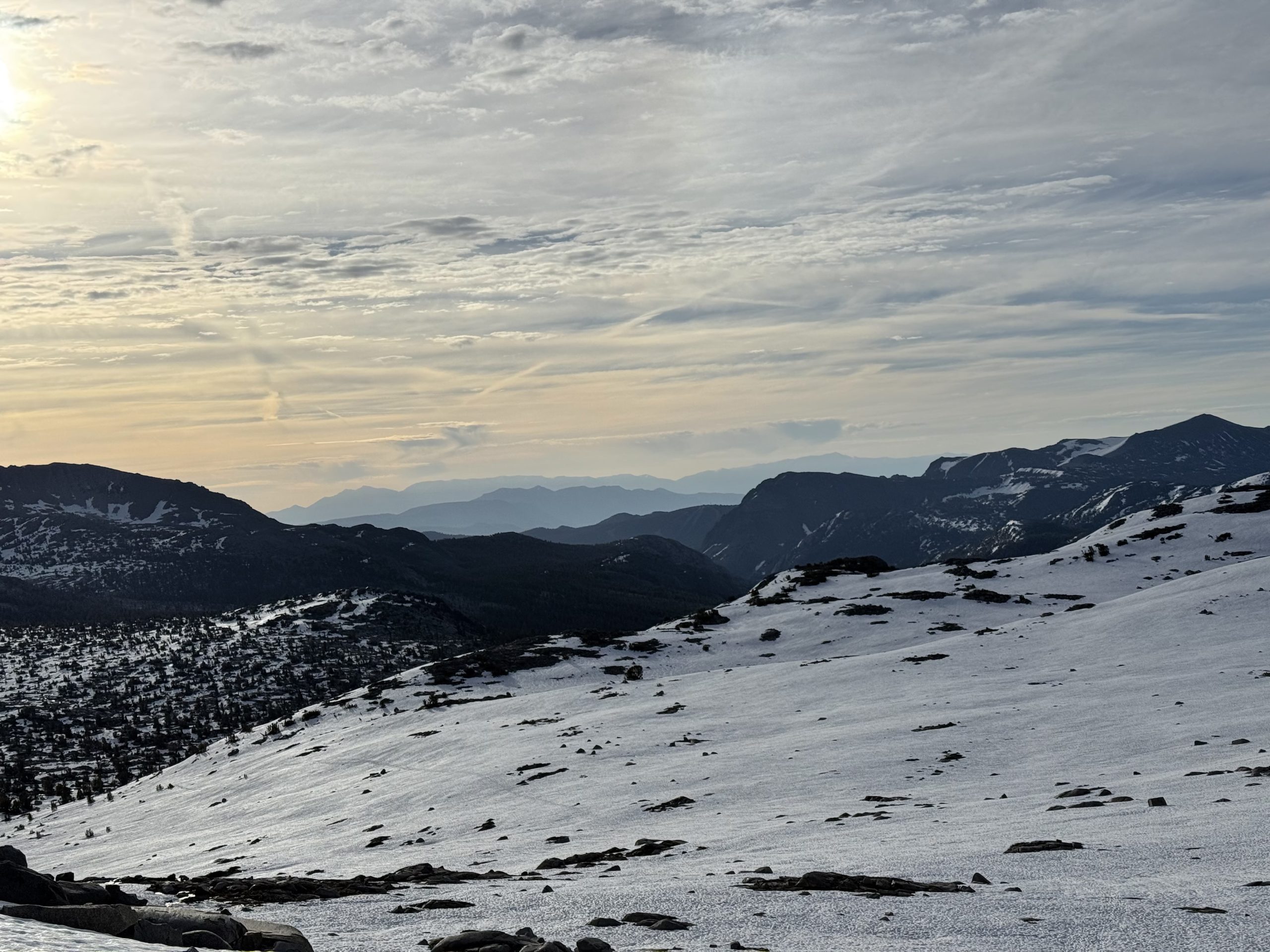
Looking back on our way up.
The descent at the beginning was good. We followed a gentle ridge to the edge, then turned back and took the inside curve of the mountain. We got to a point where some people had decided to slide to the bottom, but we decided not to participate in that. My previous experience with the slide had been a bit traumatic and I wanted to avoid it at all costs. So we continued at a downward angle, following boot prints that were spaced so far apart that I had to cut my own steps between them.
The sun was getting hot and the snow was starting to melt, which made everything more difficult. At times I would carefully place my foot in a tight imprint, only to have it give way beneath me. My foot sank deep into the snow and cold wetness cascaded around my leg. At one point, both Cactus and I reached mid-thigh. It was horrible, tedious and had me on edge. It took everything I had to get through it.
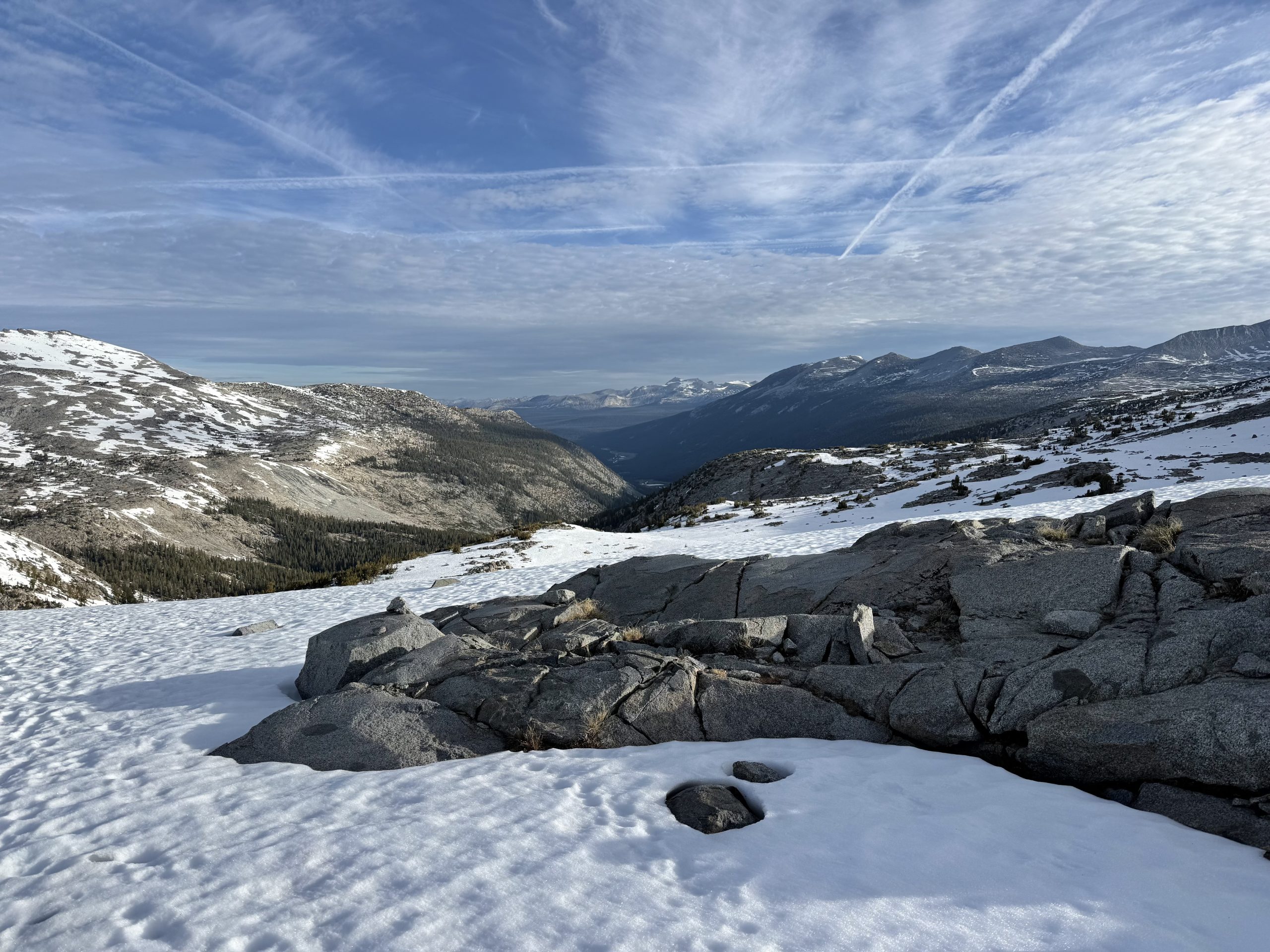
View from the top of the pass towards Yosemite National Park.
The descent had a few “stages,” between which the trail leveled out. At the end of the first stage there was a large, cold, semi-deep stream, swollen by the melting snow. We took off our shoes and crossed barefoot, desperate to at least keep our socks slightly dry that day. The water was so cold it was burning, but once it was over I felt relief. I knew we had no other major water crossings that day. We continued, heading up a steep, snow-covered trail for about another mile.
After this, the trail was clear. We finish the descent and immerse ourselves in a completely different world. The trail led out into a beautiful meadow with a swirling river running through the center. The water was the color of a tropical paradise and the meadow was framed by steep granite walls. Finally we were in Yosemite. The rest of the day was spent walking along the edge of the meadow. Some of the trail was very flooded, but most of it was just stunning. This made me even more excited for our upcoming detour to Yosemite Valley.
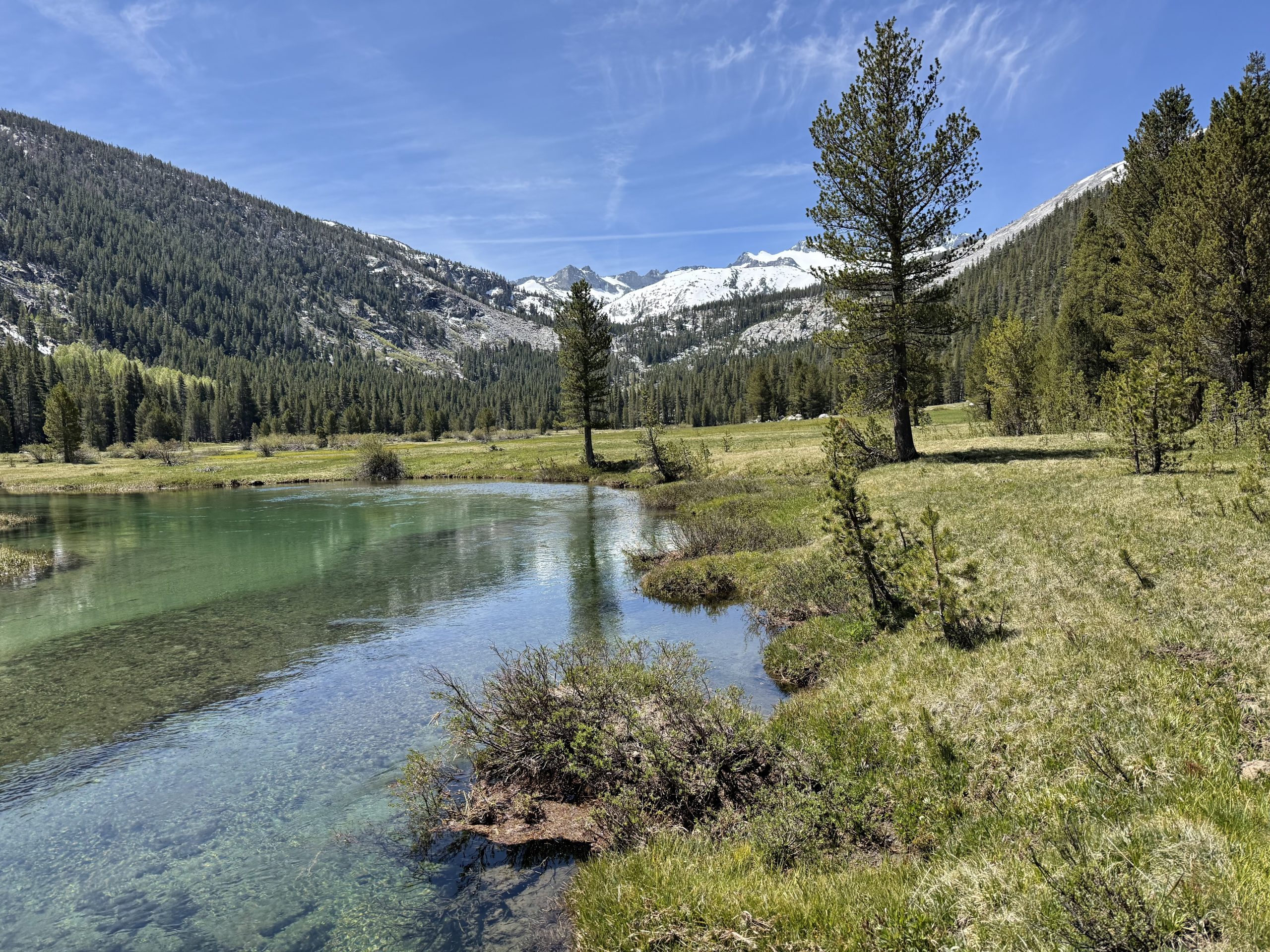
What a lush meadow!
We waited the next morning at the Tuolumne Meadows General Store for my friend Eric to join us. The store was closed and although I thought I would have a cell signal near the road, I didn’t. Without reception I couldn’t tell him we were there, or where “there” was. We sat and waited patiently and finally my friend found us. We got in the car and took the long, winding roads until we reached Yosemite.
We stopped at several of the overlooks on the way down the valley, then detoured into Mariposa Grove, a grove of giant sequoias. I had never seen trees this big in my life and it was like walking through a forest from the perspective of a little squirrel. There were trees the size of the cabins I had stayed in, and so tall that you couldn’t see the tops. After walking through the giant forest, we went down to the valley for dinner.
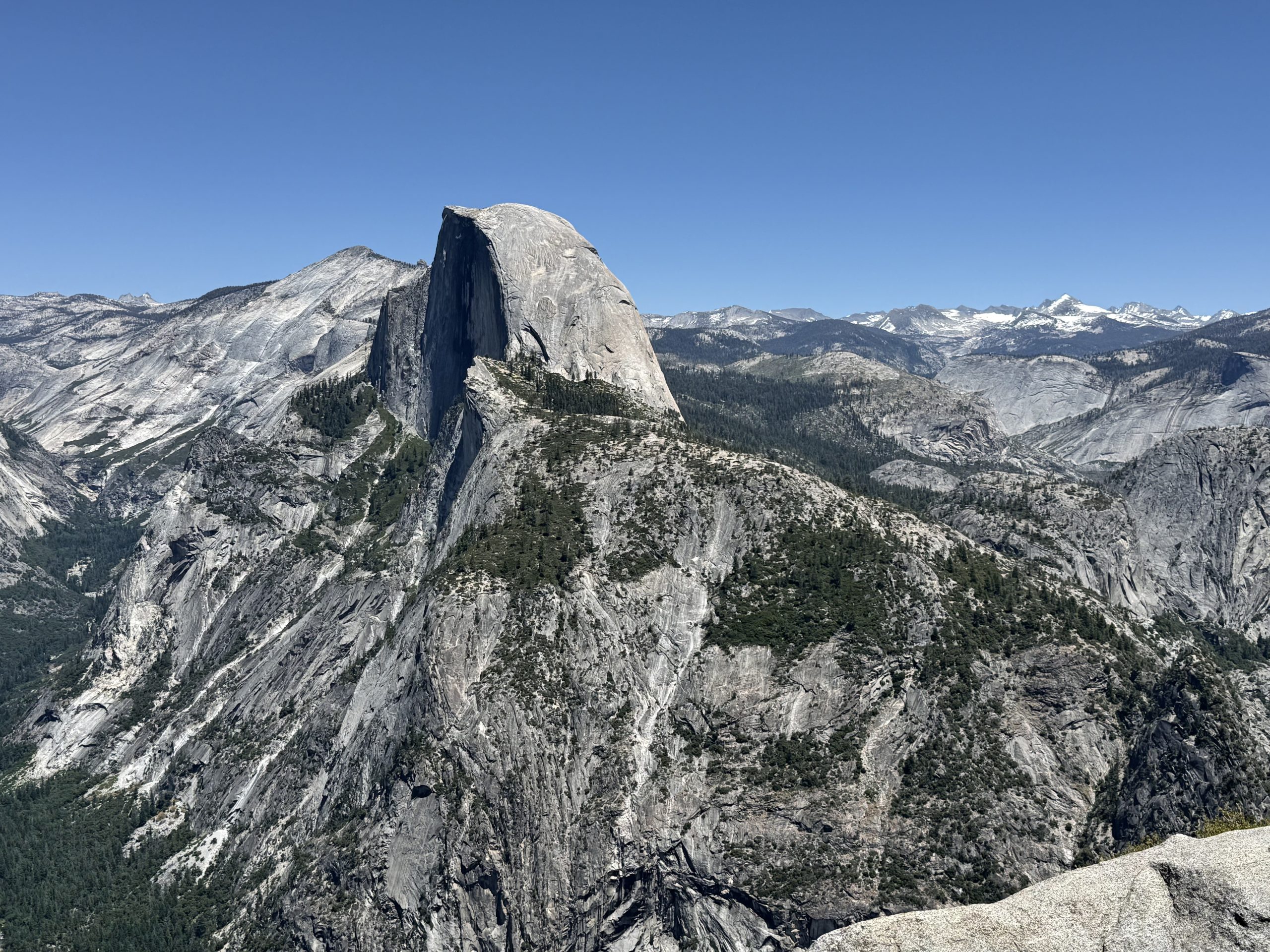
View of Half Dome from one of the viewpoints.
The next two days were spent hanging out in Yosemite. Cactus and I spent the first of those days walking through the valley, visiting the visitor center (where they had a whole exhibit on climbing!) and walking through the recreation of the small village that once housed the native people. We then headed to the base of El Capitan, where we saw a few different groups of climbers halfway up their respective routes. Some were turning in for the night on a large platform suspended from the wall, and others were still on their way.
We had tried to get permits for Half Dome for our second day in the park, but we didn’t win the lottery. Instead, we took a short hike to the top of Sentinel Dome, where we still had beautiful views of the valley. We sat there for about an hour, just taking it all in. Later we resupplied in the valley and left without enough food, but it was what we could fit in the bear cans.
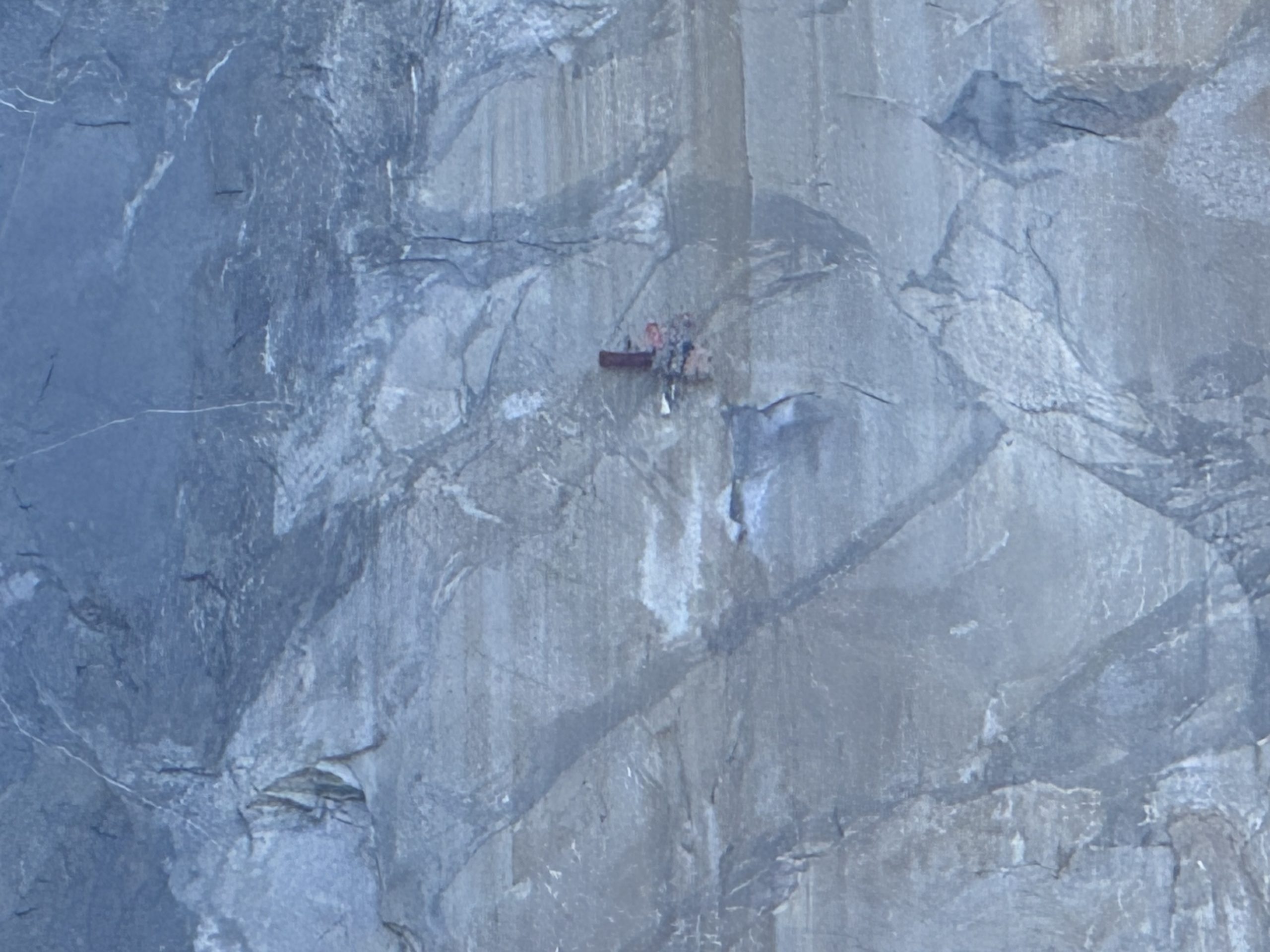
A very blurry photo of some climbers preparing to spend the night on the North American wall of El Capitan.
The next morning, my friend drove us back to the trailhead, where we had breakfast at Tuolumne Meadows Grill and saw some of our friends. They soon passed by, but it was still nice to see familiar faces. The hike that day was easy and beautiful. We passed soda springs, where cold, carbonated water bubbles up from the ground and tastes just like sparkling water. After we split from Glen Aulin, one of the high elevation campgrounds in Yosemite, the trail became deserted. We crossed meadows, bridges and passed a waterfall. Just when I thought the national park couldn’t get any cooler, I saw a marten. This must be a sign of good things to come, I thought.
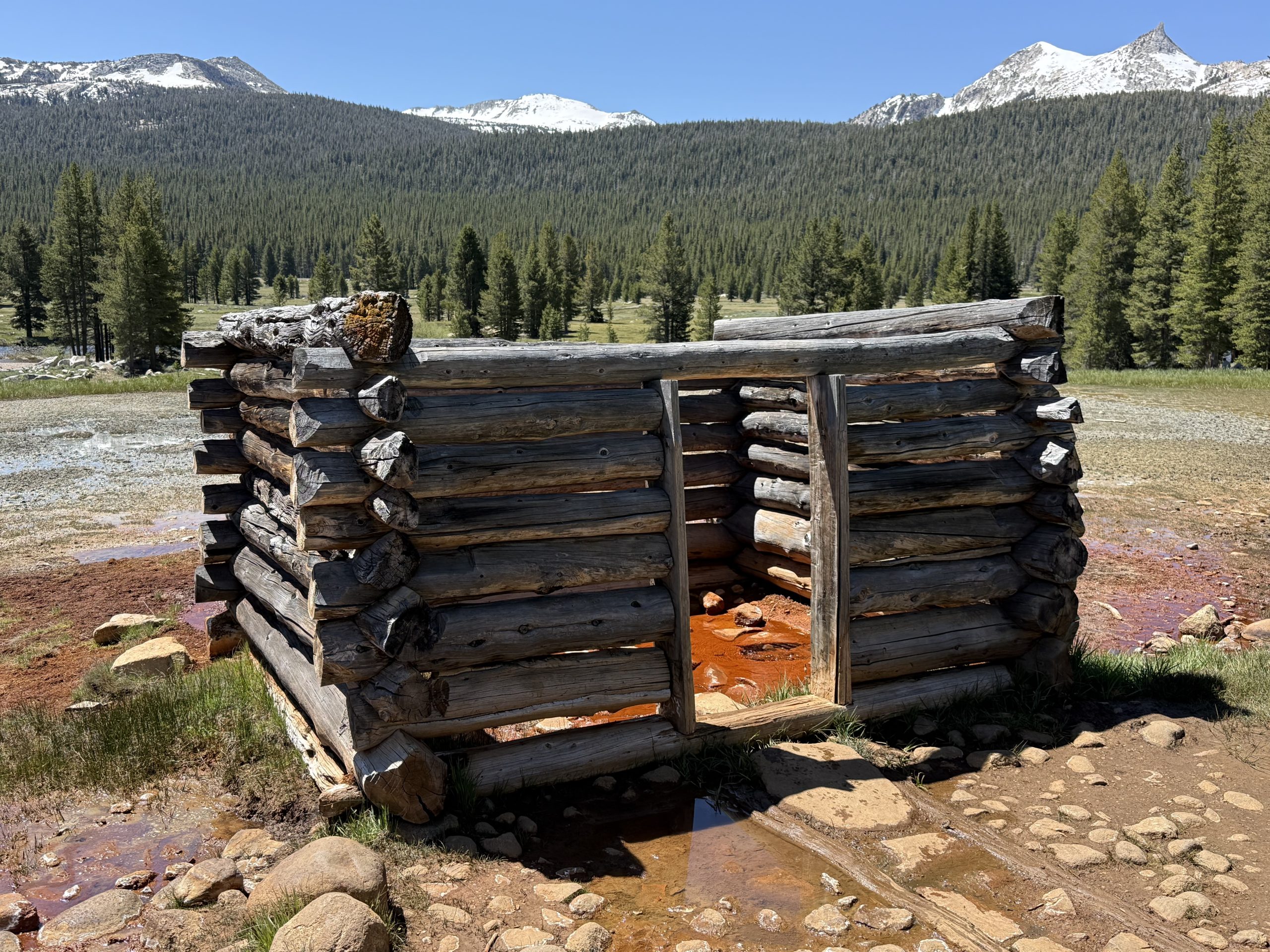
Soda spring bubbling from the cabin floor.
Perhaps my sign of good luck had been more of a warning. The temperature had dropped below freezing overnight, and early in the morning we had a wide, deep water crossing (this time without the bridge). The night before we had seen a log to cross, but it sank a little into the water just at our end of the creek and was therefore now covered in a slippery layer of ice. We cried our semi-warm feet, took off our shoes, and trudged through the water.
The rest of our day would pass in a similar manner. We took off our shoes so often we lost count. It was slowing us down a lot, but it was cold enough that I didn’t want wet shoes for the rest of the day. Between brutal water crossings, we had even more brutal climbs. We made the Benson pass, one of those passes no one talks about, and we almost gave up. There was hardly any snow, which was a welcome change, but it was relentlessly steep, both up and down. There were some steeper, more random climbs as the trail wound through a massive canyon.
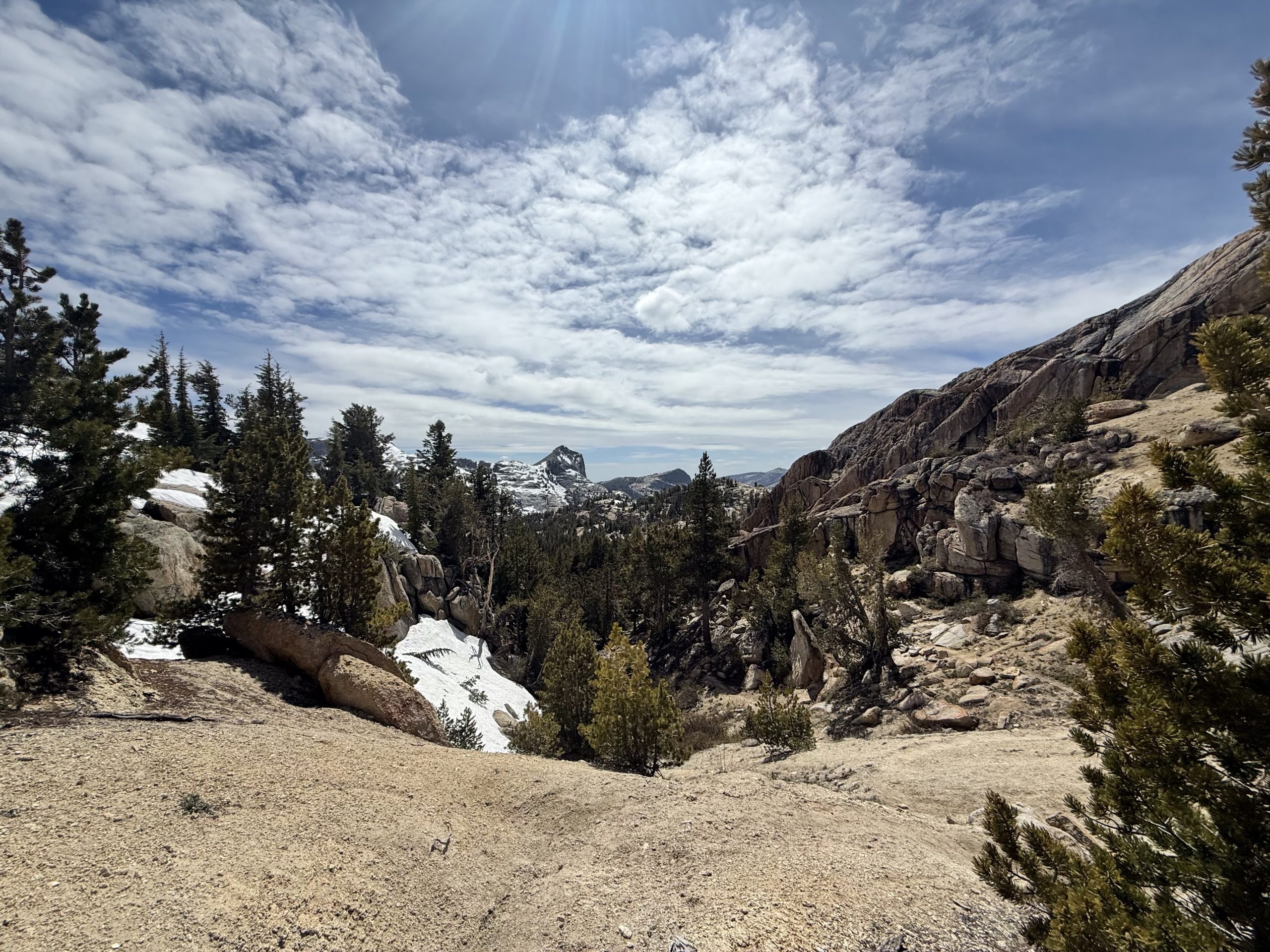
View from the top of Benson Pass
My legs were screaming. Each step was like trying to drag 50-pound dumbbells up the side of a cliff. He knew he didn’t have enough food, but would that really cause so much suffering? I didn’t feel hungry or lack snacks during the day, I just knew from the calculations that I didn’t have enough calories. We kept going and barely covered any miles that day. At 8:30 at night, after hiking for 12.5 hours, we set up camp halfway up Seavey Pass and crossed our fingers for another cold night for the snow to freeze.
It wasn’t very cold that night, but the morning snow was pretty solid. We had read about an incomplete section of our descent that involved rock climbing around steep snow, and we were prepared for the worst. It wasn’t as bad as we expected and we managed to cross the other side of the pass in decent time. Most of the water crossings that day had dry paths to cross, and I was becoming more comfortable walking balanced on thin fallen trees high above the water.
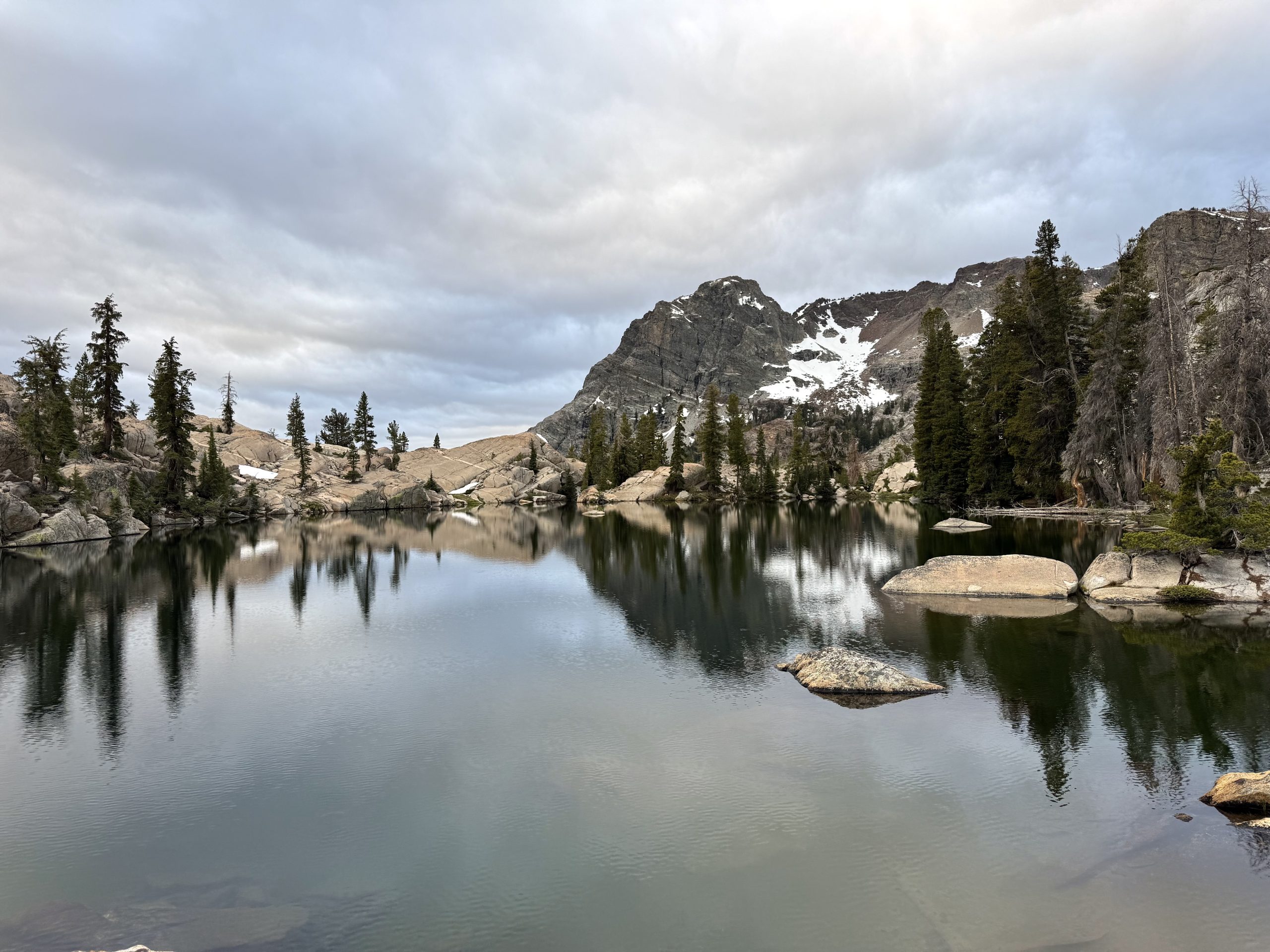
Lake near the top of Seavey Pass
Near the end of our day, we were stopped by a park ranger who wanted to check our permits. This was the first time on the entire hike that we saw a ranger; the day before we joked that they must be mythical creatures. We asked him about trail conditions ahead, but he wasn’t aware of anything outside the park boundaries. He told us that at Dorothy Lake Pass we could climb the side of the mountain a bit and get cell service. We were hoping to get updated feedback on the routes on FarOut, so this was good information.
The rest of the way to our campsite was complete hell. Since we saw the ranger, the mosquitoes began to notice us. The closer we got to Lake Dorothy, the more swampy the trail became and the thicker the cloud of mosquitoes became. They bit my ankles, my shoulders through my shirt, and my face. I stopped to put the bug net over my face to at least avoid any more bites on my cheeks. It became impossible to drink or eat or slow down and check the map. We ran to a flat place, set up the tent, and dived in to avoid death from blood loss.
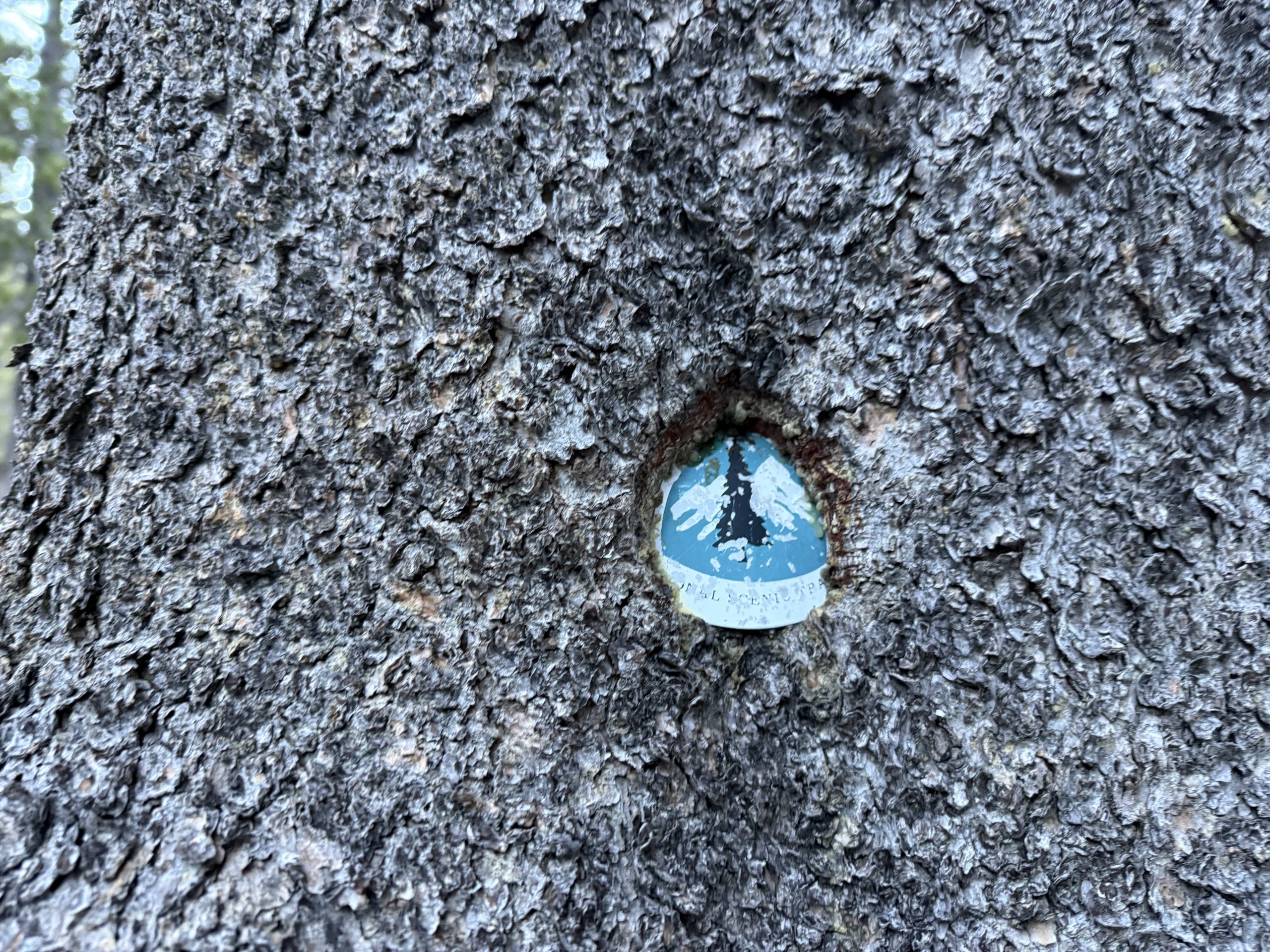
Even nature refuses to pass through here!
If this afternoon was any indication of the trail conditions ahead, I wasn’t sure I could make it. But for now, we just wanted to get out of Yosemite and be done with the mountain passes. We had skipped the most important ones for now, but we hadn’t realized that the ones we don’t talk about can be just as difficult. The trail had changed drastically when the saws started, so our only hope was that it would also change drastically when they ended.
:max_bytes(150000):strip_icc():format(jpeg)/Former-Presidents-Joe-Biden-Barack-Obama-George-W.-Bush-Bill-Clinton-061826-5c6fe9cf8288497cbf0682430e2b77e6.jpg?w=238&resize=238,178&ssl=1 "Vea cada vez que se reunieron ex presidentes de EE. UU.")


:max_bytes(150000):strip_icc():format(jpeg)/Former-Presidents-Joe-Biden-Barack-Obama-George-W.-Bush-Bill-Clinton-061826-5c6fe9cf8288497cbf0682430e2b77e6.jpg?w=100&resize=100,75&ssl=1 "Vea cada vez que se reunieron ex presidentes de EE. UU.")



/https://tf-cmsv2-smithsonianmag-media.s3.amazonaws.com/filer_public/63/4e/634e4e48-bdaf-4391-952f-e5f71e7c24ae/screenshot_2026-06-18_120017_pm.png?w=100&resize=100,75&ssl=1 "Al firmar su nombre en un frasco grande, este artista esclavizado desafió la prohibición de alfabetización en el sur. Ahora, sus obras maestras se exhiben en el famoso Paul Revere Bowl
|")

